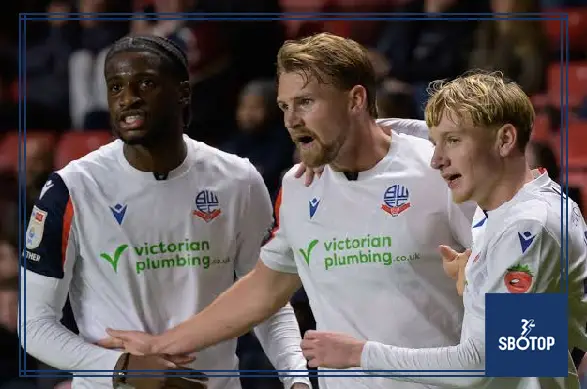
Sam Dalby provided the decisive finish as Bolton Wanderers defeated Charlton Athletic 1-0 at The Valley, extending the Addicks’ difficult run and rewarding a disciplined away performance. His 18th-minute goal separated the teams throughout a contest in which the hosts struggled to turn possession into sufficiently dangerous opportunities.
The November 3 Championship fixture offered Charlton another chance to arrest their slide. Instead, an avoidable concession left them chasing the game, while Bolton protected their advantage through organised defending and timely interventions.
Dalby’s strike was his sixth goal of the season. For Charlton, the defeat extended their winless sequence to 11 matches and brought a fourth successive league loss, leaving Nathan Jones’s team 21st at the end of the evening.
Early Openings Offer Charlton Encouragement
The opening exchanges did not suggest that Charlton would be unable to compete. Tyreece Campbell supplied a deep cross towards Dan McNamara’s run at the far post, requiring Bolton goalkeeper Jack Bonham to intervene.
Charlie Kelman also put the ball into the net during the early stages, but an offside flag prevented the effort from counting.
Those moments gave the hosts reasons to remain positive. They were finding ways to advance and briefly stretching Bolton’s defensive organisation, even if neither situation produced a legitimate breakthrough.
For a team struggling for results, an encouraging opening can be useful without being decisive. It offers evidence that an opponent can be troubled, but that promise still needs to become a goal.
Charlton could not make that conversion. Bolton remained level while the home side’s early attacking moments passed without changing the scoreboard.
Dalby Punishes a Costly Pass
The decisive incident arrived when Nathaniel Chalobah’s misplaced pass presented Dalby with a route towards goal. The Bolton striker advanced and finished confidently beyond Will Mannion.
There was no need for an elaborate attacking combination. Bolton recognised the opportunity, and Dalby supplied the composure required to exploit it.
That distinction mattered. Defensive errors do not automatically become goals; the receiving attacker must still control the situation, assess the goalkeeper and execute the finish.
Dalby completed those tasks, giving Steven Schumacher’s side an advantage they would never surrender.
For Charlton, the concession was particularly damaging because it arose from their own possession. Rather than being forced backwards by a prolonged spell of pressure, they had opened a direct route towards their goal.
The remainder of the match became an attempt to repair the consequences of that moment.
Bolton Build Around a Narrow Advantage
Once ahead, Bolton had a clearer set of priorities. They needed to protect central areas, prevent Charlton’s deliveries from becoming clean chances and retain enough attacking threat to discourage unrestricted pressure.
A one-goal lead offers little room for error. Every clearance, challenge and decision about when to advance carries significance because one unsuccessful defensive action can erase the advantage.
Bolton managed those demands effectively enough to preserve the scoreline. Their performance did not require them to dominate every passage of possession.
Instead, they made Charlton work for openings and continued competing when the hosts moved into attacking positions.
From an analytical perspective, that was the foundation of the victory. Dalby supplied the breakthrough, but the result depended on the team ensuring that his goal remained sufficient.
The visitors turned a favourable moment into a match-winning position through sustained concentration.
Charlton’s Possession Lacks a Decisive Finish
Charlton finished with 57 per cent possession and 14 attempts, compared with Bolton’s 11. However, the hosts recorded only two shots on target, while the visitors managed three.
Charlton also won four corners to Bolton’s three, illustrating that they had opportunities to sustain pressure without consistently converting them into demanding work for Bonham.
Those figures help explain the frustration surrounding the performance. Having more possession can create an impression of initiative, but it does not establish that a team is producing the better chances.
The quality of the final pass, the timing of movement and the accuracy of the attempt remain essential.
Charlton’s problem was therefore more specific than simply failing to attack. They reached promising areas but struggled to make their next action decisive.
Bolton could concede some territory while continuing to defend the spaces that mattered most.
Jones Seeks More Attacking Presence
Charlton introduced Miles Leaburn after the interval, while Matty Godden replaced Kelman around the hour. Further changes brought Joe Rankin-Costello, Millenic Alli and Sonny Carey into the contest.
Bolton also used their bench, introducing Gaizka Larrazabal and Thierry Gale in the 61st minute, followed later by Rúben Rodrigues and Ben Davies.
The changes reflected different immediate objectives. Charlton needed additional attacking influence, while Bolton needed fresh contributions to help preserve their advantage and exploit any space that appeared.
Introducing forwards can increase the number of potential targets, but it does not automatically improve the supply reaching them.
The supporting work remains important: winning possession securely, moving the ball quickly enough and delivering into areas where an attacker can act.
Charlton changed their personnel without finding the combination that would produce an equaliser. Bolton adapted sufficiently to keep the contest moving towards their preferred outcome.
A Free-Kick Opportunity Goes Unused
One of Charlton’s clearest routes back into the match came through an unusual situation. Bonham was penalised for handling a backpass, giving the hosts an indirect free-kick inside the penalty area.
The opportunity required Bolton to defend from close range, with almost no margin for hesitation. Charlton worked the ball to Harvey Knibbs, but the resulting attempt was blocked.
Josh Sheehan’s intervention was subsequently identified as crucial to preventing the hosts from capitalising.
The incident captured the opposing experiences of the evening. Charlton received a valuable opportunity but could not turn it into a goal. Bolton faced an uncomfortable defensive problem and found a solution.
Such moments can determine narrow matches without resembling conventional open-play chances.
Here, the response to the free-kick helped preserve the visitors’ advantage and removed another possible source of relief for the home supporters.
Bolton’s Defence Shares the Credit
Akin Famewo’s defensive contribution stood out as Charlton increased their pressure. Bolton continued meeting deliveries and closing down attempts rather than allowing the home side an uncontested route towards goal.
That collective work was important because a striker’s winning goal can easily dominate the account of a 1-0 victory.
Dalby supplied the moment that changed the score, but the defenders and midfielders were responsible for preventing the match from changing again.
There is also a distinction between defending deeply and defending passively. A team protecting a lead still needs to recognise when to challenge, when to cover and when to move towards the ball.
Bolton’s ability to make those decisions helped compensate for their lower share of possession.
Charlton continued searching, but the visitors maintained enough organisation to keep that search from producing the breakthrough the hosts needed.
Missed Late Chances Keep the Contest Alive
Bolton had opportunities to make the closing stages more comfortable, with substitute Gale twice unable to beat Mannion. Charlton, meanwhile, continued pursuing an equaliser, including a curling Campbell effort that went wide.
The visitors therefore had to protect a single-goal lead until the finish rather than benefiting from a decisive second strike.
Their success extended an unbeaten away sequence to four matches, including three victories.
For Schumacher, that provided evidence of a useful ability to collect results on the road. Different away fixtures demand different responses, and this one required Bolton to combine opportunism with resilience.
It would be excessive to treat the sequence as a guarantee of future success. It nevertheless represented a concrete achievement.
At The Valley, Bolton found a winning approach and maintained it despite leaving chances to settle the match unused.
Charlton’s Problems Require Specific Solutions
For Charlton, another defeat increased the urgency surrounding their performances. The narrow margin should not disguise the recurring difficulty of producing an effective attacking return.
Their possession and attempt totals suggest involvement, but involvement alone cannot reverse a poor sequence.
The practical task is to connect the stages of an attack more effectively. Receiving possession near the penalty area needs to lead to a useful delivery, an accurately timed run or an attempt that challenges the goalkeeper.
At the same time, the concession demonstrated the importance of security when the team has the ball. A misplaced pass can undo promising work and force an already frustrated side into another recovery attempt.
These are football problems that require repeated improvement rather than a single dramatic adjustment.
Charlton needed sharper execution at both ends, particularly in the moments that directly affected the score.
One Finish, Two Different Outcomes
Bolton left The Valley with a victory built around a straightforward principle: take the clear opportunity and defend the advantage.
Dalby executed the first part with authority. His teammates completed the second through organisation, concentration and a willingness to respond when Charlton threatened.
For the Addicks, the evening ended with familiar frustration. They had possession, introduced attacking alternatives and received opportunities to change the result, yet finished without a goal or a point.
The match did not establish how either club’s season would ultimately develop. It did provide a clear explanation for this particular outcome.
Bolton were decisive when presented with their opportunity and dependable when protecting it. Charlton could not supply the action required to alter the balance.
Dalby’s finish remained the difference, turning one mistake into three valuable away points.
Also Read: