

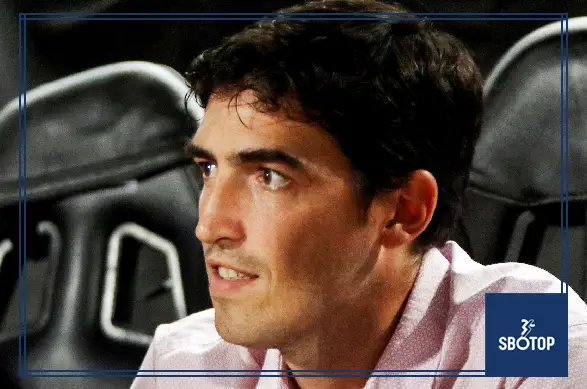
When AEK Larnaca drew 2–2 at home to Ermis Aradippou in January 2019, it was their sixth straight Cypriot league match without a win. It was also Andoni Iraola’s last game in charge. On 14 January, AEK announced that the club and coach had agreed to part ways after a meeting with the board and technical director. Later accounts have described the departure as a sacking. The club’s own announcement used the language of mutual agreement and acknowledged what Iraola had achieved in his first senior coaching job.
Those achievements included the first Cypriot Super Cup in AEK’s history and qualification for the Europa League group stage. Yet neither bought Iraola more time once domestic results deteriorated. When Liverpool appointed him in June 2026, the evidence behind their decision came mainly from what he did next in Spain and England. Cyprus remains worth revisiting because it was where he first asked a senior team to play at his preferred intensity, saw it work and then faced the consequences when the results stopped coming.
Why Larnaca Was an Ambitious First Appointment
Iraola arrived in Cyprus in the summer of 2018, less than two years after retiring as a player. He had spent 12 seasons in Athletic Club’s first team, making 510 appearances, and had finished his playing career with New York City FC. He knew European competition from his time in Bilbao, where Athletic reached the 2012 Europa League final. At Larnaca, he would experience the same competition from the dugout while learning the demands of choosing and preparing a team himself.
AEK offered immediate stakes. Their Europa League campaign began in qualifying, where they came through ties against Dundalk, Sturm Graz and Trenčín to reach the group stage. The Super Cup gave the club another reason to be pleased with the appointment. For a first-time head coach working outside Spain, the opening months brought experience of knockout ties, a trophy match and the need to prepare for domestic fixtures while facing unfamiliar European opponents.
The Pressing Game Was Already Taking Shape
David Català, a defender who played under Iraola at AEK, later recalled a coach with clear ideas about how his team should play. In his account, training and matches became faster and more demanding. Players were asked to press high, contest possession aggressively and, at times, follow opponents closely across the pitch. Català saw a resemblance to the football Athletic played under Marcelo Bielsa, one of Iraola’s coaches in Bilbao. He also recognised elements of that approach in the teams Iraola went on to manage.
That recollection helps explain the practical demands of Iraola’s first job. A defender following an opponent away from his usual position needs a teammate to cover the space he leaves. A forward who starts pressing needs the next player to close the obvious passing option. When the timing is right, the team can win the ball close to goal. When the first challenge is bypassed, the same movement can leave room for the opposition. For a coach introducing unfamiliar demands, the work involves getting a group of players to recognise the same moment and act together.
Català remembered players discussing Iraola’s potential even during that short spell. His recollection offers evidence that the approach made an impression on the squad. It also has a clear limit. Seeing a young coach communicate his ideas well is one thing. Predicting that he will eventually lead Liverpool requires a much longer record of getting those ideas to work with different players, against different opponents and over full seasons.
How a Promising Start Gave Way to Six Winless Games
At the start of December, after ten league matches, AEK were second and ahead of reigning champions APOEL. The run that followed changed the picture quickly. Three away league games passed without a victory, and Bayer Leverkusen beat AEK 5–1 at home in the Europa League during that period. A domestic home defeat added to the pressure before Christmas. AEK then lost away to Omonia and drew with Ermis, who went on to finish bottom. The final draw extended their winless league run to six.
Català recalled some changes in formation but little movement away from Iraola’s main principles. He also described the pressure that poor results could put on a coach in Cyprus. Those observations explain how one player experienced the run. AEK’s announcement confirms the date and terms in which the club presented the separation, while leaving the discussions behind closed doors private. The results offer the clearest public explanation for the timing. A team that had been second in early December was still waiting for its next league win in January.
Mirandés and Rayo Gave Iraola Time to Build a Record
Iraola returned to Spain in 2019 with Mirandés, a newly promoted second-division side. In his only season there, the club reached the Copa del Rey semi-finals. Celta Vigo, Sevilla and Villarreal all went out to Mirandés before eventual winners Real Sociedad ended the run. The opposition mattered because it gave Iraola a chance to show how a team from a lower division could create problems for top-flight clubs. The run also gave him a full season in which to build a record after his brief tenure in Cyprus.
Rayo Vallecano hired him in 2020 and won promotion to La Liga in his first season. His team subsequently beat Barcelona and Real Madrid in the top flight. That stage of his career tested his methods in a different way. Cup upsets had shown what Mirandés could do on individual nights. At Rayo, Iraola had to prepare a promoted side for repeated meetings with clubs that had deeper squads. He stayed for three seasons before Bournemouth offered him his first job in the Premier League.
Bournemouth Held Their Nerve Through Another Slow Start
Iraola’s early months in England brought a results problem that echoed Larnaca. Bournemouth failed to win any of their first nine Premier League matches under him in 2023/24. This time, he remained in charge and the team recovered to finish 12th with 48 points, then a club record in the Premier League. The turnaround showed how different an entire season could look from its opening weeks. It also gave Bournemouth a basis for keeping the same approach in place into a second campaign.
Bournemouth improved to ninth with 56 points in 2024/25, then finished sixth with 57 in 2025/26. That final campaign earned the club Europa League qualification, its first entry into European competition. The progression gave Liverpool three seasons of Premier League results to assess alongside Iraola’s style. It would be tempting to read Bournemouth’s patience as proof that AEK would have prospered had they waited. The evidence supports a narrower conclusion. At Bournemouth, Iraola had enough time to steer one team out of a poor run and improve its league finish in each of the next two seasons.
What Liverpool Inherited From That Long Route
Liverpool announced Iraola as Arne Slot’s successor on 4 June 2026. By then, he had taken a second-tier club to a Spanish cup semi-final, won promotion with Rayo and guided Bournemouth into Europe. Liverpool sporting director Richard Hughes had also been involved in appointing him at Bournemouth, giving the club a senior figure with direct experience of his work. Larnaca was part of the record, but Liverpool could judge him on years of more recent evidence about how he developed a team.
There were signs at Anfield of the approach Català remembered. In November’s 4–0 win over Manchester United, Liverpool were already three goals ahead when substitute Víctor Muñoz helped win the ball high up the pitch, exchanged passes with Florian Wirtz and scored. United had been playing with ten men since the eighth minute, an advantage Iraola acknowledged afterwards. Even in those circumstances, the fourth goal illustrated a recognisable instruction. Players close to the ball were ready to challenge for it and support the next pass, though the result was already secure.
The first job ended after a draw against the team that would finish last in Cyprus. The next three appointments gave Iraola chances to demonstrate things that six months at AEK could only partly reveal. Mirandés showed what he could do in knockout football, Rayo showed he could take a team up and compete after promotion, and Bournemouth showed he could recover from a difficult start and improve over several seasons. Larnaca had already seen the demanding style that would follow him. The clubs that came afterwards supplied the results that made Liverpool willing to hire him.
Also Read: