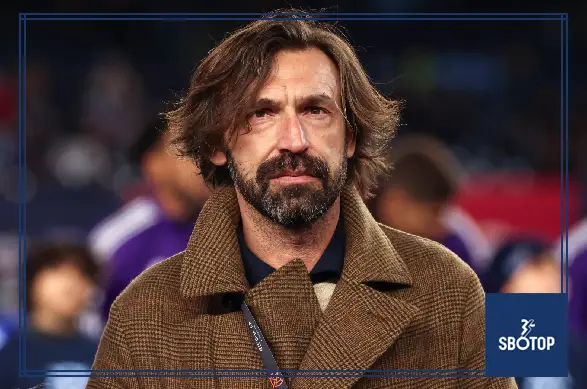
Andrea Pirlo is reportedly set to become the new head coach of the Italian national team after reaching an agreement on a four-year contract designed to carry the Azzurri through to the 2030 World Cup.
The former Juventus and AC Milan midfielder is expected to leave Dubai United in the United Arab Emirates and return to international football in one of the most important roles of his coaching career. Italian reports indicate that Pirlo has accepted a deal worth approximately €1.5 million per year, although the Italian Football Federation had not formally confirmed the appointment when news of the agreement emerged.
Pirlo’s selection follows a difficult managerial search in which Italy reportedly explored the availability of several major names. Carlo Ancelotti was considered an ideal candidate, while Pep Guardiola held discussions about the position before deciding not to pursue an immediate return to management.
With those options unavailable, the federation turned to Pirlo, a figure who combines an iconic international playing career with coaching experience in Italy, Turkey and the United Arab Emirates.
His anticipated arrival comes at a critical moment. Italy are attempting to rebuild after failing to qualify for a third consecutive World Cup. That latest disappointment led to the resignation of Gennaro Gattuso and intensified demands for a fundamental change in the direction of Italian football.
Pirlo will not simply be expected to improve the results of the senior national team. Reports surrounding the appointment suggest that he could become part of a wider effort to redefine Italy’s playing identity, improve the pathway for young footballers and restore confidence in a national programme that has struggled to combine its historic reputation with modern success.
A Return to the Shirt That Defined His Career
Few people understand the emotional weight of representing Italy as deeply as Pirlo.
He won 116 caps for the Azzurri and played a central role in the country’s 2006 World Cup triumph. His intelligence, passing range and composure made him one of the defining midfielders of his generation.
Pirlo was never dependent on speed or physical power. His greatest strength was his ability to understand a match before the ball reached him. He could control rhythm, recognise space and transform a defensive situation into an attack with one pass.
That style made him a symbol of Italian technical quality.
His international career also included a run to the final of Euro 2012, where he produced one of the tournament’s most memorable individual performances against England in the quarter-finals. The calm chipped penalty he converted during the shootout became an enduring image of his personality as a player.
Taking charge of Italy would therefore represent far more than another coaching position.
Pirlo would be returning to an institution with which he has already achieved the highest possible success. That history may help him understand the expectations surrounding the job, but it will also increase the pressure.
Supporters will remember the player who helped Italy control major international matches. They will expect the coach to create a team capable of displaying similar authority.
Italy’s Third Consecutive World Cup Failure
The scale of Pirlo’s challenge can only be understood by considering the depth of Italy’s recent decline.
The four-time world champions failed to qualify for the 2018 and 2022 tournaments. Their absence from the 2026 World Cup extended that sequence to three consecutive editions.
The latest failure came after a play-off defeat to Bosnia and Herzegovina on penalties following a 1–1 draw. It represented another painful collapse for a country that once regarded qualification as a minimum expectation.
Italy’s absence cannot be explained by one poor match or one unsuccessful coach.
The problem has developed across several years and involves player development, tactical identity, domestic opportunities for young Italians and the quality of decision-making within the federation.
Italy were able to win Euro 2020 under Roberto Mancini, proving that the country still possessed enough talent and tactical intelligence to compete at the highest level.
However, the European triumph was not followed by consistent progress. The national team continued to struggle in qualification, while coaching changes prevented the creation of a stable long-term project.
Pirlo is now expected to provide that stability.
A four-year contract suggests that the federation wants to avoid another short-term reaction. The deal would give him time to prepare for the next European Championship cycle and ultimately the 2030 World Cup.
Guardiola Was Reportedly the Preferred Choice
Pirlo was not initially the only candidate discussed for the position.
Reports indicated that Italy explored an ambitious move for Pep Guardiola after his departure from Manchester City. Federation officials were prepared to discuss giving him significant influence over the development of the national programme.
Guardiola ultimately declined the opportunity. He reportedly preferred to spend time with his family and take a break from management rather than immediately begin another demanding job.
The financial demands associated with appointing Guardiola would also have been substantial. Reports suggested that his salary expectations were far beyond the federation’s normal budget, even though Italy were willing to consider an exceptional package.
Carlo Ancelotti was another prestigious option. His experience, authority and history of success made him an obvious candidate, but his commitments elsewhere prevented the federation from progressing.
Pirlo therefore emerged as a more realistic appointment.
He does not possess Guardiola’s managerial record or Ancelotti’s decades of experience. However, he offers other qualities: familiarity with Italian football, a strong relationship with the national team and a willingness to become part of a long-term rebuilding process.
The Meaning of a Four-Year Deal
The length of Pirlo’s reported contract is significant.
International coaches are often judged immediately, particularly in countries with Italy’s history. A few disappointing results can create pressure for another change.
A four-year agreement running to 2030 indicates that the federation intends to give Pirlo a complete cycle.
That does not mean results will become unimportant. Italy must still perform in the Nations League, European Championship qualification and major friendlies.
However, the contract creates an opportunity to develop a clear identity rather than constantly selecting players for the next immediate match.
Pirlo can begin identifying the core of the squad, introducing younger players and establishing tactical principles that remain consistent across several international windows.
The next generation will require careful management.
Some players may be ready to become regular starters immediately, while others will need gradual exposure. Pirlo must avoid selecting young footballers only because of public demand while also ensuring that reputation does not protect underperforming veterans.
A long contract gives him the time to make those decisions logically.
Pirlo’s Coaching Career Has Produced Mixed Results
Pirlo’s playing reputation is unquestioned. His managerial record is more complicated.
He began his senior coaching career in extraordinary circumstances at Juventus. Initially appointed to lead the club’s under-23 side in 2020, he was promoted to the first-team job only days later.
The appointment placed him in charge of one of Europe’s largest clubs before he had managed a competitive senior match.
Pirlo won the Coppa Italia and the Italian Super Cup during his only season. Juventus also qualified for the Champions League, but they failed to win Serie A after dominating Italian football for nine consecutive campaigns.
He left after one year.
That season contained both promise and inexperience. Juventus occasionally produced fluid possession football, but the team lacked consistency and defensive control.
Pirlo later managed Fatih Karagümrük in Turkey and Sampdoria in Serie B. Neither spell produced sustained success, although both provided experience in difficult environments.
He joined Dubai United in July 2025, continuing his coaching career away from the highest-profile European leagues.
His appointment by Italy would therefore represent a risk.
The federation would be selecting a coach because of his ideas, international standing and potential rather than a long record of managerial achievement.
Why International Football May Suit Pirlo
Despite his mixed club record, international football may suit Pirlo’s qualities.
Club management demands daily work, constant squad rotation, transfer negotiations and the ability to maintain intensity over a long season.
International management is different.
A national-team coach has limited time with players and must communicate ideas clearly. Complex systems cannot always be developed because footballers arrive from different clubs and have only a few training sessions before matches.
Pirlo’s calm personality and tactical intelligence could be useful in that environment.
He understands how elite players process information and may be able to simplify his principles without removing their technical ambition.
Italy’s strongest identity has traditionally combined organisation with intelligent possession. Pirlo does not need to create an entirely unfamiliar style.
Instead, he can modernise those qualities.
His teams may attempt to build from defence, control midfield and use positional rotations to create passing options. However, international football also requires pragmatism.
Pirlo must avoid creating a team that looks sophisticated in possession but remains vulnerable during transitions.
The Search for a New Italian Identity
Italy’s football identity has often been misunderstood.
The country is famous for defensive organisation, but its greatest teams were not simply cautious. They possessed technically gifted midfielders, intelligent forwards and defenders capable of reading the game.
Pirlo himself represented that balance.
As coach, he may seek to restore an identity built on control rather than fear.
Italy need to become comfortable with the ball while retaining the defensive intelligence that has historically separated them from many opponents.
That means developing players who can operate in more than one phase.
Midfielders must be capable of receiving under pressure and reacting immediately after possession is lost. Full-backs need to contribute to attacks without leaving the defence exposed.
Forwards must press, combine and threaten space rather than waiting inside the penalty area.
Pirlo will also need to decide whether the national team should use a back four or a three-player defence.
Italian football contains players experienced in both systems. Flexibility can be a strength, but constant changes can also create uncertainty.
The new coach must establish a foundation before introducing variations.
Rebuilding the Midfield
Pirlo’s greatest attention will naturally fall on midfield.
As a player, he controlled matches from a deep position and turned passing into an attacking weapon. He will want midfielders who are brave enough to receive the ball in difficult areas.
Italy have produced several technically strong options, but the national team has not always found the correct balance between creativity, physical intensity and defensive protection.
Pirlo may use one deep playmaker with two more mobile players ahead. Alternatively, he could select a double pivot to improve security.
The choice will depend on available personnel and opposition.
He must resist the temptation to search for a direct copy of himself. Few players possess his unique passing vision, and forcing someone into that role could damage the team.
Instead, Pirlo should create a midfield in which responsibility is shared.
One player can help build from defence, another can break pressure through movement and a third can attack the penalty area.
The objective should be collective control rather than dependence on one individual.
Solving Italy’s Attacking Problems
Italy’s failure to qualify for recent World Cups has often involved a lack of efficiency in front of goal.
The team have frequently dominated possession without creating enough clear chances. When opportunities have arrived, finishing has not always matched the quality of the build-up.
Pirlo must find a more reliable attacking structure.
The centre-forward position will be critical. Italy need a striker capable of occupying defenders, linking with midfield and converting limited opportunities.
However, the burden cannot fall on one player.
Wide forwards and attacking midfielders must contribute goals. Full-backs need to provide width, while central players must make runs beyond the striker.
Pirlo’s own football education may encourage intricate combinations, but Italy must also become more direct when circumstances demand it.
International matches can be decided by transitions, second balls and set pieces. A national team cannot rely only on controlled possession.
The new coach must make Italy more flexible without removing their technical character.
Also Read: