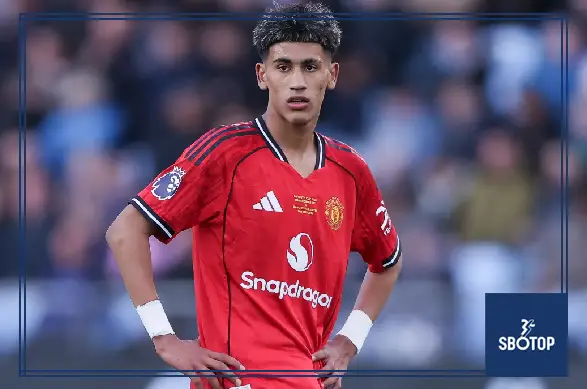
Manchester United academy sensation JJ Gabriel responded to the disappointment of missing a potential senior debut with a message that was brief, controlled and appropriate for one of English football’s most closely watched young players. The 15-year-old travelled with Michael Carrick’s first-team squad for a preseason friendly against Rosenborg in Norway, raising expectations that he could make his first senior appearance for the club. United eventually recorded an emphatic 5–0 victory, but Gabriel remained on the bench as several other academy graduates were introduced and made decisive contributions.
Shortly after the match, Gabriel posted a single word on social media: “Patience.”
The message was open to interpretation, but it appeared to reflect an understanding that his opportunity will arrive only when the club believes the timing is right. It may also have been a reminder to supporters, media observers and perhaps even himself that development cannot be rushed simply because public excitement is increasing.
Gabriel has been nicknamed “Kid Messi” because of his close control, creative dribbling and the attention he attracted through football videos at a very young age. Such comparisons naturally generate interest, but they can also create expectations that are unreasonable for a player who does not turn 16 until October 2026.
His inclusion in the senior squad was already a significant step. Manchester United trusted him to travel, prepare and experience a first-team matchday environment. Although his debut did not arrive, he moved closer to the senior side and gained a clearer understanding of the standards required.
United’s dominant victory also showed why opportunities cannot be guaranteed to every young player at once. Shea Lacey, Joshua Zirkzee, Jacob Devaney, Harry Amass and Ethan Williams scored as Carrick used the friendly to evaluate a wide range of options. Gabriel had to watch while other academy products took their chances, but his one-word response suggested that he intends to remain focused rather than frustrated.
A Dream Opportunity That Did Not Arrive
When Gabriel’s name appeared in Manchester United’s travelling squad, the possibility of a debut immediately became one of the biggest stories surrounding the match.
The teenager had already trained with senior players and built an outstanding reputation in the academy. A preseason friendly appeared to offer the perfect setting for Carrick to give him a short appearance without the pressure of a competitive result.
United’s control of the match strengthened that expectation. Once the score became comfortable, supporters naturally wondered whether Gabriel might be introduced for the final 10 or 15 minutes.
Instead, he remained an unused substitute.
From the outside, the decision may have appeared disappointing. The team were winning comfortably, the atmosphere was positive and several other young players were receiving minutes.
However, coaches must consider far more than the score.
Carrick and his staff would have evaluated Gabriel’s physical condition, recent training workload and readiness for senior contact. They also had tactical objectives for the players who entered the match.
A first-team debut is not simply a reward for popularity. It is part of a development process that must be planned carefully.
Gabriel’s presence on the bench showed that he is already under serious consideration. Remaining there did not represent rejection. It represented another stage in his education.
Why “Patience” Was the Right Message
The word JJ Gabriel selected carried more weight because of its simplicity.
He did not complain, question the manager or attempt to explain why he had not played. He did not suggest that he deserved minutes ahead of anyone else.
He wrote only: “Patience.”
That response can be understood in several ways.
It may have been directed toward supporters who were desperate to see him play. It may have reflected advice from coaches and family members. Most importantly, it may have been a personal statement about his own mindset.
Elite development requires patience because progress is rarely straightforward.
A young player can dominate at academy level and still need time before adapting to the physical speed of senior football. He may train brilliantly for several weeks before experiencing fatigue, injury or a temporary loss of confidence.
The greatest prospects are often those who learn to manage those fluctuations.
Gabriel’s talent has already created headlines, sponsorship attention and comparisons with famous players. His challenge is to avoid allowing external excitement to determine his internal expectations.
By choosing patience rather than frustration, he presented himself as a player prepared to wait for the correct opportunity.
Who Is JJ Gabriel
Gabriel is one of the most highly regarded players in Manchester United’s academy.
Born in October 2010, the forward has progressed rapidly despite regularly competing against footballers several years older than him.
He can operate centrally or from a wide position. His game is based on technical confidence, quick changes of direction and the ability to carry the ball through crowded areas.
The “Kid Messi” nickname developed because of the way he dribbles and because footage of his ability attracted attention when he was still a child. Comparisons with Lionel Messi should never be treated as a realistic prediction, but they indicate the level of excitement his natural technique has created.
Gabriel spent time in the youth systems of Chelsea, Arsenal and West Ham before joining Manchester United in 2022. He has since developed into one of the leading players in his age group and represented England at under-15, under-16 and under-17 levels.
His family background also connects him closely to professional football. His father, Joe O’Cearuill, played professionally and represented the Republic of Ireland.
That experience may help Gabriel manage the attention surrounding him. Families of young players must understand contracts, club expectations, media coverage and the emotional challenges created by rapid progress.
An Extraordinary Academy Record
Gabriel’s statistics explain why supporters are demanding an early senior opportunity.
During the previous season, he reportedly scored 26 goals and provided four assists in 29 appearances across the Under-18 Premier League and FA Youth Cup. He achieved those numbers while competing above his natural age group.
The output was not based on one short scoring run.
Gabriel regularly influenced matches through finishing, movement and individual creativity. He showed that he could score with either foot, attack from different positions and respond to the physical challenge of older defenders.
His breakthrough at under-18 level had begun even earlier.
In April 2025, he became Manchester United’s youngest player at that level and scored twice after coming on against Leeds United. The performance immediately increased expectations and confirmed that he was capable of making an impact against older opposition.
Later that year, he produced a rapid hat-trick against Derby County, scoring three times within 22 minutes. Those moments strengthened the belief that he was not simply an exciting dribbler but a forward with the instinct to convert chances.
The combination of style and output is what separates Gabriel from many technically gifted academy players.
Young forwards can attract attention through spectacular skills, but senior coaches ultimately need goals, assists and intelligent decision-making. Gabriel has demonstrated those qualities consistently enough to earn first-team involvement.
United’s Five-Goal Victory Belonged to the Academy
Gabriel’s absence from the pitch became more noticeable because so many other young Manchester United players contributed to the victory.
Shea Lacey opened the scoring before Joshua Zirkzee added the second. Jacob Devaney, Harry Amass and Ethan Williams then completed the rout during a dominant second-half performance.
Carrick made extensive changes and trusted the academy players to maintain United’s intensity.
They did more than protect the lead. They increased it.
Amass and Williams demonstrated attacking confidence, while Devaney took his chance to make a memorable contribution. Jaydan Kamason also impressed by creating opportunities from full-back.
The performance reinforced Manchester United’s long-standing belief in youth development.
For Gabriel, watching teammates score may have produced mixed emotions. He would have been pleased for players he knows from the academy, but he would also have imagined himself making a similar impact.
That competitive feeling can be healthy.
Young players should want to participate. They should believe they are capable of influencing senior matches.
The important issue is how they respond when another player receives the opportunity first.
Gabriel’s message suggested that he understood the situation. Rather than allowing disappointment to become resentment, he appeared ready to continue working.
Michael Carrick’s Development Decision
Carrick knows Manchester United’s academy culture better than most coaches.
He spent years at the club as a player, coach and caretaker manager before returning to lead the team. He understands that supporters expect young players to receive opportunities, but he also knows that talent must be protected.
After the Rosenborg victory, Carrick praised the confidence and expression shown by United’s academy graduates. He recognised the value of giving young players a platform while maintaining the standards required by the first team.
The decision not to use Gabriel should therefore be viewed within a broader development plan.
Carrick may have wanted him to experience the trip without the immediate pressure of playing. Travelling, attending tactical meetings, warming up with senior teammates and observing the match from the bench are all valuable experiences.
The coach may also have preferred Gabriel to play more substantial minutes elsewhere rather than receive a brief appearance at the end of a friendly.
That possibility gained credibility when the teenager quickly returned to youth action and reportedly scored and assisted in a behind-closed-doors Under-21 friendly against Burnley.
From a development perspective, playing a meaningful role against under-21 opposition may have offered more value than a few symbolic minutes in Norway.
Protecting a 15-Year-Old from Excessive Hype
The greatest danger surrounding Gabriel may not be a lack of opportunity. It may be the scale of the attention arriving before he has completed his physical development.
English football has a long history of identifying teenage stars and placing enormous expectations upon them.
Some respond brilliantly. Others struggle because the transition from academy prospect to established professional is more complicated than public discussion allows.
Gabriel is still growing physically and emotionally. His workload must be monitored, particularly as he competes against older players and trains at a higher intensity.
The comparisons with Messi are entertaining but unhelpful when treated seriously.
Messi was an exceptional case whose career cannot be used as a normal development model. Gabriel should be judged against his own progress, not against one of the greatest footballers in history.
Even comparisons with modern teenagers such as Lamine Yamal can create unrealistic pressure.
Every player develops differently. One may be ready for senior football at 15, while another may require two or three additional years before becoming equally successful.
Manchester United’s responsibility is to create the best career for Gabriel, not the earliest headline.
The Physical Challenge of Senior Football
Gabriel’s technical quality may already be capable of exciting senior crowds, but physical preparation remains essential.
Premier League defenders are faster, stronger and more experienced than academy opponents. They understand how to control space, use contact and prevent a forward from turning.
A teenager can possess outstanding ability but still require time to adapt to those demands.
United’s coaching staff will be assessing Gabriel’s strength, balance, endurance and recovery.
They will want to know how he responds after intense training and whether he can maintain his decision-making when fatigued.
Preseason friendlies offer a useful bridge because the tempo is lower than in competitive Premier League matches. Even so, coaches must choose the correct moment.
Introducing Gabriel simply because the score is comfortable could expose him to unnecessary challenges if his body is not ready.
The club must also consider his long-term injury risk.
Rapid increases in workload can create problems for young athletes who are still growing. Careful planning may reduce that risk and protect his availability over several seasons.
Technical Qualities That Make Gabriel Special
Gabriel’s appeal goes beyond his scoring record.
He receives the ball comfortably in tight spaces and has the confidence to attack defenders rather than immediately passing backwards.
His low centre of gravity helps him change direction quickly. He can disguise his movement, shift the ball between feet and create shooting opportunities without requiring large amounts of space.
Those qualities are particularly valuable against opponents who defend deeply.
Manchester United often face teams that protect the penalty area and challenge attackers to break down compact structures. A player capable of beating one opponent can disrupt the entire defensive shape.
Gabriel also appears comfortable moving across the front line.
He can start wide before drifting centrally, or operate as a striker who drops toward midfield to receive possession.
That flexibility could eventually make him valuable to Carrick’s tactical system.
However, senior football will require improvements without the ball.
Gabriel must learn pressing triggers, defensive positioning and when to conserve energy. He will also need to release the ball quickly when opponents deny him space.
Natural creativity should be preserved, but it must become part of a complete team performance.
Also Read: