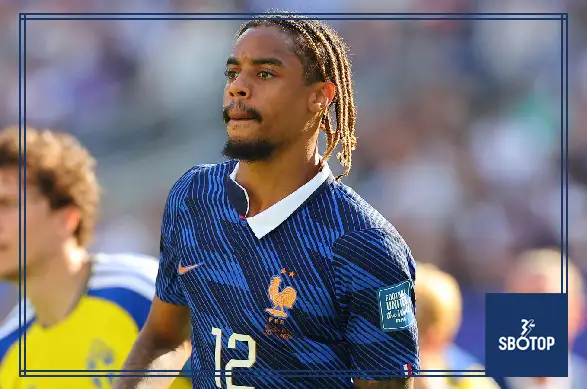
Arsenal remain interested in Paris Saint-Germain forward Bradley Barcola as the Premier League champions reconsider their attacking options following Morgan Rogers’ record-breaking transfer to Chelsea.
The Gunners had identified Rogers as a leading candidate to strengthen their forward line, but Chelsea moved decisively to secure the England international from Aston Villa. The reported £117 million agreement made Rogers the most expensive British footballer in history and left Arsenal searching for an alternative capable of adding pace, creativity and versatility to Mikel Arteta’s attack.
Barcola is among the names still being monitored.
Arsenal’s interest is not understood to have developed into a formal offer, and there is currently no agreement with PSG or the player. The French club may nevertheless consider allowing the winger to leave if their valuation is met, creating the possibility of a major transfer battle during the remaining weeks of the summer window.
The situation presents Arsenal with a difficult decision. Barcola has the talent and tactical profile to improve the team, but signing him would require a substantial financial commitment and competition with other leading European clubs.
Liverpool, Barcelona and several other teams have also been linked with the France international. PSG, meanwhile, have no need to accept a discounted proposal for a player who remains under contract and has demonstrated his ability in Ligue 1, the Champions League and international football.
Arsenal must therefore decide whether Barcola should become their priority or remain one of several alternatives being considered after losing the race for Rogers.
Chelsea’s Rogers Deal Forces Arsenal to Reassess
Morgan Rogers had emerged as an especially attractive target because of his age, Premier League experience and ability to operate in several attacking positions.
The former Aston Villa player can feature as a left winger, attacking midfielder or supporting forward. His strength, ball-carrying ability and direct movement would have given Arsenal a different profile around the penalty area.
However, Chelsea presented a project that convinced both Rogers and Aston Villa.
The London club agreed a fee reported at £117 million and handed the 23-year-old a long-term contract running until 2033. His arrival represents another major investment by Chelsea as they attempt to rebuild under their new management structure.
For Arsenal, the outcome was disappointing but not entirely unexpected.
Modern recruitment departments rarely pursue only one player for a position. Sporting director Andrea Berta is known for developing lists containing several targets with different qualities, prices and levels of availability.
The failure to sign Rogers does not mean Arsenal will automatically offer the same amount for Barcola. The two players have different strengths, contractual situations and levels of Premier League experience.
Arsenal must now determine what their attack actually needs most.
They could pursue a natural winger such as Barcola, sign a more central creator or invest in a forward capable of performing across the entire front line.
The answer will shape both their transfer strategy and Arteta’s tactical options for the new season.
Why Bradley Barcola Appeals to Arsenal
Barcola’s attraction begins with his speed. The French forward is capable of accelerating away from defenders in open space, but he is not limited to counterattacking situations. He can also receive possession near the touchline, challenge a full-back directly and create separation with a quick change of direction.
Arsenal often face opponents who defend deeply and place several players around their own penalty area. Those matches can become difficult when the attacking team moves the ball slowly or predictably.
A winger capable of beating an opponent individually can change the entire structure of such a game.
Once the first defender is eliminated, another opponent must leave his position to provide cover. That movement creates space for midfielders, overlapping full-backs or central forwards.
Barcola can therefore create advantages even when he does not score or provide the final pass.
He is most strongly associated with the left wing, where he can attack the outside channel or move inside towards goal. He is also capable of playing from the right or operating closer to the striker.
That positional flexibility would appeal to Arteta, who regularly asks his attacking players to exchange roles during matches.
Barcola could begin wide before making diagonal runs behind the defence. He could also move centrally while another player provides the width.
His movement would give Arsenal greater unpredictability and prevent opponents from preparing for one fixed attacking pattern.
A Natural Option on Arsenal’s Left Side
The left side of Arsenal’s attack has often generated debate.
Gabriel Martinelli offers exceptional speed and direct running, while Leandro Trossard provides intelligence, technical security and an ability to finish from several areas.
Both have contributed important goals, but Arsenal continue to explore ways of increasing consistency and creativity from that position.
Barcola would not simply replace one of those players. His arrival could create stronger competition and allow Arteta to choose different profiles for different matches.
Against a high defensive line, Barcola’s pace could threaten the space behind the opposition.
Against a compact block, his close control and ability to combine in small areas could help Arsenal create openings.
He could also play alongside Martinelli rather than competing directly with him. One might operate centrally while the other remains wide, or the pair could switch positions during matches.
This flexibility would be especially useful across a long season involving the Premier League, domestic cups and Champions League football.
Arsenal’s strongest competitors possess enough attacking depth to change matches from the bench. Signing Barcola would move the Gunners closer to that level.
Barcola’s Rise at Lyon
Barcola developed through Lyon’s academy, one of the most respected youth systems in French football.
He progressed into the senior side and gradually demonstrated that he could translate his technical ability into decisive performances.
His breakthrough attracted attention because of the confidence with which he attacked defenders. Barcola did not play like a young forward simply trying to avoid mistakes. He actively demanded possession, attempted difficult actions and looked capable of influencing important matches.
During the 2022–23 season, he became an increasingly important part of Lyon’s attack.
His performances earned him a move to Paris Saint-Germain in 2023, when the French champions invested heavily in his potential.
Joining PSG represented a considerable step up.
Barcola moved from a developing Lyon side into a squad expected to win Ligue 1, compete for the Champions League and dominate most domestic matches.
He also entered an attacking department filled with international players, meaning every appearance had to be earned.
The experience accelerated his development and exposed him to the highest level of European competition.
His Development at Paris Saint-Germain
Barcola’s time at PSG has included both impressive progress and difficult competition for places.
He has produced periods of excellent form, using his movement and speed to become one of the team’s most dangerous attackers.
His 2024–25 campaign was particularly productive. Barcola contributed heavily through goals and assists and played an important role in PSG’s attacking success.
The following season was less consistent, partly because his minutes decreased and the competition within the forward line intensified.
PSG’s squad structure can make it difficult for any attacker to feel completely secure. The club continue to recruit elite talent and adjust the team according to the requirements of different competitions.
Barcola has therefore experienced matches in which he was central to the attacking plan and others in which he began on the bench.
That uncertainty is one reason transfer speculation has increased.
A player approaching the prime stage of his career may want a clearer starting role, particularly when competing for a regular position with the France national team.
PSG have not publicly declared that Barcola must leave. Reports instead suggest they could consider a sale if an offer matches their expectations.
That difference is important. Arsenal would be negotiating for a player PSG can afford to keep, not someone the French club desperately need to remove from the squad.
What Arsenal Would Gain Technically
Barcola would improve Arsenal’s ability to carry the ball forward.
Ball progression is not only achieved through passing. A player who can receive possession and advance 20 or 30 metres forces the entire opposition team to retreat.
Barcola has the confidence to make those runs.
He can collect the ball inside his own half during a transition and accelerate into the attacking third. He can also receive higher up the pitch and attack a defender from a standing position.
His first touch is generally designed to move him forward rather than simply secure possession.
That approach would complement Arsenal’s midfield creators.
Martin Odegaard and other central players often attempt to draw opponents inward before releasing the ball into wider areas. Barcola could take advantage of those situations by immediately attacking the isolated full-back.
He would also offer a target for longer diagonal passes.
When opponents compress the centre of the pitch, Arsenal’s defenders can switch play towards the opposite wing. A fast attacker with reliable control can turn those switches into immediate danger.
The Importance of His Off-Ball Movement
Barcola’s value is not limited to what he does with possession.
His movement behind defenders can stretch the pitch vertically and create room for teammates.
Arsenal occasionally become too focused on receiving the ball in front of the opposition. When every attacker moves towards possession, defenders can remain compact and protect the penalty area.
A forward who repeatedly threatens the space behind the back line forces opponents to retreat.
Even when the pass is not played, that movement creates additional space between defence and midfield.
Barcola’s diagonal runs could therefore help Odegaard, Declan Rice and Arsenal’s other creators receive possession in more dangerous positions.
His presence might also benefit the centre-forward.
When Barcola attacks from the left, the striker can either remain central or move towards the near post, creating multiple problems for defenders.
These movements would require training-ground repetition, but Arteta has repeatedly shown that he values detailed attacking patterns.
Defensive Responsibilities Under Arteta
Joining Arsenal would also require Barcola to contribute without the ball.
Arteta’s wingers are expected to press, track runners and help protect the full-backs.
Arsenal’s defensive strength begins with the attackers. When the press is organised correctly, opponents are forced into predictable passes that can be intercepted by midfielders or defenders.
Barcola possesses the athletic ability to perform this role, but he would need to learn the precise triggers used by Arsenal.
Pressing is not simply running towards the player in possession. The winger must approach from the correct angle, close one passing lane and coordinate his movement with the striker and midfield.
A poorly timed press can create space behind the attacker and allow the opposition to progress easily.
Barcola’s adaptation to these responsibilities would influence how quickly Arteta trusts him in important matches.
How He Differs from Morgan Rogers
Although Barcola and Rogers can both play from the left, they are not identical footballers.
Rogers is physically powerful and often carries the ball through central areas. He can receive possession with defenders close to him, protect it and drive towards the penalty area.
He has also developed into a strong goal threat from attacking midfield positions.
Barcola is more naturally associated with wide play, acceleration and movement behind the defence.
He may provide greater one-on-one speed, while Rogers offers more physical presence between the lines.
Arsenal must therefore avoid treating Barcola as a direct replacement for the player they missed.
Signing him would represent a change in tactical emphasis rather than a simple continuation of the same plan.
That could be beneficial. Recruitment strategies sometimes improve when a failed deal forces a club to reconsider its original assumptions.
PSG’s Negotiating Position
Paris Saint-Germain are unlikely to make the transfer easy.
Barcola remains a valuable member of their squad and has already shown that he can produce at the highest level.
The French champions can demand a major fee because they do not face immediate contractual pressure.
Reports have offered a wide range of possible valuations, demonstrating that no universally accepted asking price has been confirmed.
Some estimates suggest a deal could require well over £60 million, while others claim PSG may demand a substantially larger package.
The eventual figure would depend on the structure of the offer, the player’s willingness to move and interest from rival clubs.
A bidding contest would strengthen PSG’s position.
Arsenal must decide how far they are prepared to go for a player who would improve the attack but may not be guaranteed to start every match immediately.
Competition from Other European Clubs
Arsenal are not alone in admiring Barcola.
Liverpool have been repeatedly linked with the winger as they reshape their own attacking department. Barcelona and other leading clubs have also been mentioned.
Competition affects more than the transfer fee.
Interested teams must convince the player that their sporting project offers the best route to regular football, trophies and personal development.
Arsenal can make a strong case.
They are the reigning Premier League champions, compete in the Champions League and have built a squad containing several young players who improved significantly under Arteta.
The manager can point to the development of Bukayo Saka, William Saliba, Gabriel Magalhães and other important figures.
However, Barcola will also consider the competition for minutes. Arsenal already possess established wide attackers, and he may seek guarantees about his expected role.
No elite club can promise an automatic starting position, but the clarity of the plan could influence his decision.
Financial Fairness and Squad Planning
A potential Barcola deal must fit within Arsenal’s wider financial strategy.
The club may need reinforcements in more than one area. Spending a large percentage of the available budget on a winger could limit their ability to strengthen elsewhere.
Arsenal must also consider wages, agent fees and possible performance bonuses in addition to the transfer price.
The fact that they did not match Chelsea’s £117 million move for Rogers does not necessarily mean they have that entire amount available for another target.
Different deals are assessed independently, and transfer budgets are influenced by sales as well as purchases.
The recruitment team must calculate whether Barcola provides sufficient improvement to justify the total investment.
Also Read: