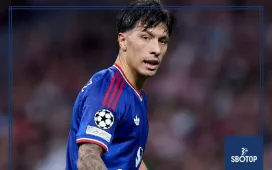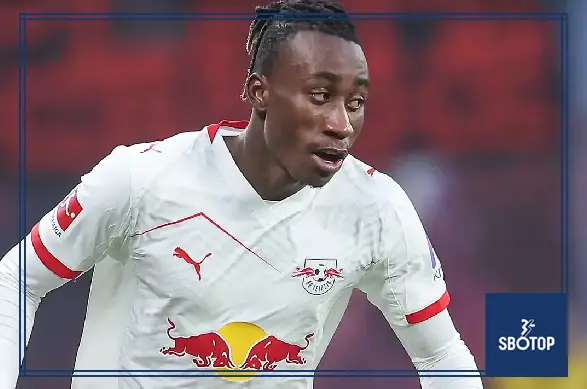
Arsenal reportedly explored a move for RB Leipzig winger Yan Diomande after losing out to Chelsea in the competition to sign Morgan Rogers from Aston Villa.
The development illustrated how quickly transfer plans can change at an elite club. Rogers had been identified as a leading Arsenal target because of his Premier League experience, physical power and ability to operate across several attacking positions. Once Chelsea completed a reported £117 million deal for the England international, Arsenal were forced to assess alternative ways of strengthening Mikel Arteta’s forward line.
Diomande emerged as one of the most exciting options under consideration.
The Ivory Coast international enjoyed a rapid breakthrough at RB Leipzig, establishing himself as a dynamic winger capable of beating defenders, attacking space and contributing goals. At only 19, he appeared to offer both immediate attacking quality and the potential to develop into one of Europe’s leading wide players.
Reports stated that Arsenal had made preliminary enquiries about his availability following the setback involving Rogers. However, the Gunners were never alone in the pursuit. Paris Saint-Germain, Liverpool and Real Madrid were also linked with the player, while Leipzig demanded a fee approaching or exceeding €100 million.
The transfer landscape has since moved quickly. More recent reporting indicates that Real Madrid have become the clear favourites and are close to completing a deal worth more than €100 million after PSG withdrew from the competition. Diomande is also reported to have agreed personal terms with the Spanish club.
Arsenal’s exploration of the winger may therefore prove to have been brief. Even so, their interest reveals important details about Arteta’s transfer priorities and the type of attacker the club want to add.
Missing Out on Morgan Rogers Forced Arsenal to Reassess
Arsenal entered the summer with Morgan Rogers reportedly positioned near the top of their attacking shortlist.
The Aston Villa forward had become one of the Premier League’s most influential young attackers. His ability to carry the ball through pressure, compete physically and operate as a number 10 or wide forward made him particularly attractive to Arteta.
Rogers also had the advantage of being proven in English football. Arsenal would not have needed to wonder whether he could handle the Premier League’s speed, physicality or tactical demands.
The Guardian reported in June that Arsenal had made Rogers their primary transfer target and believed the player was interested in joining. Aston Villa, however, were reluctant to sell after he played a central role in their success and signed a new contract.
Chelsea eventually moved more decisively.
Sky Sports reported that the west London club completed a deal worth £117 million, leaving Arsenal without the player they had hoped to make a major part of their attacking evolution.
Losing a priority target does not automatically mean a club has failed in the market. Much depends on how quickly and intelligently it responds.
Arsenal could have increased their financial proposal, but there is a point at which every transfer becomes inefficient. Paying beyond an internal valuation can create problems elsewhere in the squad and distort future negotiations.
The Gunners instead began exploring other options, with Diomande among the names considered.
Why Yan Diomande Attracted Arsenal
Diomande’s profile is different from that of Rogers, but he offers several qualities Arsenal need.
He is primarily a winger rather than a powerful attacking midfielder. His greatest strengths are acceleration, direct dribbling and the ability to threaten defenders in one-on-one situations.
Arsenal frequently face opponents who defend with a compact block. In those matches, the team may control possession but struggle to create separation in the final third.
A winger who can eliminate a defender individually changes the geometry of an attack.
When one player beats his marker, another defender must leave his position to provide cover. That movement can create space for a striker, an overlapping full-back or a midfielder arriving near the penalty area.
Diomande’s pace would also give Arsenal greater danger in transition.
Arteta’s side are usually associated with structured possession, but title-winning teams must be able to score in different ways. When opponents commit players forward, a fast winger can turn a defensive recovery into a goalscoring opportunity within seconds.
The Ivorian’s age was another attractive factor.
Born in November 2006, Diomande was still only 19 during the 2026 summer window. He had already produced an impressive Bundesliga season, scoring 12 goals in 32 league appearances according to available career records.
Signing a player at that stage of development could provide Arsenal with an attacker capable of contributing immediately while increasing in value over several seasons.
A Remarkably Fast Rise
Diomande’s journey to the top level developed at unusual speed.
Born in Abidjan, he later moved to the United States and spent time at DME Academy. He then entered Spanish football with Leganés, initially representing their reserve side before progressing into the senior team.
His first-team breakthrough in Spain quickly attracted attention. RB Leipzig moved to sign him in July 2025, giving him a five-year contract and an opportunity to continue his development in the Bundesliga.
Leipzig have built a strong reputation for identifying young players before their value reaches its peak. The club provide talented prospects with first-team opportunities, tactical development and exposure to high-level European football.
Diomande proved ideally suited to that environment.
He did not require several seasons to become influential. His speed, confidence and direct style allowed him to make an immediate impact in Germany.
That rise continued at international level. He became a senior Ivory Coast international and further increased his profile through performances for his country.
By the summer of 2026, he was no longer viewed merely as an interesting prospect. Several of Europe’s most powerful clubs considered him capable of becoming a major attacking figure.
How He Would Have Fitted Arsenal’s Attack
Had Arsenal advanced their interest, Diomande could have competed on either wing.
He is most naturally associated with the left side, where he can receive the ball near the touchline and attack the opposing full-back. Because he is right-footed, he can also move inside toward shooting or combination areas.
That profile would have provided competition for Gabriel Martinelli and other left-sided options.
Martinelli offers speed and penetration, but Arsenal have continued searching for ways to make their left flank as consistently dangerous as the right side. A player such as Diomande could have introduced fresh competition and a slightly different dribbling style.
He could also have played from the right.
Bukayo Saka remains one of Arsenal’s most important players, but the club cannot expect him to carry a huge workload indefinitely. Injuries and fatigue can become increasingly likely when a player is used in almost every major match.
Diomande’s ability to cover both wings would have given Arteta another rotational solution.
He would not necessarily have arrived as an automatic starter. Arsenal already possess established attackers, and adapting to Arteta’s tactical demands requires more than individual ability.
Wide players must press, protect their full-backs, understand positional rotations and make disciplined decisions when Arsenal dominate possession.
Nevertheless, Diomande’s raw qualities would have given the coaching staff an exciting foundation.
Diomande and Rogers Offered Different Solutions
Although Arsenal’s interest in Diomande emerged after they missed out on Rogers, the two should not be viewed as direct tactical replacements.
Rogers is physically powerful and comfortable operating through central areas. He can receive the ball between the lines, carry it past midfielders and create openings through strength as well as technique.
Diomande is more naturally a touchline attacker.
He stretches the pitch, attacks isolated defenders and provides greater speed in wide spaces. His game is built around explosive movement rather than controlling the central attacking area.
This distinction reveals that Arsenal may not have been looking for one highly specific position. Instead, they appear to have been seeking another high-level attacker capable of improving the team’s unpredictability.
Arteta could have used Rogers as a number 10, a wide forward or a physically dominant number eight in selected structures.
Diomande would have provided more natural width and individual dribbling.
Both players could improve the attack, but in different ways.
The change of target therefore would have required some adjustment to Arsenal’s tactical plan rather than simply replacing one name with another.
The Enormous Financial Challenge
Any attempt to sign Diomande was always going to be expensive.
Leipzig had little reason to sell cheaply. The player was under a long-term contract, had just completed a breakout season and was attracting interest from multiple wealthy clubs.
Reports suggested Leipzig valued him at approximately €100 million or more. Liverpool were said to have submitted an offer at that level, while Real Madrid later moved with a package exceeding €100 million.
That price would have forced Arsenal to make a major strategic decision.
Diomande has enormous potential, but paying more than €100 million for a 19-year-old with one leading Bundesliga season involves substantial risk.
A player’s future development is never guaranteed.
He would need to adapt to a new league, a new tactical structure and the pressure associated with a record-level transfer. Premier League defenders would also study his tendencies and attempt to restrict the spaces in which he is most dangerous.
Arsenal would therefore have been paying partly for present performance and partly for what they believed he could become.
That type of investment can transform a club when successful. It can also limit future recruitment if the player struggles.
Real Madrid Moved More Decisively
While Arsenal explored the situation, Real Madrid appear to have taken more concrete action.
The Spanish club reportedly submitted an initial package of €90 million plus €10 million in bonuses, which Leipzig rejected. Madrid then improved the terms and moved close to reaching an agreement exceeding €100 million.
The player’s preference also appears to have influenced the outcome.
Reports from Spain state that Diomande wanted to join Real Madrid, even after holding discussions with PSG coach Luis Enrique. PSG eventually withdrew because the financial conditions no longer matched their recruitment policy.
When a player strongly favours one destination, rival clubs face a major disadvantage.
Arsenal could theoretically match or exceed Madrid’s bid, but doing so would make little sense unless Diomande was equally enthusiastic about moving to north London.
A transfer of this size requires complete commitment from all parties.
Real Madrid’s status, recent history and ability to attract elite young talent made them extremely difficult to compete against once they established themselves as the player’s preferred club.
Arsenal Must Avoid Reactive Recruitment
Missing out on two attacking targets could create pressure on Arsenal’s recruitment team.
Supporters may expect an immediate response, particularly after rivals complete expensive signings. However, the club must avoid making a large purchase simply to demonstrate activity.
Reactive recruitment often produces poor value.
A club identifies one player, loses him, and then pays too much for someone with a different profile because the transfer window is moving quickly.
Arsenal need to maintain a clear idea of what the squad lacks.
Do they need a left winger who can dominate one-on-one duels? Do they need a central creator capable of covering Martin Ødegaard’s role? Or do they need a versatile attacker who can play across the entire front line?
The answers should determine the next target.
Diomande made sense as an elite young winger, but his likely move to Madrid means Arsenal must continue looking.
That does not mean the club should simply pursue the next highly publicised name.
Also Read: