Egypt’s World Cup dream is still alive after one of the most emotional knockout matches of the tournament. In Dallas, the Pharaohs survived 120 tense minutes against Australia before winning 4-2 on penalties, sealing a place in the last 16 after a 1-1 draw that tested their patience, mentality, and nerve.
It was not a perfect performance. Egypt started strongly, took an early lead through Emam Ashour, then allowed Australia back into the contest through a Mohamed Hany own goal. They missed chances, watched the match drift into extra time, and had to face the one scenario every knockout team fears: penalties. But when the shootout arrived, Egypt were flawless. Mahmoud Saber, Rami Rabia, Mohamed Salah, and Hossam Abdel-Maguid all converted, while Australia missed twice through Harry Souttar and Lucas Herrington.
For Egypt, this was not just another win. It was a breakthrough moment. The Guardian reported that Egypt had won a World Cup knockout tie for the first time, with Salah and coach Hossam Hassan both visibly emotional after the final penalty. It was the kind of night that can reshape a nation’s football story.
Ashour Gives Egypt the Perfect Start
The match nearly began with an Australian shock. Cristian Volpato, who had switched international allegiance from Italy shortly before the tournament, struck the top of the crossbar inside the opening five minutes. It was an early warning for Egypt that Australia would not simply defend and wait.
But Egypt recovered quickly and found the opening goal in the 13th minute. Karim Hafez delivered from the left, and Emam Ashour rose at the back post to head past the Australian goalkeeper. CAF later described the finish as confident and noted that Ashour was named man of the match after an influential display in attack and defence.
That goal gave Egypt exactly what they wanted: the scoreboard advantage. It allowed them to settle into a compact shape, force Australia to chase, and look for moments through Salah, Omar Marmoush, and their supporting runners. For a team carrying the weight of history, the early breakthrough should have made the evening easier.
Instead, it made the tension even sharper. Egypt had the lead, but not total control.
Australia Refuse to Fade Away
Australia’s campaign had been built on defensive discipline, physical resilience, and collective belief. Against Egypt, the Socceroos again showed those qualities. They were not always fluent in possession, and their attacking play lacked the spark required to consistently trouble Egypt, but they stayed alive through effort and pressure.
The Guardian’s post-tournament analysis noted that Australia finished the competition with only three goals across 390 minutes and just one win from four matches, underlining the team’s struggle to combine defensive strength with attacking vitality. That same issue appeared in Dallas. Australia had territory and moments, but not enough imagination in open play.
Still, knockout football is often about persistence. Australia kept sending balls into dangerous areas, kept testing Egypt from set pieces, and eventually forced their way level. Ten minutes after half-time, Mohamed Hany attempted to deal with an in-swinging delivery and glanced the ball into his own net.
It was a painful moment for Egypt and a lifeline for Australia. Suddenly, the match was no longer about Egyptian control. It was about survival.
Marmoush’s Miss Proves Costly
Egypt had a huge chance to kill the match early in the second half. Just seconds after the restart, Omar Marmoush found himself in a position to double the lead, but he dragged his effort wide. CNA reported that the Manchester City attacker slid the ball off target from close range, and that miss became even more important when Australia equalised soon after.
That was the turning point before the real drama. At 2-0, Egypt might have settled the contest. Australia would have had to open up, and Salah might have found more space in transition. Instead, the Pharaohs remained stuck in a tense one-goal match, and after Hany’s own goal, they had to rebuild their confidence.
The equaliser changed the emotional rhythm. Australia believed. Egypt looked frustrated. The crowd sensed that the game had become unpredictable. From that point onward, every clearance, every foul, every corner, and every missed pass carried greater weight.
Egypt still looked dangerous in spells, but the sharpness was not always there. Australia defended deeper as the match went on, waiting for mistakes and hoping their physical approach could carry them into penalties.
Salah’s Quiet Game Still Ends With a Giant Moment
For much of the match, Mohamed Salah was not at his brilliant best. Coming into the fixture after a hamstring strain, he struggled to dominate open play. CNA described him as a peripheral figure for long periods, especially in the first half, while also noting that he became more involved later as Egypt pushed for a winner.
Yet great players do not always need to own the full match to define the decisive moment. Salah’s biggest contribution came in the shootout, when he stepped up under enormous pressure and produced a Panenka-style penalty down the middle.
It was brave, almost outrageous, and perfectly timed. Salah later explained that he wanted to give confidence to his teammates and felt his experience made him the right player to take that kind of responsibility.
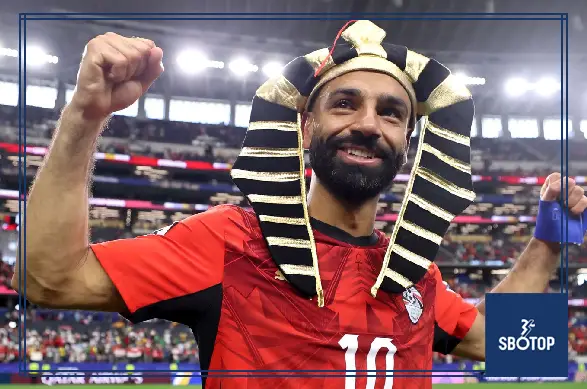
That penalty mattered beyond the scoreboard. It changed the tone of the shootout. It told Egypt that their leader was calm. It told Australia that pressure alone would not break the Pharaohs. And it gave Salah a World Cup moment that will live in Egyptian football memory.
Australia’s Goalkeeper Gamble Backfires
One of the biggest talking points came just before penalties. Australia coach Tony Popovic replaced Patrick Beach with Mathew Ryan in the 119th minute, clearly hoping the experienced goalkeeper would give the Socceroos an edge in the shootout. It was a bold decision, and in theory, a logical one. Ryan had experience, reputation, and familiarity with pressure.
But football does not always reward logic.
Ryan could not save any of Egypt’s four penalties. Sky Sports reported that Egypt converted all four spot-kicks against the veteran goalkeeper, while Australia’s Souttar and Herrington both missed. The Guardian described the substitution as a gamble that backfired, noting that Beach had made a key late save before being replaced.
That decision will be debated in Australia for a long time. Had Ryan saved even one penalty, Popovic might have been praised for bravery. Instead, the move became part of the heartbreak. Beach had kept Australia alive with a stunning save from Rami Rabia in stoppage time, but he watched the shootout from the sidelines.
Tournament football can be that cruel. One managerial decision can become the symbol of an entire exit.
Souttar and Herrington Carry the Pain
Australia’s shootout began badly when Harry Souttar missed the opening penalty, sending the Socceroos immediately onto the back foot. After that, the pressure only grew. Jackson Irvine and Awer Mabil scored, but when 18-year-old Lucas Herrington struck the bar, Egypt had the path to victory.
Herrington’s miss was especially painful because of his age. To step up in a World Cup knockout shootout at 18 requires immense courage. Missing in that situation can feel devastating, but the fact that he accepted the responsibility says something important about his character.
The Guardian noted that Australia’s shootout decisions, including the choice of Herrington in such a high-pressure slot, will become one of the most debated topics from the Socceroos’ campaign. That is understandable. Supporters will ask whether the order was right, whether the goalkeeper change disrupted rhythm, and whether younger players were placed under too much pressure.
But penalties are not only tactical. They are psychological, emotional, and sometimes brutally random. Egypt were perfect. Australia were not. That was the difference.
Abdel-Maguid Delivers the Final Blow
Hossam Abdel-Maguid became the man who sent Egypt into the last 16. With the shootout at 3-2 and Australia already wounded by two misses, Abdel-Maguid stepped up with the chance to finish the job. He did not blink.
The Guardian described how he slowed his run-up, waited for Ryan to move, and placed the ball to the goalkeeper’s right before sprinting away in celebration. It was a moment of pure release. Egypt’s players chased him toward the corner. Salah was in tears. Hossam Hassan was emotional. The Egyptian supporters inside Dallas Stadium finally let themselves believe.
Abdel-Maguid’s kick was not just the final penalty. It was the end of decades of waiting for a modern Egyptian World Cup knockout celebration. The Pharaohs had carried the history of 1934, the disappointments of 1990 and 2018, and the burden of being a proud football nation still searching for a defining World Cup moment.
In Dallas, they found it.
Also Read: