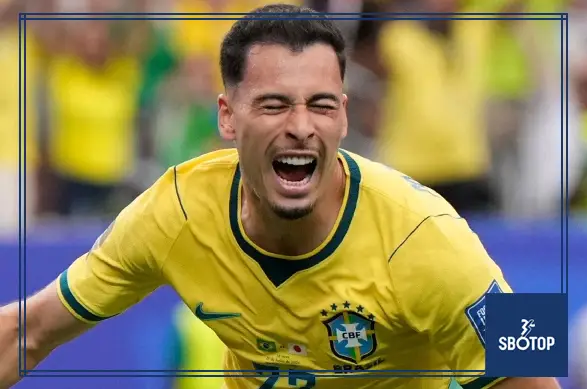
Brazil’s World Cup campaign is still alive, but it took every ounce of patience, belief, and late drama to keep it that way. In a tense round-of-32 clash in Houston, Carlo Ancelotti’s side came from behind to beat Japan 2-1, with Gabriel Martinelli emerging as the hero after scoring deep in stoppage time.
For long periods, this was not the smooth, commanding Brazil many expected. Japan were disciplined, brave, and tactically sharp. They frustrated the five-time world champions, took the lead in the first half, and looked capable of forcing extra time. But Brazil, as they have done so many times in World Cup history, found a way to survive.
Kaishu Sano gave Japan the lead in the 29th minute after capitalising on a Brazilian mistake, before Casemiro levelled with a second-half header. Then, just when the match seemed to be drifting toward extra time, Martinelli struck late to complete the comeback and send Brazil into the round of 16. AP reported that Martinelli’s stoppage-time winner secured Brazil’s 2-1 victory and kept Ancelotti’s team moving forward in the tournament.
Martinelli’s Moment of Rescue
Gabriel Martinelli did not start the match, but he finished it as Brazil’s match-winner. Coming off the bench, the Arsenal winger brought directness, speed, and urgency at a time when Brazil needed fresh energy. His late goal was not just a finish; it was a release of pressure for an entire nation.
Reuters described the winner as a far-post strike deep in stoppage time, a moment that broke Japanese resistance and rescued Brazil from a dangerous knockout situation. It was exactly the kind of contribution every coach wants from a substitute: immediate intensity, belief, and decisiveness when the match is on the edge.
For Martinelli, this goal could become a defining moment in his international career. Brazil’s attacking depth is enormous, and competition for minutes is always fierce. Players like Vinicius Junior, Neymar, Rodrygo, Raphinha, and others often dominate the headlines. But tournament football rewards impact, and Martinelli delivered when the stakes were highest.
A late winner in a World Cup knockout match can change how a player is viewed. Martinelli is no longer just another talented option in Brazil’s attack. He is now the player who stepped forward when elimination pressure was rising.
Japan’s First-Half Plan Almost Worked
Japan deserve enormous credit for the way they approached the match. They did not arrive merely to defend and hope. Their structure was clear, their transitions were dangerous, and their discipline made Brazil uncomfortable. Reuters reported before the match that Japan opted for a five-man defence, making several changes in an attempt to contain Brazil’s attacking power.
That approach worked well for much of the first half. Japan narrowed the spaces, denied Brazil easy central progression, and forced Ancelotti’s side into slower, less threatening possession. Brazil had star names on the pitch, but they often lacked rhythm. The yellow shirts circulated the ball without consistently breaking through.
Then came Japan’s breakthrough. Sano punished a poor Brazilian pass, drove forward, and finished low to put Japan ahead. AP reported that the goal arrived in the 29th minute, giving Japan a shock lead and forcing Brazil into a difficult chase.
For Japan, it was a moment that reflected their courage. They were not simply waiting for Brazil to make mistakes. They were ready to punish them.
Brazil’s Defensive Warning Signs
The goal Brazil conceded will concern Ancelotti. Knockout football is often decided by mistakes, and Brazil almost paid dearly for one. Japan’s opener came from an error that exposed the risk of slow or careless buildup against a team prepared to press at the right moment.
Brazil have enough attacking talent to rescue many matches, but defensive lapses become more dangerous as the tournament progresses. Against stronger opponents, one mistake may not leave enough time for recovery. The comeback showed character, but the concession showed vulnerability.
Reuters later framed the match as a reminder of both sides of Ancelotti’s Brazil: a team capable of dramatic survival, but also one that can invite pressure through defensive errors. That balance will be central to Brazil’s campaign. They have the talent to win the World Cup, but they cannot afford repeated lapses in knockout football.
Ancelotti’s task is to keep the attacking freedom alive while reducing the moments that leave Brazil exposed. The win over Japan was dramatic, but it was also a warning.
Casemiro Restores Control
If Martinelli was the late hero, Casemiro was the player who brought Brazil back into the contest. His equaliser in the 56th minute changed the emotional temperature of the match. Until then, Japan had succeeded in making Brazil look anxious. After Casemiro’s header, the game shifted.
The goal was classic Casemiro: timing, strength, experience, and presence in a decisive area. AP reported that Casemiro headed Brazil level after a delivery from Gabriel Magalhaes, giving Ancelotti’s side the platform to chase the winner.
Casemiro’s contribution matters because Brazil’s midfield is not only about flair. Tournament football requires leadership, physicality, and emotional control. When Brazil were trailing, they needed someone with experience to steady the team. Casemiro provided that.
However, there was also concern after he appeared to leave the match with a leg issue. For a Brazil side already dealing with the physical demands of a long tournament, any question over Casemiro’s condition will be closely watched. Losing his defensive intelligence and big-game experience would be a significant blow.
Ancelotti’s Halftime Adjustment Pays Off
Carlo Ancelotti’s calmness has always been one of his greatest managerial qualities. He rarely looks panicked, even when the match is slipping away. Against Japan, that composure mattered. Brazil needed adjustments at halftime, and Ancelotti found a way to shift the rhythm.
Reuters reported that Ancelotti credited patience and a change of strategy at halftime as key reasons behind Brazil’s comeback. The same report noted that Brazil overturned a deficit in a World Cup knockout match for the first time since their 2-1 quarterfinal win over England in 2002.
That statistic is important. Brazil are famous for attacking brilliance, but this was a different kind of victory. It was not about early dominance or flowing football from the first minute. It was about absorbing pressure, adapting, and refusing to let frustration take over.
Ancelotti’s Brazil did not win because everything went according to plan. They won because they responded when the plan was disrupted.
Bruno Guimaraes Pulls the Strings
Martinelli took the headlines, but Bruno Guimaraes deserves serious recognition. In a team full of glamorous attackers, Bruno’s work can sometimes go slightly underappreciated. Against Japan, his intelligence and timing were vital.
Reuters reported that Bruno Guimaraes was the architect of Brazil’s late winner and that the assist was his fourth of the tournament, placing him among the leading creators at the World Cup. That tells its own story. Brazil’s attack may be filled with explosive wingers and famous forwards, but Bruno has become one of the team’s most important creative sources.
His role is especially valuable because he connects the different parts of Brazil’s system. He can receive under pressure, progress the ball, and find the final pass when space opens. In knockout football, that final detail matters. A single well-timed pass can decide a season, a tournament, or a legacy.
Against Japan, Bruno did not need to be the face of the victory. He simply needed to make the decisive contribution. He did exactly that.
Japan Leave with Heartbreak and Respect
Japan’s defeat was cruel. For much of the match, they executed their plan with intelligence and bravery. They led, defended with discipline, and pushed one of the tournament favourites to the limit. But football can be ruthless. One lapse, one late run, one far-post finish, and a historic result disappeared.
Japan are still searching for a breakthrough victory in the knockout rounds of a World Cup, but this performance showed how close they are becoming. Their tactical maturity, technical confidence, and ability to compete with elite nations continue to improve.
Japan coach Hajime Moriyasu said after the match that the performance showed Japan are closing the gap on traditional football powers, even though the result was painful. Reuters reported that Japan had stifled Brazil for long spells before Martinelli’s late winner ended their campaign.
That is the difficult lesson for Japan. They are no longer outsiders simply happy to share the stage. They are close enough to hurt giants. Now, the challenge is learning how to finish those matches.
Brazil’s Aura Still Matters
Brazil did not play perfectly, but they won. At the World Cup, that matters more than style. Great tournament teams often have matches like this: uncomfortable, messy, tense, and emotional. What separates them from others is the ability to survive.
There is still something powerful about Brazil’s World Cup aura. Opponents know they may have to defeat not only the players on the pitch, but also the weight of history. Even when Brazil are behind, the game never feels finished. There is always the possibility of one final attack, one final moment, one final piece of quality.
Japan felt that reality in Houston. They were minutes away from extra time, perhaps even a chance at another historic upset. But Brazil stayed alive long enough for Martinelli to strike.
That is why this win could become psychologically important. Brazil now know they can suffer and still advance. They know they can be tested and still respond. In tournament football, that kind of belief can grow quickly.
Ancelotti’s Brazil Show a Different Side
When Brazil appointed Ancelotti, the expectation was not only that he would bring structure, but also that he would bring calmness in decisive matches. This game offered evidence of that. Brazil were not at their best, but they did not collapse. They adjusted, stayed patient, and found a late solution.
Ancelotti has won so much in club football because his teams often understand moments. They may not always dominate every minute, but they know how to stay alive in difficult games. This Brazil performance carried some of that same quality.
It was not the flamboyant Brazil of fantasy. It was a pragmatic, resilient Brazil. There was beauty in the late goal, but there was also grit in the comeback. The result suggested that Ancelotti’s influence is not only tactical. It is emotional.
Brazil may still need to improve, but they have already shown they can win under pressure.
The Vinicius Factor
Vinicius Junior did not score the winner, but his presence remains central to Brazil’s attacking identity. Every opponent must plan around him. His pace, dribbling, and ability to create panic force defensive structures to shift. Even when he is not decisive on the scoresheet, he shapes the match.
Against Japan, Brazil struggled to unlock compact spaces early, and Vinicius was not always given room to explode. Still, his threat stretched Japan and kept defenders occupied. In matches like this, attackers can influence the final result indirectly. They create fear, attract markers, and open lanes for others.
That is where Brazil’s depth becomes dangerous. If opponents focus too heavily on Vinicius, Martinelli can punish them. If they close down Martinelli, Bruno can create. If the game becomes physical, Casemiro can arrive. Brazil’s strength lies in having many different ways to win.
Japan contained several of those threats for a long time, but not all the way to the end.
Also Read:
- SBOTOP: Enzo Maresca Faces Ultimate Challenge as Man City Demand Winning Standard After Guardiola Era
- SBOTOP: Rangers Secure Ben Godfrey on Season-Long Loan from Atalanta as Former Everton Defender Makes Scottish Move
- SBOTOP: Jude Bellingham Earns Tuchel’s Praise as England Star Embraces World Cup Role with Back-to-Back MOTM Displays