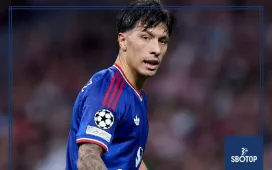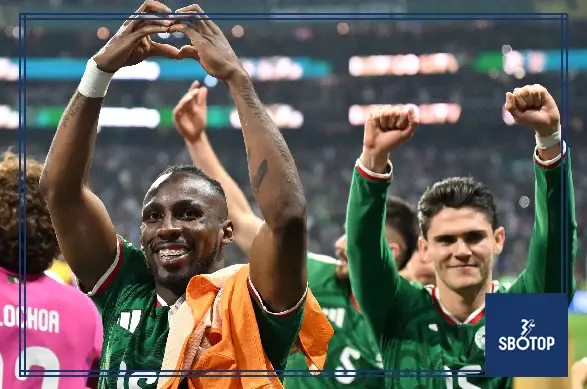
Mexico’s World Cup dream is no longer built only on hope, noise, and home advantage. It now has a knockout victory to stand on. In front of a roaring Estadio Azteca crowd, El Tri defeated Ecuador 2-0 in the round of 32, ending a 40-year wait for a World Cup knockout-stage win and moving into the last 16 with the energy of an entire nation behind them. First-half goals from Julian Quinones and Raul Jimenez settled the tie, while Piero Hincapie’s late red card summed up Ecuador’s frustration on a night when Mexico controlled the emotional and tactical temperature.
This was not just another host-nation victory. It was a release. Mexico had not won a World Cup knockout match since beating Bulgaria on home soil in 1986, a painful statistic that had followed generation after generation of talented teams. In Mexico City, that burden finally lifted. Reuters reported that the 2-0 win sent the co-hosts into the last 16 and secured a return to the Azteca for the stadium’s final match of the tournament.
The atmosphere made the night feel larger than football. Kick-off was delayed by an hour because of thunderstorms and lightning risk, but the storm did not weaken the mood. More than 80,000 fans turned the stadium into a sea of green long before the first whistle, and Mexico played as if they were drawing electricity directly from the stands.
The Azteca Became Mexico’s Extra Player
Some stadiums host football matches. The Azteca shapes them. Against Ecuador, Mexico did not merely play at home; they played inside a national theatre of pressure, memory, and expectation. Every early tackle, every forward pass, and every Ecuador mistake was met with a roar that seemed to push Javier Aguirre’s team forward.
Reuters described the atmosphere as one that surpassed even Mexico’s tournament opener, with the home crowd turning the venue into an intimidating green wall before kick-off. The Guardian later reported that Mexico City was swept up in World Cup fever, with around 1.4 million people estimated to have watched the Ecuador match on outdoor screens despite the pre-match storm.
That scale of support matters because it changes the psychology of the match. Ecuador were not just trying to defeat Mexico’s XI. They were trying to quiet a stadium and a country. For 20 minutes, they resisted. Then Mexico’s pressure, movement, and confidence began to break through.
Aguirre understood the connection. After the match, he said he could feel a bond between the fans and the team, praising Mexico’s first-half performance and the calmness his players showed after the break. That balance was important. Mexico did not get carried away by the occasion. They used it.
Quinones Lights the Fuse
The breakthrough arrived in the 22nd minute, and it came from one of Mexico’s sharpest attacking weapons. Roberto Alvarado picked out Julian Quinones with a perfectly weighted pass that cut through Ecuador’s high press. Quinones shrugged off Willian Pacho, opened his body, and fired a thunderous finish into the top corner. Reuters reported it was his third goal of the tournament.
The goal changed everything. Until that moment, Ecuador had survived Mexico’s early aggression and even threatened on the counter when John Yeboah hit the outside of the post after Gonzalo Plata launched a quick break. But once Quinones scored, the Azteca exploded and the match began to tilt heavily toward the hosts.
What made the goal so damaging was not only the finish. It was the way Mexico bypassed Ecuador’s pressure. Ecuador had tried to push high and disrupt Mexico’s buildup, but Alvarado’s pass found the space behind that aggression. Quinones then turned a promising moment into a brutal one with the kind of shot that gives a goalkeeper almost no chance.
It was a goal of technique, strength, and timing. More importantly, it gave Mexico permission to believe.
Jimenez Delivers the Second Blow
Nine minutes later, Mexico turned control into command. Ecuador lost the ball cheaply near their own penalty area, and Raul Jimenez punished the mistake with ruthless precision. He started the move, exchanged passes with Quinones, and struck a first-time shot into the top corner to make it 2-0. Reuters reported that it was Jimenez’s 47th international goal, moving him within five of Javier Hernandez’s all-time Mexico scoring record.
That second goal was the moment Ecuador’s night became almost impossible. At 1-0, they could still imagine settling down, surviving the crowd, and finding one clean counterattack. At 2-0, they were chasing a match in a stadium that was already celebrating.
Jimenez’s finish also carried symbolic weight. He has been a central figure in Mexican football for years, and on a night defined by history, he delivered a goal worthy of the occasion. His movement, composure, and connection with Quinones reflected a Mexico side that looked sharper, more decisive, and more comfortable with pressure than Ecuador.
For Aguirre, the early double was exactly what knockout football demands. Mexico took their chances when the game was still open. They did not allow Ecuador to grow into the night.
Mexico’s Best Half of the Tournament
The first half may have been Mexico’s most complete 45 minutes of the World Cup. They pressed with purpose, attacked with speed, and controlled the emotional rhythm of the game. Reuters wrote that Mexico looked transformed by their two-goal cushion, playing with confidence and intensity while Ecuador struggled to contain wave after wave of green-shirted attacks.
Teenager Gilberto Mora nearly added one of the goals of the tournament when he whipped a fierce shot from a tight angle just beyond Hernan Galindez’s far post. Raul Jimenez also went close early with a header from Luis Romo’s cross. These moments showed that Mexico’s advantage was not accidental. They were creating different types of danger: wide combinations, central pressing, set pieces, and quick transitions.
Ecuador did show life before the interval, particularly when Yeboah forced Raul Rangel into an excellent diving save after cutting inside and unleashing a rising drive. But even that chance did not change the broader story. Mexico entered half-time with control, confidence, and a crowd fully convinced that something special was happening.
In knockout football, the first half often sets the emotional direction. Mexico’s first half told Ecuador they were in another team’s story.
Ecuador Had No Route Back
Ecuador entered the match with genuine resilience behind them. Before facing Mexico, they had recovered from an opening defeat to Ivory Coast, drawn with Curacao, and revived their tournament by beating Germany 2-1 in the group stage. Reuters described their late surge into the knockouts as a test of comeback spirit against a Mexico side that had not conceded.
But at the Azteca, that comeback spirit never became a comeback. Ecuador saw more of the ball in the second half, but they could not turn possession into sustained pressure. Mexico’s defensive structure stayed compact, the crowd remained loud, and Rangel’s goal stayed protected.
Reuters noted that Ecuador pushed men forward late but could not find a way past a disciplined Mexico defence that still had not conceded a goal in the tournament. That defensive record is becoming one of the central pillars of Mexico’s campaign. El Tri are not only thrilling because of the atmosphere; they are hard to break down.
That will matter in the next round. Knockout runs are often built on defensive security as much as attacking fire. Mexico now have both: momentum in the stands and control at the back.
Hincapie’s Red Card Captures Ecuador’s Frustration
Piero Hincapie’s late red card gave the match its final flashpoint. The Ecuador defender was dismissed in second-half stoppage time after covering his mouth while arguing with Mexico forward Santiago Gimenez. Reuters reported that his frustration boiled over in the closing stages, while Business Standard, citing AP, explained that Hincapie became the second player at the tournament to be sent off under FIFA’s new rule against covering the mouth during confrontational exchanges.
The rule was introduced to prevent players from hiding potentially abusive comments by covering their mouths, and Hincapie’s dismissal followed Paraguay’s Miguel Almiron becoming the first player punished under the directive earlier in the tournament. For Ecuador, the red card was a miserable final note. Their tournament was already slipping away, and the sending-off underlined how completely the night had escaped them.
From a match perspective, the red card did not change the result. Mexico were already in control. But symbolically, it mattered. Ecuador had arrived with belief and a defensive unit full of highly rated names. They left frustrated, beaten, and reduced to 10 men in the final moments.
Hincapie’s dismissal will also affect Ecuador beyond the World Cup, as the defender is set to be suspended for the team’s next international match.
Gilberto Mora Adds Youthful Spark
One of the most exciting parts of Mexico’s performance was the contribution of 17-year-old Gilberto Mora. He did not score, but his composure, movement, and confidence gave Mexico another dimension. Reuters reported that Mora came close with an early effort and later received a standing ovation when Aguirre withdrew him, with the coach praising his bravery after the match.
The Guardian highlighted Mora as one of the players capturing the imagination of Mexico City, with supporters already talking about his poise and potential after the Ecuador win. That matters because every great host-nation run usually creates a new hero. Sometimes it is a veteran. Sometimes it is a goalscorer. Sometimes it is a teenager who appears fearless while the country around him is losing its mind with excitement.
Mora’s role will be fascinating as Mexico move forward. England will bring a different level of physicality and tactical detail in the last 16, but Mora’s ability to play between pressure lines could be valuable. He gives Mexico something unpredictable: youthful nerve in a tournament full of heavy expectations.
Aguirre will need to manage him carefully. But after this performance, Mora is no longer just a promising youngster. He is part of the story.
Aguirre’s Game Plan Worked Perfectly
Javier Aguirre deserves significant credit for how Mexico handled the occasion. It would have been easy for the hosts to start emotionally, press recklessly, and leave spaces for Ecuador’s runners. Instead, Mexico played with intensity and control. They attacked early, punished mistakes, and then managed the second half with maturity.
Aguirre’s substitutions also showed his awareness of the game state. Reuters reported that he withdrew Quinones, Jimenez, and Mora after Mexico had control, protecting key players while allowing the team to conserve energy for the next round. His post-match comments also revealed how big the next game feels, as he described Sunday’s last-16 fixture as the most important match in the history of the Mexican national team and in his own career.
That may sound dramatic, but in context, it makes sense. Mexico are at home. They have ended a knockout drought. They are unbeaten, defensively perfect, and playing with the country behind them. The next step is no longer just about reaching another round. It is about whether this team can become historic.
Aguirre has given Mexico structure. The fans have given them fire. Together, they look dangerous.
Also Read:
- SBOTOP : Riyad Mahrez Quits International Football Following Algeria’s 2026 World Cup Elimination
- SBOTOP: Mbappe and Olise Lead France Past Sweden in Ruthless World Cup Win to Book Paraguay Showdown
- SBOTOP : Marcus Rashford Softens Stance as Manchester United Rethink Exit Plan But Sale Still On Table