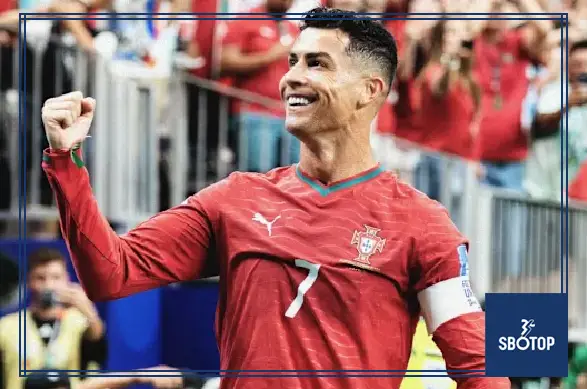
Spain against Portugal is never just another football match. The geography, the shared border, the cultural rivalry, and the weight of football history all make the Iberian derby one of the most compelling fixtures in international football. But when the 2026 World Cup last-16 draw placed Spain opposite Portugal, the story immediately gained another layer. It was not simply Spain versus Portugal. It was Spain versus Cristiano Ronaldo, possibly for the last time on the World Cup stage.
At 41, Ronaldo was no longer the explosive force who once terrorized defenders with endless sprints, stepovers, and violent acceleration. Yet his presence still changed the emotional temperature of a match. Spain manager Luis de la Fuente understood that clearly. Before the meeting, he admitted that he would rather not see Ronaldo on the pitch, while acknowledging that the Portugal captain remained capable of deciding a game at any moment.
That single admission captured the unusual power Ronaldo still carries. Very few players can make an opponent publicly say they would prefer not to face them, especially at 41. But Ronaldo’s threat has never been built only on youth or speed. It has been built on timing, mentality, positioning, confidence, and the ability to turn one small opening into a defining moment.
Spain’s Respect Was Not Fear but Realism
Spain did not arrive at the last-16 tie afraid of Portugal. They came in with belief, structure, and a clear identity under De la Fuente. Yet respect for Ronaldo was unavoidable. The Spanish camp knew that knockout football often belongs to players who understand pressure better than everyone else. Ronaldo has spent his entire career living inside pressure.
De la Fuente’s words should not be misunderstood as weakness. They were a form of realism. Coaches often speak in public using diplomatic language, but when a manager openly says he would prefer a specific opponent not to play, it reveals how deeply that opponent shapes preparation. Ronaldo may not dominate every match over 90 minutes anymore, but he still forces defenders to remain alert every second.
The danger with Ronaldo is not always volume. It is precision. He can be quiet for long stretches, then appear in the box at the exact moment a defender relaxes. He can misplace a pass, lose a duel, or look physically restricted, then still decide the match with one header, one penalty, or one instinctive finish. Spain knew that. Their preparation had to include not only Portugal’s system, but also Ronaldo’s gravity.
Ronaldo’s Final World Cup Admission Raised the Stakes
The match also carried emotional weight because Ronaldo had already admitted that the 2026 tournament would be his final World Cup. Reuters reported that the Portugal captain, playing at a record sixth edition of the tournament, said this would be his last World Cup while insisting he would end his wider career on his own terms.
That admission changed the atmosphere around the last-16 tie. Every Ronaldo appearance became part of a farewell arc. Every touch could become a memory. Every missed chance could become a regret. Every goal could become a final masterpiece.
For Spain, that made the challenge even more complicated. They were not just facing a striker. They were facing a legend trying to extend his final World Cup journey. Sentiment can be powerful in football, especially when attached to a player whose career has already stretched beyond normal limits. Portugal’s players wanted to keep Ronaldo’s dream alive. Spain had to find a way to end it.
Portugal’s Belief After Croatia
Portugal entered the Spain clash with momentum from a dramatic 2-1 win over Croatia in the round of 32. Ronaldo scored a penalty in that match, becoming the oldest player to score in a World Cup knockout stage, while Goncalo Ramos struck late to seal Portugal’s place in the last 16.
That result mattered because it showed Portugal still had two important qualities: emotional resilience and late-game danger. They had trailed against Croatia but found a way back. Ronaldo had delivered from the spot. Ramos had added the final blow. The match also came with emotional context, as Portugal marked the anniversary of Diogo Jota’s death, making the victory feel even more meaningful for the squad.
Spain therefore knew Portugal would not be easy to break. Roberto Martinez had a squad filled with technical quality: Bruno Fernandes, Vitinha, Joao Neves, Bernardo Silva, Joao Felix, Pedro Neto, Nuno Mendes, Joao Cancelo, and Ruben Dias. Ronaldo was the headline, but Portugal’s danger came from many areas.
Still, even in a team full of talent, Ronaldo remained the symbolic center.
Why Ronaldo Still Changes Defensive Planning
Modern defenders study data, patterns, pressing triggers, passing lanes, and expected movements. But Ronaldo represents a different kind of challenge. He is not only a tactical problem; he is a psychological one.
Defenders know his reputation. Goalkeepers know his penalty record. Midfielders know that any loose ball into the box can become dangerous if he is near it. Even when Ronaldo is not at his physical peak, his presence demands attention. That attention can open space for others.
This is one reason Spain could not simply focus on stopping Ronaldo in isolation. If they crowded him too aggressively, Portugal’s wide players could exploit space. If they ignored him, they risked giving one of football’s greatest finishers a clean look at goal. The challenge was balance.
Spain’s defenders had to stay compact, communicate constantly, and avoid giving Portugal cheap set pieces. Against Ronaldo, a corner or free-kick is not just a restart. It is a warning.
Spain’s Own Identity Under De la Fuente
Spain’s approach under De la Fuente has been built around control, technical security, intelligent positional play, and trust in young talent. The team that faced Portugal retained the same starting lineup used against Austria, with Unai Simon in goal, Pedro Porro and Marc Cucurella as full-backs, Pau Cubarsi and Aymeric Laporte in central defense, and Rodri, Pedri, and Dani Olmo forming the midfield base. Reuters reported that Lamine Yamal, Alex Baena, and Mikel Oyarzabal were chosen in attack.
That lineup reflected Spain’s confidence in continuity. De la Fuente did not overreact to Portugal’s star power. He trusted the structure that had brought Spain into the knockout stage. The presence of Yamal gave Spain creativity and unpredictability, while Oyarzabal provided movement and pressing intelligence through the center.
Spain’s plan was not simply to survive Ronaldo. It was to dominate the ball, control tempo, and make Portugal defend for long stretches. Against a team with Ronaldo leading the line, possession can become a defensive weapon. The less Portugal have the ball, the fewer chances they have to feed their captain.
The Tactical Battle Behind the Headline
The headline was Ronaldo, but the match was always going to be decided by details. Could Spain’s midfield control Bruno Fernandes and Vitinha? Could Portugal’s full-backs contain Yamal and Baena? Could Rodri dictate tempo under pressure? Could Ronaldo find separation from Spain’s center-backs? Could Portugal transition quickly enough when Spain lost possession?
Spain’s greatest strength was their ability to manage rhythm. They did not need chaos. They wanted the match to become a technical contest, one in which their passing structure and positional discipline could wear Portugal down.
Portugal, on the other hand, needed moments. Ronaldo is at his most dangerous when a match becomes emotional and broken. A loose cross, a second ball, a penalty shout, a defensive hesitation: those are the situations where his instincts come alive.
That contrast made the tie fascinating. Spain wanted control. Portugal wanted the kind of moment that Ronaldo has spent his career turning into history.
The Match Became a Test of Patience
When the teams finally met, the match unfolded as a tense and cautious Iberian derby. Reuters reported that Spain eventually advanced with a 1-0 win, thanks to a 91st-minute goal from substitute Mikel Merino after a slick move involving Ferran Torres.
The late timing of the goal was brutal for Portugal. For most of the match, they had managed to stay alive. Diogo Costa produced important saves. Portugal’s defense resisted Spanish pressure. Ronaldo had a chance of his own but could not beat Unai Simon. The tie seemed headed toward extra time until Merino arrived with the decisive strike.
For Spain, it was the reward for patience. They did not panic. They did not lose their structure. They kept probing until the final moments, and the breakthrough came from a substitute who understood exactly when to attack the space.
For Ronaldo, it was a painful ending. His final World Cup stage closed not with a goal, but with a late Spanish winner.
Ronaldo’s World Cup Curtain Call
Reuters described Merino’s goal as the strike that ended Ronaldo’s World Cup career. The Portugal captain left the tournament after a campaign that extended his record-breaking longevity but still ended without the one trophy missing from his collection.
That is the cruel beauty of football. Even legends do not get to choose their endings. Ronaldo had given the World Cup six tournaments, countless headlines, and unforgettable moments. Yet the trophy remained out of reach. Spain became the final opponent in that chapter.
After the defeat, Ronaldo did not immediately make a rushed decision on his overall Portugal future. Reuters reported that he said Spain had enjoyed some luck with the late winner and that he would not make a hasty call about his international career.
That response felt typical of Ronaldo. Even at the end of his World Cup journey, he refused to let emotion dictate the final word. The World Cup door had closed, but the broader Ronaldo story remained under his control.
Spain’s Caution Was Justified
Looking back, De la Fuente’s concern about Ronaldo was justified even though Spain won. Ronaldo did not score, but he still shaped the buildup, the defensive preparation, and the emotional narrative. Spain knew that the match could turn on one moment, and they had to play with that awareness until the final whistle.
That is the mark of greatness. Ronaldo’s influence was not limited to what happened on the ball. It existed in how Spain prepared, how defenders positioned themselves, how the media framed the contest, and how supporters watched every Portuguese attack with anticipation.
In the end, Spain managed the threat. They denied him the defining moment. They forced Portugal into a match where their own control and patience mattered more than Ronaldo’s instincts.
But De la Fuente’s pre-match words still stand as a reminder: even in the twilight of his career, Ronaldo remained an opponent no manager wanted to face in a decisive knockout tie.
Portugal’s Missed Opportunity
For Portugal, the defeat will hurt deeply. This was not a collapse, but it was a missed opportunity. They had enough quality to trouble Spain. They had enough experience to manage the occasion. They had Ronaldo’s final World Cup motivation behind them. Yet they could not find the goal that would have changed the match.
Portugal’s attacking setup, with Joao Felix joining Ronaldo and Pedro Neto, gave them technical ability and movement, but Spain’s defensive discipline limited the number of clear chances. Reuters noted that Spain dominated possession, particularly in the second half, while Portugal’s strong defensive work and Diogo Costa’s saves kept the match tight until the late goal.
That will be the frustration for Portugal. They were close enough to believe. Close enough to imagine extra time. Close enough for Ronaldo to dream of one more dramatic chapter. Then, in the 91st minute, everything disappeared.
Also Read:
- SBOTOP: Alphonso Davies Opens Up on Career’s Toughest Test While Refusing to Blame Limited Canada World Cup Role
- SBOTOP: UEFA Accuses FIFA of Crossing the Line After Shock Suspension of Folarin Balogun’s Red Card Ban
- SBOTOP: Vinicius Junior Reveals Penalty Decision as Bruno Guimaraes Miss Leaves Brazil Haunted Against Norway