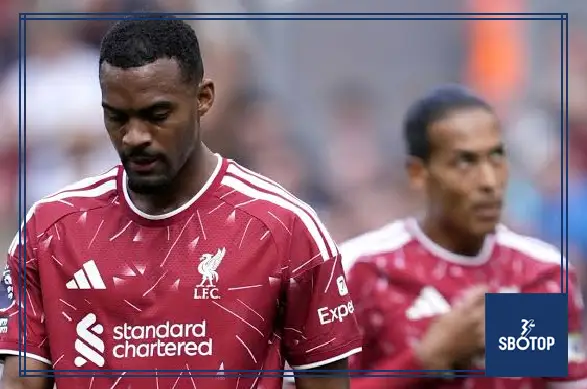
The arrival of Andoni Iraola at Liverpool has brought a clear change in identity. The new head coach has quickly attempted to introduce a more aggressive, energetic and demanding style, with pressing at the heart of his football philosophy. Liverpool are running more, sprinting more and asking their players to operate at a consistently high intensity.
That approach has produced encouraging signs during the opening stages of the 2026/27 campaign, but it has also created an important question of sustainability. Liverpool are expected to compete across several competitions, meaning periods of three matches in a week will become a normal part of life at Anfield.
The challenge is not simply whether Liverpool can press aggressively for one match. The bigger issue is whether they can reproduce that intensity every few days without allowing fatigue to affect their performances, decision-making and defensive organisation.
Recent evidence suggests that this is already becoming one of Iraola’s most important challenges.
Liverpool remained unbeaten through their opening four Premier League matches, but only one of those games ended in victory. A goalless draw with Fulham after a demanding Champions League encounter against Atletico Madrid highlighted the physical and tactical demands of Iraola’s approach.
Andoni Iraola Has Changed Liverpool’s Intensity
Iraola arrived at Liverpool with a reputation for demanding intense work from his players.
During his time at Bournemouth, his teams became associated with aggressive pressing, quick transitions and an emphasis on collective movement without the ball. At Liverpool, he inherited a squad accustomed to demanding football, but he has nevertheless attempted to raise the intensity further.
The statistics highlighted by Sky Sports illustrate the scale of the change.
Liverpool’s PPDA, a commonly used measure of pressing intensity, was reported at 8.6 during the early stages of this Premier League season. That figure was lower than any full-season PPDA recorded by Liverpool under Jurgen Klopp, although the sample remains small. Liverpool had also recorded the most sprints in the Premier League at that point and had significantly increased their position in the distance-covered rankings.
Those numbers demonstrate that Iraola’s instructions are being followed.
Liverpool are not merely talking about becoming more aggressive. They are physically running more and attempting to recover possession higher up the pitch.
However, high-intensity football carries a physical cost, especially when the same players are repeatedly asked to deliver maximum effort.
The Three-Game Week Changes Everything
Playing once a week allows a coach to demand almost everything from his players. Three matches in seven days are different.
A player might be capable of producing an outstanding pressing performance on Saturday, but repeating that performance on Tuesday and again on Friday requires exceptional physical preparation, squad depth and intelligent rotation.
Iraola has openly acknowledged that he is still learning which Liverpool players can handle the schedule.
He explained that some players can play every three days without their performances changing significantly, while others experience a greater drop in performance or face a higher physical risk. The manager said he needed to learn who could maintain their levels and who required rest.
That learning process is particularly important because Liverpool’s calendar is not going to become easier.
European football, domestic cup competitions and Premier League fixtures will repeatedly overlap.
The ability to rotate without weakening the tactical structure could become one of the defining elements of Iraola’s first season at Anfield.
Fulham Exposed the First Warning Sign
Liverpool’s goalless draw with Fulham provided an early indication of what can happen when the intensity drops.
The match came after Liverpool had faced Atletico Madrid in the Champions League and before their Carabao Cup meeting with Tottenham. The turnaround between fixtures was demanding, and Iraola admitted afterward that his team lacked freshness.
The problem was particularly noticeable in Liverpool’s pressing.
Iraola said his players were arriving late to their pressing actions, especially during the first half. That small difference can have major tactical consequences.
A successful press depends on timing.
If one player moves forward too early while another is late, gaps appear. If the midfield does not move with the forwards, opponents can play through the first line. If defenders retreat instead of stepping forward, the team becomes stretched.
Against Fulham, Liverpool experienced several of those problems.
The visitors were able to find spaces between Liverpool’s lines, while their goalkeeper Bernd Leno sometimes had relatively straightforward options to bypass the first wave of pressure.
For a team built around aggressive pressing, that is an important warning.
Pressing Is About Coordination, Not Just Running
It can be tempting to view pressing as a simple matter of running harder.
In reality, effective pressing is a highly coordinated tactical process.
A forward needs to know when to close the centre-back. A winger may need to block a full-back’s passing route. The midfield must move forward at the correct moment. The defensive line needs to maintain enough courage and proximity to prevent large spaces from appearing behind the press.
When every movement happens at the right time, the opponent can be forced into hurried decisions.
When the timing is wrong, the same aggressive system can become a source of vulnerability.
This is why fatigue is such a significant issue for Liverpool.
A tired player may still be able to run, but his timing can become slightly slower. His reaction can be delayed by a fraction of a second. His decision about whether to press or hold position can become less precise.
At elite level, those small differences can determine whether a press wins possession or creates an opportunity for the opposition.
Liverpool’s Attack Must Contribute to the System
Iraola has also placed responsibility on Liverpool’s forwards.
Following the Fulham draw, the manager indicated that his attacking players needed to do more to make his system function properly.
That is logical within his tactical structure.
The first defensive action often begins with the striker.
The centre-forward determines the direction of the opposition’s build-up by choosing which defender to approach and which passing lane to block. Wingers then react to the movement behind them.
If the front three press aggressively but the midfield remains too deep, the press can be broken.
If the midfield pushes forward but the defence does not follow, dangerous spaces can emerge.
Iraola therefore needs every line to operate together.
That becomes even more difficult during a congested schedule because the players involved may change from match to match.
Rotation Will Become Essential
One of Iraola’s most important jobs will be deciding when to rotate.
The temptation for any manager is to use the strongest available team in major matches. But if the same players are selected repeatedly, physical fatigue can eventually undermine the very qualities that make the system effective.
Iraola has already indicated that he is studying which players can cope with playing every two or three days.
Rotation does not necessarily mean abandoning the pressing philosophy.
Instead, the objective is to maintain the same principles with different personnel.
That requires squad players to understand their roles.
Liverpool therefore need depth not only in terms of individual quality but also in terms of tactical compatibility.
A substitute must be capable of pressing according to the same principles as the starter.
Otherwise, changing personnel can disrupt the entire structure.
The Midfield Is Central to the Problem
Liverpool’s midfield will have a particularly important role in sustaining Iraola’s system.
Midfielders must cover significant distances, support pressing actions and help the team transition rapidly between attack and defence.
Ryan Gravenberch and Alexis Mac Allister are among the players Iraola has considered rotating during the demanding schedule, while other midfield options could become increasingly important as the season develops.
Dominik Szoboszlai also brings considerable physical energy, while Florian Wirtz has demonstrated a willingness to work hard without the ball.
But intensity cannot be measured simply by distance covered.
Players need to make the correct movements at the correct time.
A midfielder who runs extensively but arrives late to pressing situations may actually create more problems than a player who conserves energy and moves with greater tactical precision.
Alexander Isak Adds Another Tactical Question
Liverpool’s attacking options also create an interesting question for Iraola.
Alexander Isak possesses significant attacking qualities, but the manager must determine how effectively the Swedish striker can operate within a pressing structure that demands repeated high-intensity movements.
This does not necessarily mean Isak cannot press.
Instead, Iraola must decide how to structure the team so that Isak’s strengths are complemented by the movements around him.
A striker does not need to chase every ball.
Effective pressing involves choosing the correct moments.
The challenge is finding a balance between conserving energy for attacking situations and contributing sufficiently to the defensive structure.
With Hugo Ekitike unavailable during the period discussed by Sky Sports, Liverpool also had fewer options for rotating their central attacking positions.
That makes squad management even more significant.
The Schedule Will Test Liverpool Repeatedly
The fixture list illustrates why Iraola is concerned.
After the international break, Liverpool are scheduled to face Manchester City at home, travel to Austria to meet LASK Linz in the Champions League and then play Brentford away within a short period.
That sequence represents a major physical and tactical challenge.
Manchester City can demand enormous concentration and running.
A Champions League trip introduces travel and a different competitive environment.
Then another Premier League away match arrives before the squad has had much time to recover.
Similar periods are expected later in the season, with Champions League fixtures repeatedly placed between important domestic games.
Therefore, Liverpool cannot treat the three-game week as an occasional inconvenience.
It is likely to become a recurring reality.
The Defensive Line Must Stay Connected
One of the biggest risks associated with aggressive pressing is the space created when the system becomes disconnected.
Sky Sports analysis noted that Liverpool have sometimes appeared split, with attackers pressing while defenders retreat.
That situation gives opponents opportunities to exploit the space between the lines.
The solution requires bravery and communication from the defensive unit.
When Liverpool press high, their defenders need to remain sufficiently close to the midfield to reduce the available space.
But doing that repeatedly requires physical confidence and concentration.
Fatigue can make defensive players more reluctant to hold an advanced position.
That is another reason why Iraola needs to manage the workload carefully.
Liverpool’s Early Defensive Progress
There are also positive signs.
Liverpool have already shown improved defensive stability during the early weeks of Iraola’s reign. Recent reporting noted that the team had recorded three consecutive Premier League clean sheets, while Alisson Becker acknowledged that the performances were not always flawless but highlighted the importance of resilience and adaptability.
That suggests the pressing system is not simply producing chaos.
There are signs that Liverpool can use their intensity to control matches defensively.
The next step is making that control sustainable.
A team cannot rely on maximum physical output in every minute of every game.
The strongest version of Iraola’s Liverpool may therefore involve knowing when to accelerate and when to conserve energy.
The Young Players Could Become Important
A congested schedule can create opportunities as well as problems.
Young players who might otherwise receive limited minutes can suddenly become important members of the squad.
Lewis Koumas is one example.
The young forward impressed in Liverpool’s Carabao Cup victory over Tottenham, earning the player-of-the-match award and receiving praise from Iraola for his energy, tactical discipline and work rate.
These performances can give Iraola additional options.
If younger players demonstrate that they understand the pressing demands, the manager can rotate his squad without completely changing the team’s identity.
That could prove valuable during Champions League and domestic cup periods.
Also Read: