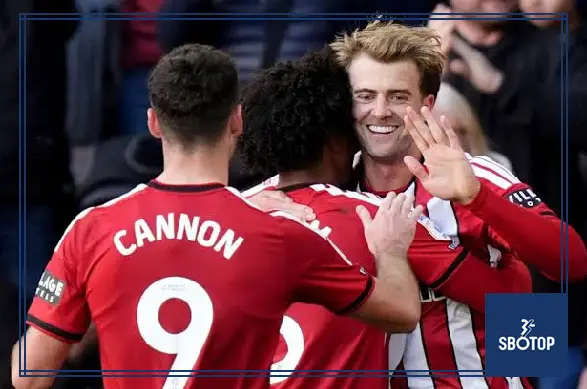
Sheffield United returned to winning ways with a 3-0 victory over Lincoln City at Bramall Lane on Saturday, 10 October 2026. Patrick Bamford scored twice, either side of a Tahith Chong goal, as the Blades turned an initially competitive Championship encounter into a convincing home win.
Bamford opened the scoring in the 43rd minute, Chong doubled the advantage in the 52nd, and Bamford completed his double in the 77th. United combined their attacking reward with a clean sheet, giving Chris Wilder’s side a substantial response to their recent setbacks.
The distinction between their league form and overall form matters. United had lost their previous two Championship matches, against Wolverhampton Wanderers and Stoke City. A defeat at Fleetwood Town in the EFL Cup between those fixtures meant they entered this match after three consecutive losses across all competitions.
This was therefore a welcome change in direction. It was also a reminder that a comfortable final score can emerge from a game in which the winners first have to withstand pressure and gradually find their attacking rhythm.
A Result That Stops the Slide
The immediate value of the victory was straightforward: three points, three goals, and an end to the losing sequence. United avoided carrying another disappointing result into the next stage of their campaign.
Their preceding league defeats had been relatively narrow, but repeated setbacks can make the next fixture increasingly important. Saturday offered an opportunity to replace that sequence with something positive.
That does not establish a lasting recovery. One victory cannot determine how the remainder of the season will unfold, nor does it automatically resolve every weakness exposed in earlier matches.
Nevertheless, this performance provided a useful starting point. United produced a decisive result rather than merely avoiding defeat, and their scoring was spread across both halves. They built an advantage, extended it, and finished the match without conceding.
Lincoln Make the Opening Competitive
Lincoln presented a genuine challenge in the early stages. Conor McGrandles tested Michael Cooper with a low effort, while Adam Reach also brought the United goalkeeper into action from a free-kick.
The visitors found promising situations before United had established control. Their attacking involvement is important to the overall picture: this was not simply a match in which Lincoln spent the entire afternoon defending.
United had to remain alert while looking for their own openings. The early exchanges gave Lincoln opportunities to influence the score, but they did not turn those moments into a lead.
From an analytical perspective, that period shows why the final margin should not be projected backwards over the whole match. United eventually won clearly, but the opening required defensive attention as well as attacking ambition.
United Grow into Their Attacking Work
As the first half developed, United began finding opportunities of their own. Joe Rothwell threatened from distance, and Ben Brereton Diaz also tested George Wickens.
Those efforts did not immediately produce a goal, but they showed the home side becoming more involved around Lincoln’s penalty area. The breakthrough eventually came through a delivery from closer to the byline rather than a long-range attempt.
That contrast illustrates a useful attacking principle without proving a particular coaching instruction. Teams often need several routes towards goal when their first opportunities do not succeed.
United’s eventual lead came from combining the supply and the finish effectively. The earlier attempts were part of the contest, but the decisive action required a player to deliver accurately and another to make the opportunity count.
Bamford Breaks Through Before the Interval
Bamford’s first goal arrived shortly before half-time. Sam McCallum delivered from the left, and the forward redirected the ball into the bottom corner.
The timing gave United a practical advantage: they could begin the second half in front. Lincoln, meanwhile, had to reassess their approach after an opening period in which they had offered a threat.
It would be speculative to describe precisely how the goal changed either dressing room. No invented team talk is needed to explain its importance.
The scoreboard provides the clearest evidence. Until the 43rd minute, the teams were level; at the interval, United held the lead. Bamford’s finish converted a competitive first half into a position from which the Blades could pursue greater control.
Chong Gives the Blades Breathing Space
Chong scored United’s second after receiving the ball from Rothwell on the left side of the penalty area. His angled effort found its way into the net in the 52nd minute.
The goal was especially significant because it arrived relatively early in the second half. Lincoln still had time to respond, but they now needed two goals to draw level.
For United, the additional margin changed the demands of the contest. They could seek further attacking opportunities while having more protection against a single concession.
That is a tactical interpretation of the score rather than a claim about Wilder’s exact instructions. The confirmed point is that Chong increased the lead. His contribution also ensured United’s scoring did not depend entirely on Bamford, even though the striker would ultimately finish with two goals.
Bamford’s Second Completes the Scoring
Brereton Diaz supplied the delivery for Bamford’s second goal, sending the ball in from the right. Bamford met it with a volley and directed it into the bottom corner.
The finish demonstrated a different method from his opening goal. His first had involved redirecting a delivery from the left; his second required a clean connection with a ball arriving from the opposite side.
With United 3-0 ahead in the 77th minute, Lincoln’s task became substantially more difficult. The home side had turned a one-goal interval advantage into a much stronger position.
Bamford deserves clear recognition for completing both opportunities. The deliveries also mattered: McCallum and Brereton Diaz helped create the situations in which his finishing could decide the match.
The Suppliers Share in the Credit
Goals naturally draw attention towards the players who finish them. This match also underlined the importance of the players providing the final pass.
McCallum assisted the opener, Rothwell supplied Chong, and Brereton Diaz created the third. United therefore received decisive attacking contributions from several members of the side.
Analytically, that distribution is encouraging because it gives a team more than one route to a goal. It does not prove that every attacking pattern will work against different opponents, but it offers examples worth retaining.
The broader lesson is about coordination. A good finish needs a usable delivery, while a promising pass needs movement and execution from its recipient. United brought those elements together often enough to turn their opportunities into a three-goal victory.
Cooper’s Late Save Protects the Clean Sheet
Lincoln continued looking for a goal even after the result had moved firmly towards United. Late in the match, Callum Elder set up Mikkel Ladefoged, whose attempt was stopped by Cooper.
That save preserved the clean sheet and added a defensive achievement to the attacking result. United did not simply score freely; they completed the match without allowing Lincoln onto the scoreboard.
A clean sheet should not be confused with a complete absence of chances. Cooper had work to do, and Lincoln had attacking moments.
The more accurate assessment is that United dealt successfully with the threats they faced. Goalkeeping and defensive intervention helped preserve the advantage, while the attackers increased it. Both sides of the performance contributed to the final result.
A Difficult Afternoon with Lessons for Lincoln
For Lincoln, the defeat contained a clear progression: a competitive opening, a concession before the interval, and two further goals after the restart.
Their early involvement matters because it identifies something more useful than a blanket description of failure. They found situations from which they could threaten, but did not produce a goal.
The timing of United’s first two strikes also gave Lincoln increasingly difficult circumstances. Chasing a match changes the balance between attacking ambition and defensive protection.
However, the score alone cannot establish why individual defensive actions failed. Claims about fatigue, communication, or confidence would require supporting evidence. The concrete areas for review are the chances left unconverted and the movements that allowed United’s finishers to receive dangerous deliveries.
Encouragement Without Premature Conclusions
United can reasonably take encouragement from the result. They ended an unwanted sequence and demonstrated that they could extend a lead rather than depend on a single goal.
What remains uncertain is whether this will become sustained form. Describing the match as a turning point is an interpretation that future results must support.
Bamford’s double also should not be used to predict his scoring rate across the season. It was an effective performance on this occasion, not a guarantee about the next opponent.
The most useful response is to retain what worked while reviewing what could improve. United’s early difficulties remain part of the evidence, even though their finishing and clean sheet ultimately produced a convincing outcome.
A Strong Response to Build Upon
The Blades left Bramall Lane with the result they needed and a performance containing several clear positives. Bamford supplied two finishes, Chong added the second goal, and the supporting players helped turn promising attacks into tangible rewards.
Cooper’s contribution ensured the afternoon also ended with a clean sheet. Lincoln’s opportunities made that achievement meaningful rather than automatic.
For Wilder’s side, the next challenge is consistency. The losing sequence has ended, but lasting improvement requires the same effectiveness across further matches.
Saturday’s victory gives United something concrete to build upon: a three-goal response, contributions from multiple players, and a result secured through both attacking execution and defensive work. Bamford provided the headline, while the collective performance supplied the foundation for a welcome return to winning ways.
Also Read: