

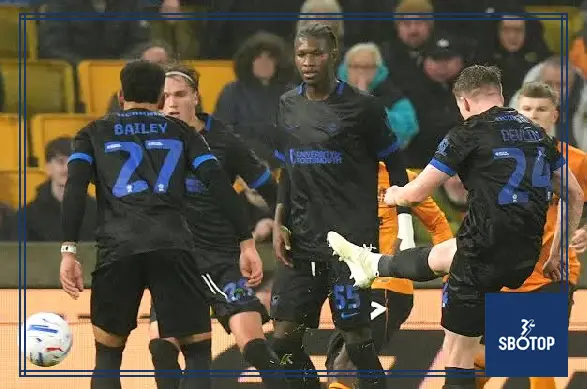
Terry Devlin delivered the decisive late intervention as Portsmouth fought back to draw 1-1 with Wolverhampton Wanderers at Molineux on October 20, 2026. Jordan James had put the hosts ahead midway through the second half, but Wolves could not turn their improved attacking display into a victory.
The Championship contest developed slowly before becoming considerably more eventful after the interval. Wolves benefited from two half-time substitutions, threatened through Tawanda Chirewa and eventually broke through when James combined with Fer López before firing home. Portsmouth remained within reach, however, and Devlin equalised in the 86th minute.
For Wolves, the result brought frustration after they had created opportunities to establish a stronger position. For Portsmouth, it rewarded persistence through a difficult second half. The contrast between those reactions captured a match in which territorial pressure and promising attacks ultimately mattered less than the ability to finish at two decisive moments.
A First Half Short on Clear Opportunities
Neither side managed a shot on target before half-time. Wolves attempted to establish attacking momentum, but their early possession did not produce the sustained threat that the home crowd wanted.
André sent an effort wide after a clearance reached him outside the penalty area. Rafiki Said later had a shot blocked as Portsmouth’s defenders recovered to protect their goal.
Those moments provided glimpses of opportunity rather than evidence of consistent penetration. Wolves needed sharper connections between their approach play and the actions taking place around the box.
Portsmouth were also limited going forward. Their task was not simply to defend, but to find enough control in possession to relieve pressure and give their attacking players opportunities. During the opening period, both teams struggled to turn promising positions into efforts that required a goalkeeper’s intervention.
Portsmouth Offer a Warning From a Free-Kick
One of Portsmouth’s more threatening first-half moments followed a free-kick that Wolves did not deal with cleanly. The resulting sequence ended with Rocco Shein sending an effort wide.
Although the visitors did not score, the incident carried significance. Set-piece danger does not end with the initial delivery or first defensive contact. The next ball can create another shooting opportunity while players are still adjusting their positions.
That is a general tactical principle rather than proof that Wolves repeatedly failed in this area. Nevertheless, the sequence showed that Portsmouth could create uncertainty without building a lengthy passing move.
At the interval, the score remained 0-0. The lack of shots on target reflected a contest that had yet to find rhythm, leaving both managers with reasons to seek improvement.
Half-Time Changes Give Wolves New Energy
Wolves head coach César Peixoto introduced James and Chirewa at the break, replacing Marshall Munetsi and Sean Neave. The changes quickly helped the hosts produce a more threatening display.
Chirewa came close when he moved inside his opponent and struck the crossbar from a tight angle. The chance gave the second half an urgency that had been missing before the interval.
James also became influential, eventually supplying the opening goal. Together, the substitutes offered a clear example of how changes in personnel can alter a match’s direction.
It would be simplistic to attribute every improvement solely to the two arrivals. Players already on the pitch contributed to the stronger attacking combinations. Even so, their involvement was central to the opportunities Wolves created after half-time.
Chirewa Comes Close to Another Decisive Contribution
Chirewa entered this fixture having scored the winning goal as a substitute against Burnley four days earlier. At Molineux, he again brought an immediate attacking threat from the bench.
His attempt against the crossbar suggested Wolves had found a player capable of disrupting Portsmouth’s defensive organisation. It also illustrated how narrow the difference can be between a promising intervention and a decisive one.
A goal at that stage would have changed the score, but its wider effect remains hypothetical. Portsmouth would still have had time to respond, and the rest of the match would have developed under different circumstances.
The confirmed point is more straightforward: Chirewa helped Wolves become more dangerous. His movement and willingness to attempt a finish gave the visitors another problem to manage.
James and López Create the Breakthrough
The opening goal arrived in the 62nd minute. James exchanged passes with López, continued into the penalty area and struck a powerful low effort past Nicolas Schmid at the near post.
The move demonstrated the value of continuing a run after releasing possession. James did not remain outside the attack after his first pass. He moved into a position where López could return the ball and create the shooting opportunity.
That coordination was an important contrast with the less productive first half. Wolves connected the build-up, movement and finish in one sequence.
For James, the goal justified his introduction. For Peixoto, it provided a tangible return from the half-time adjustments. Wolves now had an advantage to protect, but they still needed to decide how best to combine further attacking ambition with defensive security.
Wolves Cannot Find the Second Goal
The hosts continued searching for another breakthrough. Their attacking play produced further opportunities, but the margin remained narrow.
That distinction matters when assessing the outcome. Creating chances can indicate improvement, yet an unconverted opportunity does not provide the same protection as another goal. Portsmouth remained one successful finish away from drawing level.
From an analytical perspective, Wolves needed to preserve the useful elements of their second-half approach without becoming careless. Pursuing a second goal can reduce pressure by keeping the opposition occupied, but attacks also require protection behind them.
The eventual draw does not establish that Wolves should simply have become more defensive. It does show the risk of leaving a match unresolved when opportunities exist to create a more comfortable lead.
Portsmouth Stay Within Reach
Portsmouth had an opportunity to equalise before Devlin’s eventual goal, with Ebou Adams heading over from close range following a corner.
The missed chance reinforced that the visitors had not disappeared from the contest. Wolves were creating more after the interval, but Portsmouth still found moments from which they could threaten.
That resistance was important. An away team facing pressure must first avoid allowing the score to move beyond recovery. Remaining only one goal behind preserved a realistic route to a point.
However, resilience should not be confused with complete defensive control. Portsmouth had faced dangerous situations and required Wolves’ opportunities to pass without further punishment. Their achievement was to keep competing through those difficulties and remain ready when another opening appeared.
Devlin Delivers the Equaliser
Portsmouth’s reward came in the 86th minute. A free-kick from Adrian Segečić struck the defensive wall, and the loose ball reached Devlin, who sent a fine finish into the bottom corner.
The goal changed the meaning of the closing stages. Wolves had been approaching a narrow victory; suddenly, they needed another goal to recover the two points that had slipped away.
For Portsmouth, the finish justified their continued involvement in the match. Devlin reacted effectively to an opportunity that appeared after the original attempt had been stopped.
Analytically, the incident underlined the importance of the next action. Blocking a free-kick can remove one immediate threat while leaving another. Attacking players must anticipate the loose ball, while defenders need to reorganise quickly enough to prevent a clean follow-up.
Mousinho Praises His Team’s Persistence
Portsmouth head coach John Mousinho welcomed the point and highlighted his players’ determination during a demanding schedule. He acknowledged that Wolves became more dangerous after the interval, while praising his side for maintaining composure.
His assessment recognised both the difficulties and the response. Portsmouth had not dominated the second half, but they remained competitive enough to recover something from it.
Mousinho also pointed to the contribution of his squad, including Eoin Kenny’s league debut. That emphasis placed the result within the practical demands of managing several fixtures close together.
Those comments were the manager’s assessment, rather than an independent measurement of every player’s physical condition. They nevertheless explained why he valued the result: Portsmouth had found a way to remain effective despite the pressures surrounding the match.
Late Pressure Cannot Separate the Sides
Wolves responded to the equaliser by pushing forward again. López had an effort blocked, while Chirewa threatened with a deflected attempt that went narrowly wide.
There was no winning goal. The final whistle confirmed a point apiece and left the teams with contrasting evaluations.
Wolves could identify a successful half-time intervention, a well-constructed opener and a considerably stronger attacking second half. They also had to confront the failure to convert that improvement into three points.
Portsmouth could appreciate their persistence and Devlin’s finishing while recognising the periods when the hosts had caused them problems. The result offered encouragement without eliminating areas for improvement.
The defining lesson was the value of staying engaged until the match was settled. Wolves produced enough to move ahead but could not secure their advantage. Portsmouth absorbed the setback, remained within reach and seized their late opportunity. James supplied the breakthrough; Devlin supplied the answer. At Molineux, neither side found the final action needed to turn one point into three.
Also Read:
- SBOTOP: Botman Escapes Red but Webb’s Explanation Exposes the Difficult Boundary of VAR Intervention
- SBOTOP: Ten Hag Revisits United: Unfulfilled Assurances the Kane Ambition and a Wembley Triumph That Could Not Secure His Future
- SBOTOP: Kulusevski’s Comeback Crowns Tottenham’s Long-Awaited Breakthrough Against Coventry