

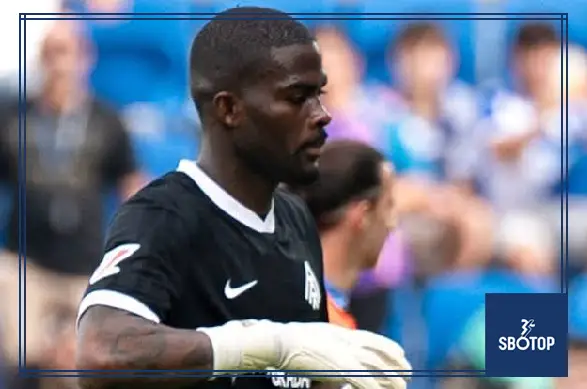
The Spanish Football Federation has suspended FC Andorra goalkeeper Jesús Owonofor 12 matches following the collision in which Tenerife forward Jesús de Miguel was critically injured. De Miguel, 30, died in hospital on 3 November 2026, a day after the two players collided during a Spanish second-division match. The federation’s disciplinary committee announced its decision on 13 November, imposing the maximum suspension available under the rule it applied.
The committee based its ruling on the referee’s account of a raised-leg challenge involving excessive force while the ball was being contested. It also took into account the gravity of what followed. A separate federation decision confirmed that the 2–2 score at the time play stopped would stand. Spanish police opened an investigation under judicial supervision. The federation’s ruling addresses the challenge under football’s disciplinary rules, while the judicial inquiry examines the circumstances of De Miguel’s death.
The Match Stopped Deep into Added Time
Tenerife hosted Andorra at the Estadio Heliodoro Rodríguez López on 2 November in the 12th round of the Segunda División season. De Miguel came on in the second half for Enric Gallego, who had scored a penalty to put Tenerife 2–0 ahead before the break. Andorra recovered late in the match, scoring through a Lautaro de León penalty in the 83rd minute and a Marko Golubović equaliser in the 88th.
The score was still 2–2 deep into added time when Owono left his goal to challenge for an aerial ball near midfield. The goalkeeper and De Miguel collided. Referee Manuel Ángel Pérez Hernández showed Owono a straight red card and recorded the incident at 90+6 in his match report. His account described Owono making forceful contact with a raised leg as the players contested the ball.
Players signalled for medical assistance, and staff treated De Miguel on the pitch before he was carried off on a stretcher. An ambulance took him to the Hospital Universitario Nuestra Señora de Candelaria, where he was admitted to intensive care. Tenerife confirmed the following morning that he had died. The club said his death had occurred at 8 a.m. local time.
The referee’s report also recorded what happened after the stoppage. The officials returned to the dressing rooms and consulted the captains and representatives of both teams. The clubs said their players were in no emotional condition to continue. With agreement among those involved, the referee suspended the match.
Why the Committee Imposed the Maximum Suspension
The disciplinary committee found that Jesús Owonofor had committed a serious infringement under Article 102 of the federation’s disciplinary code. The provision covers violence against an opponent during play that causes serious injury. The committee imposed a 12-match suspension and the accompanying fines provided for under Article 52. Its published decision records that none of the interested parties submitted observations on the facts set out in the referee’s report within the applicable period.
The panel identified specific features of the challenge in explaining why it had chosen the maximum. It relied on the referee’s description of Owono’s raised leg, the force of the contact and the fact that the ball was still in contention. It also noted that De Miguel required treatment on the pitch and had to be taken off on a stretcher. The ruling acknowledged his death as part of the circumstances that made the case exceptionally serious.
The red card and the suspension were decisions taken at different stages. Pérez Hernández dismissed Owono during the match and documented the reasons for doing so. The committee subsequently considered the recorded conduct and determined the length of the ban under the code. In opening its written decision, the panel expressed condolences to De Miguel’s family, friends, teammates and club.
Why the 2–2 Score Was Allowed to Stand
The abandoned fixture left the federation with a separate decision about the result. The referee recorded that around two minutes remained and that, had play resumed, Tenerife would have restarted with a direct free kick around midfield. Both teams had already played the full 90 minutes, and the score was level when the collision occurred.
The federation’s competition authorities ordered that the score stand. Their reasoning centred on the exceptional circumstances and the prospect of asking players to return to the exact point at which the match had stopped. Confirming the draw meant the teams would keep the result recorded on the field without having to replay the fixture or complete its remaining minutes.
That decision also reflected the way the officials had stopped the match in the first place. Both teams had told the referee they were unable to carry on after De Miguel was taken off. The decision to preserve the score meant they would not have to recreate the restart described in the referee’s report. Tenerife and Andorra each received one point.
The Police Inquiry and Owono’s Response
Spain’s National Police opened an investigation into the circumstances of De Miguel’s death, including possible involuntary manslaughter. Judicial authorities in the Canary Islands described the opening of an inquiry as routine in the circumstances of a death considered non-natural. The inquiry should be understood at that stage. The decision to investigate does not establish that a charge will follow or that criminal responsibility has been determined.
Owono expressed grief in a statement released through Andorra. He said he was struggling to process what had happened and was thinking of De Miguel, his family and the people who loved him. He also said he would address what followed with respect. The goalkeeper withdrew from Equatorial Guinea’s squad for its November Africa Cup of Nations qualifiers against Zimbabwe.
Andorra head coach Carles Manso said on 12 November, the day before the suspension was announced, that Owono had yet to decide whether he would return to competition. Manso said the club would give him time and space to make that decision. The disciplinary ruling established how many matches Owono would be suspended for. His own decision about a return to football remained open when Manso spoke.
Tenerife Remember Their Number Nine
De Miguel was born in Madrid in 1996 and joined Tenerife from Castellón ahead of the 2025/2026 season. He scored 11 goals for Tenerife in that campaign. At the Heliodoro Rodríguez López, he wore the number nine, which became the focus of several tributes after his death. Supporters returned to the ground on 7 November for a memorial organised by the club.
The ceremony began with a minute’s silence and was followed by applause. Gallego, Tenerife’s captain, shared memories of his teammate, as did club president Felipe Miñambres and majority shareholder Rayco García. Thousands of supporters gathered to say goodbye in the stadium where De Miguel had played his final match. The memorial gave his teammates and the people who had watched him play a chance to remember him together.
The response extended beyond Tenerife. The Spanish federation postponed matches scheduled for 3 November, including ties in the Copa del Rey and Copa de la Reina. UEFA announced periods of silence before its club matches that week. Teams across Spain offered condolences, and at Tenerife’s first match after his death, their opponents took part in a tribute that placed De Miguel’s shirt at the centre of the occasion.
De Miguel’s Shirt Returns to the Pitch Against Ceuta
Tenerife resumed their league campaign at home to Ceuta on 15 November. Before kick-off, players from both teams wore tribute shirts bearing De Miguel’s name and number. Gallego placed his teammate’s jersey on the pitch, and Tenerife’s players gathered around it. Both sides observed a moment of silence at midfield. Play then paused in the ninth minute so players, coaches and supporters could applaud.
Shortly before half-time, Tenerife midfielder Nacho Gil scored the opening goal. He was handed De Miguel’s shirt and held it up in front of the crowd. The gesture carried the remembrance from the ceremony before kick-off into the match itself. Neal Viereck later added Tenerife’s second goal in a 2–0 victory.
By the time Tenerife played Ceuta, the football authorities had settled the result of the Andorra fixture and announced Owono’s punishment. The police inquiry and the goalkeeper’s decision about his future remained separate matters. For Tenerife, the first match back gave the club a chance to honour a teammate in front of the people who had supported him. They marked the ninth minute with applause, and when Gil scored, the shirt they raised was De Miguel’s.
Also Read: