

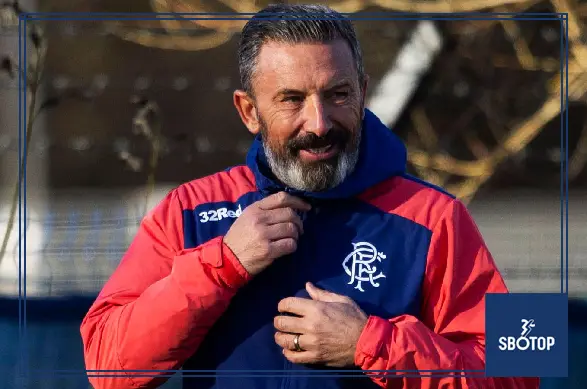
Derek McInnes had encouraging news for Rangers before their trip to Motherwell on 21 November. Lawrence Shankland and Cammy Devlin were running again after hamstring injuries, while Ross McCrorie and Daisuke Yokota had resumed training. Shankland and Devlin still needed more time before they could play. Rangers then won 2–1 at Fir Park and 3–2 against Aberdeen at Ibrox, taking six points from two Scottish Premiership matches in four days while both players continued their recoveries.
McInnes also addressed the criticism aimed at Scotland head coach Sébastien Pocognoli after a difficult start to his tenure. He argued that some of it had gone too far and that Pocognoli needed time to work. At club level, McInnes put the emphasis on winning as a way to build belief. The two league games that followed showed how much Rangers could gain from that approach and how much they still had to improve.
What McInnes Confirmed About the Injured Pair
Speaking on 19 November, McInnes said Shankland and Devlin were progressing as expected. Both had resumed running as part of their rehabilitation and were doing light work away from the main squad. They remained unavailable for the Motherwell match. The team news ahead of Aberdeen on 24 November still listed them at the running stage, and neither appeared in the matchday squad at Ibrox. McInnes’s initial update gave no confirmed comeback date for either player.
That distinction matters during a congested spell. Running again is a visible step forward, but a match asks for repeated accelerations, changes of direction and reactions to opponents. A striker chasing a loose ball in the penalty area and a midfielder turning to cover a counterattack have little control over when they need to go at full speed. Until Shankland and Devlin are ready for those demands, McInnes has to pick teams on the assumption that others will carry those responsibilities.
Shankland’s Absence Has Changed the Attack
Motherwell was a significant fixture in Shankland’s recovery story. The Scotland striker injured his hamstring early in Rangers’ 1–0 victory over the same opposition on 5 September. He had joined from Heart of Midlothian in the summer on a two-year deal with an option for another season. His injury came after Rangers had already lost fellow forward Youssef Chermiti to a long-term knee injury, reducing McInnes’s options through the middle.
The two November wins underlined how important Ryan Naderi has become in their absence. His late effort at Fir Park deflected off Martin Moormann and went in for the winner. Against Aberdeen, he equalised at the start of the second half and helped set up Djeidi Gassama’s goal almost immediately afterwards. In one game, he supplied the decisive moment near the finish. In the other, he was involved twice in quick succession as Rangers overturned a half-time deficit.
Shankland’s eventual return would give McInnes more ways to manage those games. He could bring on a fresh centre-forward if Rangers needed a goal or change who led the line when fixtures were close together. Naderi’s contribution also gives the manager room to bring Shankland back gradually, if that is what his recovery requires. Any decision about how they fit into the same side can wait until both are available.
Devlin’s Recovery Raises a Different Selection Question
Devlin, another summer arrival from Hearts, suffered his hamstring injury after coming on as a substitute in Rangers’ 1–0 win over Celtic at Celtic Park. The Australian’s return would give McInnes another midfield option for games in which Rangers need to compete for loose balls, press the opposition or protect a narrow lead. The composure to win possession and then keep it can matter as much as the initial challenge, particularly when the game has become stretched.
Aberdeen supplied a clear example of the problem Rangers have had to solve without him. After Nicolas Raskin made it 3–1, Findlay Marshall quickly reduced the deficit and the visitors kept pushing for an equaliser. Rangers had already done enough scoring to win. The challenge was to slow the game, keep possession for longer and deny Aberdeen the chance to build another attack. Devlin’s availability would give McInnes an extra choice in that situation, although it would take matches to see how the recovering midfielder fits into the team.
McCrorie and Yokota Move Closer to Selection
McCrorie and Yokota were further along. McCrorie was back in contention ahead of Motherwell, while Yokota was expected to resume full training the following week. By the time Rangers prepared to face Aberdeen, both were back in full training. McInnes also explained that Kevin Kelsy’s delayed return from international duty was down to travel. Kelsy subsequently started against Aberdeen as the manager made three changes from the win at Fir Park.
The changes showed how quickly a manager can need more options. Three days after a tight away win, Rangers faced opponents who had also won at the weekend. McInnes changed personnel for the home match, but it still took a second-half surge to turn the game. When players are available across several positions, a manager can use the bench to respond to what is happening on the pitch as well as to manage the short turnaround between fixtures.
McInnes Calls for Patience With Pocognoli
McInnes’s comments about Pocognoli came after Scotland’s 4–0 Nations League defeat to Switzerland in St Gallen. Scotland had beaten North Macedonia days earlier, but the heavy loss put the new head coach under scrutiny. Pocognoli had taken the job in August. McInnes acknowledged why the recent results and performances had prompted criticism, while arguing that some of the reaction had been excessive so early in his tenure.
At Rangers, the discussion about performances had a different context. McInnes said before the Motherwell match that belief grows through winning games. After the victory, he rated his team’s display highly. The result also left room for a less generous reading of the performance. Rangers had opened the scoring early and still needed a deflected effort near the end to take all three points. For McInnes, the persistence that produced that winner was part of the performance he was judging.
Two Wins Narrow the Gap but Leave Work to Do
Emmanuel Fernandez gave Rangers the lead at Fir Park with a header from Kim Min-su’s corner. Jake Girdwood-Reich equalised with a volley, and Motherwell stayed level until Naderi’s deflected effort settled the match. Rangers finished the night four points behind Celtic. That made the late goal valuable beyond the immediate result. Dropping points would have increased the pressure going into the Aberdeen game, whereas the win gave Rangers a chance to move within a point of the leaders.
Aberdeen made that opportunity difficult to take. Brad Lyons headed the visitors in front in the first half, and they had chances to extend their lead. Naderi, Gassama and Raskin scored in a burst after the interval to put Rangers 3–1 up. Marshall brought Aberdeen back within a goal, forcing the home side to defend its advantage through a tense finish. The 3–2 victory cut Celtic’s lead to one point and showed how quickly Rangers could change a match when their forwards and midfielders combined at pace.
The two wins also highlighted different aspects of playing with a lead. At Motherwell, Rangers scored early and let the hosts back into the contest. Against Aberdeen, they took charge after half-time and conceded shortly after scoring their third. Those spells give McInnes something specific to address while results are going his way. A team that can keep the ball or threaten again immediately after scoring makes it harder for opponents to turn the next few minutes into a period of sustained pressure.
Rangers Can Afford to Wait for the Next Step
For now, the practical gain from the two victories is that Rangers kept pace in the title race while Shankland and Devlin continued their rehabilitation. Naderi’s influence in both games gave McInnes an answer up front, and the return of McCrorie and Yokota to full training broadened his choices elsewhere. The next significant update for Shankland and Devlin will come when they can train fully with their teammates and then make a matchday squad.
McInnes has seen his team win a tight game away from home and recover from a poor first half at Ibrox. With Celtic only a point ahead after the Aberdeen match, the value of those six points is clear. The next test is whether Rangers can sustain the attacking rhythm they found after half-time at Ibrox and give themselves more comfortably managed finishes. Getting Shankland and Devlin back would give McInnes more ways to do both.
Also Read: