

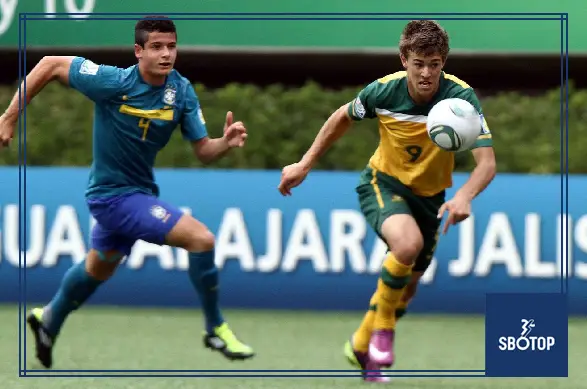
At a team meeting during the 2026 FIFA Under-17 World Cup in Qatar, Australia’s players heard about a striker who had once been in their position. Dylan Tombides was 17 when he represented Australia at the same tournament in Mexico in 2011. He scored in an opening win over Côte d’Ivoire and was diagnosed with testicular cancer after a random anti-doping test led to further investigation. Fifteen years later, his brother Taylor spoke to another Australian squad about what to do if they noticed a change in their own bodies.
The session was part of a programme run by FIFA Medical and the DT38 Foundation, which Dylan’s family established in his memory. By 25 November, FIFA said 43 squads had received briefings. Players were offered educational materials and a free ultrasound in Doha if they had concerns. Six had already requested and undergone scans. For some of the teenagers in Qatar, a conversation that began with the story of another footballer had already led to a medical appointment.
The Lump Tombides Noticed Before Mexico
The first sign came before the World Cup. According to his family, Tombides found a lump in April 2011. It caused no pain at first. When he later felt discomfort, he initially put it down to the amount of football he was playing. He went to his doctor after the discomfort became more consistent and was told the lump was a cyst. That explanation was still the one he had when he travelled to Mexico with Australia’s under-17s.
A random anti-doping test during the tournament prompted further tests, which uncovered a tumour. The sequence matters to the education programme. Tombides had noticed a change and sought medical advice. His family uses that part of his experience to explain why a young person should feel able to go back to a clinician if a change persists or if the initial explanation leaves them concerned. An ultrasound is one of the tests clinicians can use to investigate testicular symptoms.
His family has spoken about wishing an ultrasound had been arranged earlier. Whether an earlier scan would have changed his outcome cannot be established. The more useful point for the players hearing his story is what they can do when they find something unfamiliar. They can describe when they first noticed it, explain how it has changed and ask the clinician whether an ultrasound or further assessment is appropriate.
The Footballer Behind the Foundation
Long before his story became part of a health briefing, Tombides had built a football career across several countries. He played youth football in Perth, continued playing after his family moved to Macau and joined West Ham United in 2008. He progressed through the academy and reserves to train around the senior side. His goal against Côte d’Ivoire in Mexico came during a period when he was getting closer to first-team football in England.
Tombides made his senior West Ham debut in September 2012, coming off the bench in a League Cup tie against Wigan Athletic while undergoing treatment for cancer. He went on to represent Australia again at youth level, playing at an under-22 tournament in Oman in January 2014. He died on 18 April 2014, aged 20. West Ham retired his number 38 shirt, and that number became part of the name of the foundation his mother, Tracy, and brother Taylor co-founded.
For the Australian players in Qatar, the age and setting made the story unusually close to their own lives. Tombides had gone abroad with teammates, put on the national shirt and scored at a World Cup. Taylor, himself a former Australia youth international, could explain what that opportunity had meant to both brothers. He could also talk about a subject that a teenager might hesitate to raise in a room full of teammates. Taylor said the players asked good questions, an early sign that they felt able to engage with the subject.
From a Team Briefing to a Private Appointment
FIFA Medical and the foundation took the sessions directly to squads, including a presentation at Australia’s team hotel. They used a short animation and handed out packs with materials on how to check for changes. The organisers encouraged players to get familiar with what feels normal for them and to speak to a health professional if something changes. The offer of a free scan gave players a route to follow up during the competition.
The six scans reported by FIFA show that some players used that route. FIFA disclosed how many underwent scans but gave no results. A player might ask for a scan because of a lump, discomfort or another concern. Ultrasound can help clinicians investigate what is causing a symptom, and many testicular changes have causes other than cancer. Keeping the focus on access to assessment also leaves each player’s medical information where it belongs, in a private conversation with their healthcare team.
There is a practical advantage to pairing the briefing with an appointment option. A player away from home may have questions about whom to approach or whether to wait until after the tournament. In Qatar, there was a way to raise a concern during the event and have it investigated. The programme gave players room to listen and ask general questions together, then seek individual care if they needed it.
What Young Players Are Being Asked to Notice
A new lump, swelling or change in the size, shape or feel of a testicle warrants medical assessment. So does an ache or discomfort that persists, or a scrotum that feels unusually heavy or firm. A change can matter even when it is painless, as Tombides’s experience illustrates. Sudden, severe testicular pain requires emergency assessment because it can be a sign of a different problem that needs urgent treatment.
The campaign encourages players to check themselves about once a month so they become familiar with their own bodies. That advice is about noticing changes. In Qatar, the scans were offered to players with concerns, and there is no standard routine screening test for people without symptoms. For someone who has found a change, the next step is to speak to a clinician, who may examine the area and arrange an ultrasound or other tests. Testicular cancer is generally highly treatable, and finding it early can make treatment easier.
The language used to start that conversation can be simple. A player can say they have found a lump, that something feels different or that an ache has lasted longer than expected. Giving a clinician a rough timeline can help, including whether the change has grown or whether discomfort comes and goes. A teenager who feels awkward can ask a parent, trusted adult or team doctor to help arrange the appointment. The squad meeting gives players the vocabulary to take that first step in private.
A Lesson Players Can Take Back to Their Clubs
An international tournament brings players together for a few weeks before they return to clubs, schools and academies. FIFA Medical Director Andrew Massey said he hoped the teenagers would share what they had learned with teammates at home. He also said FIFA Medical wanted to repeat the initiative annually for players in the 17-to-20 age range. That was an aim expressed during the tournament. The briefings delivered in Qatar, along with the scans already requested, were the confirmed work.
For an academy, the example from Qatar suggests a straightforward way to make the subject easier to discuss. Players already know who to tell about a sore ankle or a muscle injury. A health briefing can make it just as clear whom they can approach about a testicular concern, whether that is a team doctor, another clinician or an adult who can help them get an appointment. It can also give a teammate enough information to respond sensibly if a friend asks what to do.
The long-term reach of the programme will depend on what happens once the players go home. The number of squads briefed tells FIFA who heard the message in Qatar. The number of scans shows that some players acted on it during the tournament. Neither measure can capture the future conversation in which a player tells a friend to get a lump checked or decides to seek advice about a change they had been hoping would go away. That is where the most personal part of Tombides’s story still matters. He was already good enough to play at a World Cup, and he still needed help understanding what a change in his body meant. The players following him now know how to start that conversation.
Also Read: