Erling Haaland did not dominate every minute against Ivory Coast. He did not spend the full match bullying defenders, collecting chances, and making the round-of-32 tie look easy. For long stretches at Dallas Stadium, he was crowded, starved of service, and forced to wait while Norway struggled to turn possession into a clean path toward goal.
Then, with the match drifting toward extra time and Norway’s World Cup dream in danger of becoming more complicated than expected, Haaland appeared where great strikers always seem to appear. Four minutes from the end of normal time, he converted the decisive chance to give Norway a 2-1 victory, sending his country into the last 16 and setting up a blockbuster clash with Brazil. Reuters reported that Haaland’s 86th-minute winner was his fifth goal of the tournament and secured Norway’s first-ever World Cup knockout-stage win.
The finish was not the cleanest goal of Haaland’s career, but it may become one of his most meaningful. Norway had waited 28 years to return to this level of World Cup relevance, and one of the game’s most feared centre-forwards carried them into a meeting with the five-time champions. Football history is not always written with perfect technique. Sometimes it is written by being in the right place when pressure becomes suffocating.
For Norway, this was not just a win. It was a national moment.
Norway Had to Survive Before They Could Celebrate
The final scoreline suggests a narrow but controlled knockout victory. The match itself was far messier. Ivory Coast were not passive opponents waiting for Haaland to decide their fate. They started aggressively, found routes down the flanks, and used their speed to unsettle Norway’s defensive shape.
Nicolas Pepe was particularly active on the right, while Ghislain Konan and Yan Diomande helped Ivory Coast threaten before Norway settled. Reuters noted that the African side shaded the early exchanges, with Pepe involved in dangerous attacks and Konan going close after bursting into the area.
That early pressure mattered because it showed this was never going to be a simple Haaland showcase. Norway were forced to defend, adjust, and wait for their rhythm. The match tested their patience as much as their quality. Haaland, meanwhile, spent much of the opening period on the edges of the game, often surrounded by defenders and lacking the early delivery he needs to become devastating.
But Norway gradually improved. Martin Odegaard began to find more space, the tempo increased, and Antonio Nusa produced the first true moment of attacking quality. In the 39th minute, Nusa stepped inside onto his right foot and curled a superb finish beyond Yahia Fofana to give Norway the lead. Reuters described it as a sweetly struck goal after Odegaard had worked the ball to him on the left.
It was the kind of goal that can settle nerves. Instead, it set up a second half full of tension.
Amad Diallo Gives Ivory Coast Hope
Ivory Coast did not fade after falling behind. They grew stronger, pushed higher, and kept asking whether Norway could manage the knockout pressure. That persistence eventually brought reward through Amad Diallo.
Introduced in the second half, Amad changed the energy of the match. He cleared a Norway effort off the line before making a decisive impact at the other end. In the 74th minute, he combined sharply with Pepe, held off pressure, moved past Sander Berge, and struck an equaliser that bounced beyond Orjan Nyland. Reuters reported that Amad’s goal cancelled out Nusa’s opener and sparked a major Ivory Coast celebration.
At that stage, the psychological balance shifted. Ivory Coast had momentum. Norway were suddenly facing the possibility of extra time, fatigue, and a penalty shootout. The underdogs had found belief, and Norway’s earlier control began to feel fragile.
Ivory Coast coach Emerse Fae later said his young side had fought from the first minute to the last, but he also admitted that inexperience played a role. Reuters reported that Fae believed his players should perhaps have tightened up defensively after the equaliser rather than chasing a quick second goal.
That was the danger. Ivory Coast had momentum, but momentum can also tempt a team into opening spaces. Against Norway, and especially against Haaland, the smallest opening can be fatal.
The Moment Haaland Waited For
For most of the match, Haaland had been peripheral by his standards. Reuters noted that he had been on fire earlier in the tournament after scoring four goals in Norway’s first two group matches, but against Ivory Coast he was kept quiet for much of the 90 minutes.
That is often the challenge of building a team around a striker like Haaland. His presence changes everything, but he still needs the right kind of service. He can run behind, attack early crosses, and punish space in the box, yet if the ball arrives late or not at all, his influence can disappear for long spells.
Norway’s wide players and midfielders did not always find him quickly enough. Alexander Sorloth and Nusa had moments, but they also held the ball when Haaland wanted early delivery. Odegaard tried to thread passes into dangerous zones, but Ivory Coast’s back line limited the space.
Then the pattern changed. Substitute Oscar Bobb found Patrick Berg inside the area, and Berg chose the simple but devastating option: an early ball across goal. Haaland was there. With Fofana stranded, the Manchester City striker forced the ball over the line to make it 2-1. Reuters reported that Berg’s assist set up Haaland to score into an empty net and that Nyland later protected the lead by saving Amad’s stoppage-time free-kick.
It was not Norway’s most fluent attacking move of the night. It was their most important.
A Goal That Changed Norway’s Tournament
Haaland’s winner did more than send Norway through. It changed the scale of their World Cup story. Before the tournament, Norway were dangerous because of their stars. After this match, they became a team with history behind them and belief in front of them.
Reuters reported that this was Norway’s first victory in a World Cup knockout match. That single fact gives the result emotional weight beyond the scoreline. For a country whose previous men’s World Cup appearance came in 1998, this was a breakthrough that connected generations of supporters.
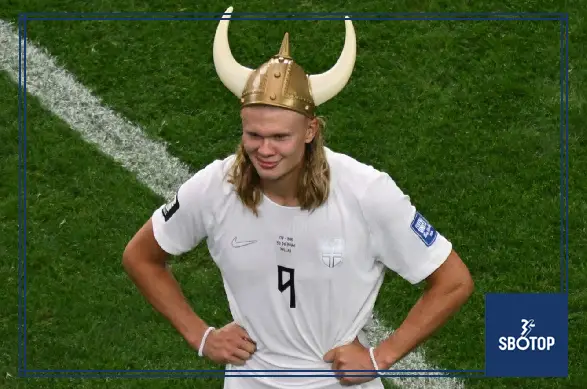
Haaland understood that immediately. After the match, he spoke about what the win meant for Norway, describing the sense of unity and national emotion around the team. Reuters also reported that he celebrated with supporters after the final whistle, even appearing on the field in a horned Viking helmet.
That image will live in the tournament’s memory. Haaland is often discussed through numbers: goals, records, expected goals, conversion rates, speed, strength. But this was about something less statistical. It was about a superstar carrying a national football identity into a new place.
Norway did not just win. They announced themselves.
Ivory Coast Leave With Regret and Promise
For Ivory Coast, the defeat was painful because they had enough moments to imagine a different ending. They pressed well, created pressure, and found an equaliser that seemed to place Norway under real strain. But knockout football punishes every lapse.
Fae’s post-match reflections were brutally honest. Reuters reported that he felt his side lacked maturity at crucial moments, especially after equalising, and that Ivory Coast should have been more pragmatic once they had worked so hard to get back into the game.
That assessment feels fair. Ivory Coast were brave, but bravery alone is not always enough in knockout football. Their desire to push for a second goal left the match stretched. Norway did not need many clean chances. They needed one.
Still, Ivory Coast’s campaign should not be reduced only to the disappointment of elimination. This was their first World Cup since 2014, and Reuters noted that they reached the knockouts after finishing second in their group behind Germany, having beaten Ecuador and Curacao.
There is a foundation here. Amad’s performance, the energy of the young group, and the experience gained on this stage can all serve the future. The lesson is harsh, but valuable: at the World Cup, emotional momentum must be matched by defensive control.
Ivory Coast learned that against one of football’s most ruthless finishers.
Brazil Await After Their Own Escape
Norway’s reward is one of the biggest possible tests in world football: Brazil. The five-time champions booked their place in the last 16 after surviving their own scare against Japan, coming from behind to win 2-1 in Houston.
Reuters reported that Japan led through Kaishu Sano in the 29th minute before Casemiro equalised with a 56th-minute header from a Gabriel Magalhaes cross. Gabriel Martinelli then scored deep in stoppage time, with Reuters noting that his 95th-minute winner was the latest normal-time winning goal in a World Cup knockout match since 1966.
That result gives the Brazil-Norway meeting extra intrigue. Both teams reached this stage through late drama. Both were tested. Both needed a decisive moment from a major attacking figure. Brazil needed Martinelli. Norway needed Haaland.
The difference is historical expectation. Brazil are built to win World Cups. Norway are discovering the emotional size of a tournament run. That contrast will shape the match. Brazil will carry pressure. Norway will carry momentum.
Carlo Ancelotti’s side have more depth, more experience, and a wider collection of match-winners. But knockout football has already shown that favourites can suffer. Norway have Haaland, Odegaard, belief, and the freedom of a team that has already made history.
Solbakken’s Respectful Warning to Brazil
Norway coach Stale Solbakken knows the scale of the challenge. He has been careful not to turn the Brazil match into empty theatre. After a locker-room video showed him saying Norway were coming for Ancelotti, Solbakken later clarified that it was not meant as provocation and praised the Brazilian coach’s status in European football. Reuters reported that Solbakken said Brazil are favourites and strong candidates to win the tournament, while also insisting Norway are not entering the match just for the experience.
That balance matters. Norway cannot afford to approach Brazil with fear, but they also cannot pretend this is an ordinary opponent. Brazil’s attacking quality, tournament pedigree, and individual brilliance make them dangerous even when they are not at their fluent best.
Solbakken’s task is to keep Norway realistic without making them cautious. Against Ivory Coast, Norway sometimes sat deep and invited pressure. Against Brazil, that approach could become dangerous if they cannot escape with clean passes. But if they press recklessly, Brazil can punish the space behind them.
This is where Odegaard becomes almost as important as Haaland. Norway need someone to control breathing space in midfield, slow the game when necessary, and pick the moment to release the striker. Haaland can finish the story, but Norway need Odegaard to help write it.
The Recovery Question Before Brazil
The emotional high of beating Ivory Coast comes with a physical cost. Norway’s players had to endure a tense knockout tie, and Haaland himself admitted fatigue after the match. Reuters reported that concerns around recovery became a major talking point before the Brazil clash, especially for Haaland and Odegaard, while Solbakken acknowledged that Haaland had been tired during the Ivory Coast match.
That could be decisive. Brazil also had a demanding game against Japan, but they have greater squad depth. Norway rely more heavily on their core stars. If Haaland and Odegaard are below full sharpness, Norway’s attacking threat becomes easier to contain.
Still, fatigue can work in strange ways during a World Cup. Emotion can carry players through moments that logic says should be difficult. Norway are riding a national wave. Reuters reported that demand for Norway shirts has surged back home ahead of the Brazil clash, with the red home jersey becoming especially popular after the country’s first men’s World Cup appearance since 1998.
That tells us something about the mood. Norway are not merely preparing for another match. They are living through a football moment that has gripped the country. Physical recovery matters, but emotional energy matters too.
Also Read:
- SBOTOP: Rangers Land Dan Neil on Three-Year Deal After Beating Southampton to Former Sunderland Captain
- SBOTOP: Penalty Stutter Run-Up Faces World Cup Reckoning After Germany and Netherlands Shootout Pain
- SBOTOP: England Hit by Reece James and Jarell Quansah Injury Blows Ahead of DR Congo Knockout Clash