


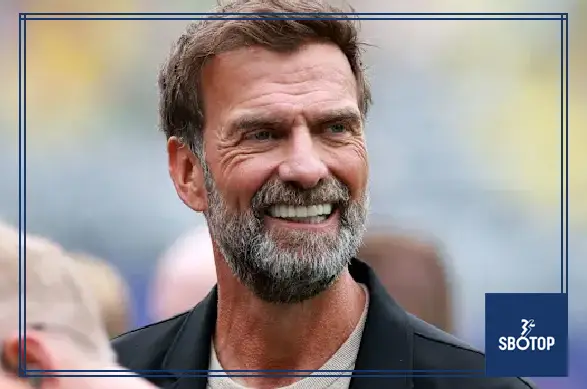
Jürgen Klopp is preparing for a possible return to frontline management with the people he trusts most beside him. The former Liverpool manager has emerged as the German Football Association’s clear first choice to lead the national team following Julian Nagelsmann’s departure, and discussions over the structure of Klopp’s proposed appointment have moved into an advanced stage.
Klopp is expected to reunite with former Liverpool assistants Peter Krawietz and Pepijn Lijnders should an agreement be completed. The pair played major roles throughout his successful period at Anfield, helping Liverpool win the Premier League, Champions League, Club World Cup, FA Cup and League Cup.
Their possible arrival suggests Germany are not simply attempting to appoint a famous head coach. They are considering the creation of a complete coaching operation built around methods, relationships and responsibilities already tested at the highest level.
The negotiations remain complicated because Klopp is under contract with Red Bull as its Head of Global Soccer until 2029. However, the DFB and the company are discussing an unusual arrangement that could allow him to take charge of Germany without a conventional compensation payment.
Under the reported proposal, Klopp would leave his executive football position but continue representing Red Bull as a brand ambassador. The solution would enable the company to retain its public association with one of football’s most recognisable coaches while allowing the DFB to secure its preferred candidate without paying a substantial release fee.
The structure would be unconventional, but Germany’s circumstances demand an ambitious response.
Germany Turn to Klopp After Another World Cup Failure
The DFB moved quickly toward Jürgen Klopp after Germany’s disappointing elimination from the 2026 World Cup.
Nagelsmann’s team were beaten by Paraguay on penalties in the round of 32, extending a deeply concerning sequence for one of international football’s traditional powers. Germany had already exited at the group stage in both 2018 and 2022, meaning three consecutive World Cups ended far earlier than expected.
The country that lifted the trophy in 2014 has now gone more than a decade without winning a World Cup knockout match.
Nagelsmann initially appeared willing to continue, but the DFB concluded that another reset was required after reviewing the campaign. The federation subsequently confirmed that it would open discussions with Klopp, who had already indicated that he was generally willing to consider the position.
Klopp responded by saying he felt fully recharged and ready for the challenge. He also made clear that Germany’s problems extended beyond one manager and would require deeper conversations about the direction of the national team.
That observation is important.
Germany’s decline cannot be explained solely through tactical decisions made by Nagelsmann, Hansi Flick or Joachim Löw. The national team has struggled with squad balance, defensive security, player development and the enormous psychological burden created by repeated tournament failure.
Appointing Klopp would provide energy and authority, but it would not automatically solve every structural weakness.
The DFB appears to understand that reality. Reports suggest the federation wants Klopp to contribute not only as first-team coach but also to the broader sporting direction of German football.
Klopp Wants Familiar Faces Around Him
The expected involvement of Krawietz and Lijnders is one of the strongest indications that Klopp is taking the opportunity seriously.
Krawietz has worked with Klopp for much of his managerial career and became widely known at Liverpool for his detailed opposition analysis. His work helped translate information about opponents into practical match plans, giving Klopp and the players clear tactical guidance before major fixtures.
Lijnders became an increasingly influential figure on the training field.
The Dutch coach was heavily involved in designing sessions, developing pressing structures and introducing tactical ideas. While Klopp remained the central leader and communicator, Lijnders helped shape the daily football programme that supported Liverpool’s intense playing style.
Their responsibilities were different but complementary.
Krawietz provided analytical depth. Lijnders brought energy and detailed coaching to the training ground. Klopp connected the technical work to the emotional identity of the team.
Recreating that partnership with Germany would reduce the uncertainty attached to taking over an international squad.
Klopp would not need to spend months discovering how his assistants communicate, divide responsibilities or respond under pressure. The three men already understand one another’s methods and expectations.
Reports indicate that Krawietz and Lijnders are expected to replace members of Nagelsmann’s former staff, including Benjamin Hübner, Benjamin Glück, Alfred Schreuder and Bram Geers. Goalkeeping coach Andreas Kronenberg may remain, while DFB youth-development director Hannes Wolf could receive an expanded role.
That combination could provide continuity in selected areas while allowing Klopp to establish a new identity.
Why a Staff Reunion Matters in International Football
National-team management differs significantly from club football.
At Liverpool, Klopp and his assistants worked with players almost every day. They could repeat tactical exercises, study previous matches and gradually correct weaknesses across a long season.
International coaches have far less time.
Players arrive from different clubs, tactical systems and domestic competitions. A coaching staff may have only a few training sessions before an important qualifier or Nations League match.
That reality increases the value of clarity.
Klopp needs assistants who can communicate his principles quickly and efficiently. Every session must have a specific purpose because there is little time available for experimentation.
Krawietz and Lijnders already understand the fundamental ideas Klopp is likely to introduce: aggressive pressing, collective movement, vertical attacking and strong emotional commitment.
Their familiarity could help Germany adopt those principles more rapidly.
The players would also receive a consistent message.
Confusion can develop when a head coach and assistants interpret tactical instructions differently. Klopp’s former Liverpool team already share a common language, making it easier to deliver the same ideas through video analysis, training exercises and individual conversations.
The reunion would therefore represent more than nostalgia.
It would be a practical attempt to transfer a proven working structure into international football.
The Red Bull Contract Is the Main Complication
Klopp joined Red Bull after leaving Liverpool in 2024, beginning his role as Head of Global Soccer in January 2025.
The position allowed him to remain involved in football without returning immediately to the demands of daily coaching. He provided strategic guidance across Red Bull’s network, supported sporting directors and contributed to coaching development, recruitment and global scouting.
Klopp described himself primarily as a mentor within the organisation rather than someone responsible for the daily operation of individual clubs.
The role suited his circumstances.
When he announced his Liverpool departure, Klopp explained that he no longer possessed the energy required to continue managing at the same intensity. Red Bull provided a different type of challenge and gave him time to observe football from a wider perspective.
However, the Germany opportunity has changed the situation.
Klopp’s contract reportedly runs until 2029, and DFB vice-president Hans-Joachim Watzke has acknowledged that the deal is not automatic because of those existing obligations.
Watzke described Klopp as Germany’s “Masterplan A,” but estimated the probability of completing the appointment at only greater than 50 percent while negotiations remained unresolved. He also confirmed that Red Bull representatives would need to participate in discussions.
The relationship between Klopp and Red Bull appears positive, which may make a solution easier.
The company knew when appointing him that the national-team position could eventually become attractive. Reports have differed over whether Klopp possesses a formal release clause, but there is widespread agreement that some form of understanding existed regarding a future Germany opportunity.
A “Free Transfer” With Commercial Value
The proposed compromise is unusual because Red Bull could release Klopp without receiving a standard financial payment.
Normally, a federation attempting to hire a coach under contract would negotiate compensation with his employer. That amount could reach several million euros depending on the length and value of the agreement.
In this case, Red Bull may view Klopp’s continued ambassadorial association as more valuable than a one-time fee.
Klopp has enormous commercial appeal in Germany and across Europe. His personality, Liverpool achievements and reputation for authenticity make him an influential figure beyond coaching.
Keeping him connected to Red Bull would allow the company to maintain that visibility even after he stopped serving as its global football executive.
The DFB would benefit by avoiding a compensation payment, while Klopp would gain the freedom to return to management without completely ending his relationship with Red Bull.
That creates a potential three-way solution.
Klopp gets the national-team job. Germany secures its preferred coach. Red Bull retains access to his image and public influence.
The details will require careful negotiation.
The parties must determine how much time Klopp would devote to ambassadorial work, which commercial appearances would be permitted and how Red Bull’s sponsorship interests would interact with the DFB’s existing partners.
Private endorsement contracts may also create complications.
Watzke has acknowledged that financial and sponsorship issues remain part of the discussions, joking that the DFB expects Klopp to accept a small patriotic reduction compared with what he might earn elsewhere.
New York Becomes the Centre of Negotiations
Senior DFB officials travelled to New York to advance the deal.
Federation president Bernd Neuendorf and Watzke were scheduled to meet Klopp and his adviser Marc Kosicke, with Red Bull executive Oliver Mintzlaff also expected to participate in discussions surrounding the transition.
The location is convenient because Klopp has been working in North America as a television analyst during the World Cup.
The negotiations are expected to cover his salary, contract length, coaching staff, commercial activities and influence over the wider football structure.
Reports suggest the DFB is offering a four-year agreement extending through the 2030 World Cup. Klopp’s proposed salary would reportedly be slightly higher than the approximately €7 million earned annually by Nagelsmann.
A contract through 2030 would give Klopp time to build rather than demand immediate transformation.
Germany’s next competitive fixtures arrive quickly, with Nations League matches expected in September and October. However, the ultimate objective would be creating a team capable of challenging for the next World Cup.
That long-term horizon may be one of the position’s attractions.
Klopp would have the opportunity to influence a new generation rather than simply organise an established squad for one tournament.
Also Read:








