Spain have reached the stage of the 2026 World Cup where confidence can no longer remain hidden behind cautious language. One victory separates La Roja from the final, and France stand between them and the opportunity to compete for football’s greatest prize.
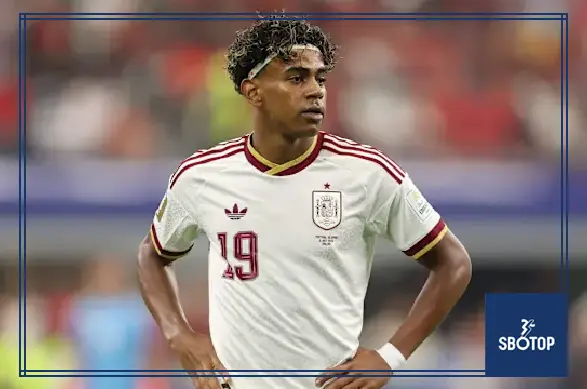
Lamine Yamal has made Spain’s mood perfectly clear. The teenage winger insists his team will not approach the semi-final with fear, pointing to their recent victories over France as evidence that Didier Deschamps’ side can be beaten. He has also dismissed concerns about his personal scoring return, arguing that his influence should be judged by Spain’s collective progress rather than by one column on a statistics sheet.
The message is bold, but it is not empty bravado. Spain have defeated France in their previous two meetings, first in the Euro 2024 semi-final and then in a remarkable Nations League encounter in 2025. Now, however, the stakes are even higher.
This is not simply another chapter in a growing rivalry. It is a World Cup semi-final between two teams with contrasting identities, world-class talent and genuine belief that the trophy belongs within reach.
Yamal Refuses to Treat France as Untouchable
France have become one of the most consistent tournament teams of the modern era. Their physical strength, defensive organisation and attacking depth have repeatedly carried them into the final stages of major competitions. That reputation can influence opponents before the match begins. Some teams become cautious, retreat too early and focus so heavily on stopping France that they forget to impose their own strengths.
Spain appear determined to avoid that mistake.
Yamal’s comments after the quarter-final victory over Belgium reflected a team that respects France without placing them on an unreachable level. His argument was straightforward: Spain have already beaten this opponent twice recently, so there is no reason to enter the next meeting feeling inferior.
He even framed the semi-final as a choice between France reaching a third consecutive World Cup final and Spain defeating them for a third straight time. The remark carried the confidence of a young player who has already experienced success against Les Bleus on major stages.
Confidence alone will not win the match, but it can shape Spain’s tactical behaviour. A fearless team will press, demand the ball and attack spaces. A frightened one will surrender territory and wait for Mbappé to punish it.
Spain clearly intend to be the former.
Recent History Gives Spain Genuine Belief
The evidence behind Yamal’s confidence begins with the Euro 2024 semi-final.
France took an early lead through Randal Kolo Muani, but Spain responded with two goals in quick succession. Yamal produced a brilliant curling equaliser before Dani Olmo completed the turnaround. Spain held on for a 2-1 victory and later won the tournament. Yamal’s strike also made him the youngest goalscorer in European Championship history.
The teams met again in the 2025 Nations League semi-final, and the result was even more dramatic. Spain won 5-4 after building a large advantage and surviving a late French comeback. Yamal scored twice in a contest that showcased both Spain’s attacking quality and France’s refusal to surrender.
Those two victories do not guarantee a third. Tournament football does not operate through simple patterns, and France will have studied both defeats carefully.
Nevertheless, past success removes psychological uncertainty. Spain know what it feels like to break France’s defensive line, survive their pressure and close out a high-stakes victory.
France may possess greater World Cup experience, but Spain possess recent proof.
The Belgium Victory Revealed Spain’s Resilience
Spain reached the semi-final by defeating Belgium 2-1 in a tense quarter-final. Fabián Ruiz opened the scoring before Charles De Ketelaere equalised, becoming the first player to score against Spain during the tournament.
With extra time approaching, substitute Mikel Merino reacted quickest to a loose ball and scored the winner in the 88th minute. It was another decisive late contribution from a player who has developed a reputation for delivering in knockout matches.
The performance was not flawless. Spain did not control every phase, and Belgium created enough danger to keep the contest uncertain until the final minutes.
Yet that may strengthen Spain more than a comfortable victory would have done.
A World Cup winner must usually survive at least one match in which its preferred rhythm disappears. Spain were forced to manage physical pressure, emotional tension and the threat of elimination. They found a solution through their squad rather than waiting for one star to rescue them.
Yamal did not score or register an assist, but he was still named Player of the Match. His dribbling, movement and constant demand for defensive attention affected Belgium’s structure even when the final action did not produce a direct statistical reward.
That distinction lies at the centre of the debate surrounding his tournament.
Yamal Fires Back at the Numbers Debate
Elite attackers are judged ruthlessly. Goals and assists are easy to count, easy to compare and easy to turn into criticism.
Yamal’s reputation makes that scrutiny even stronger. He is not treated like an ordinary young player experiencing his first World Cup. His performances for Barcelona and Spain have already established expectations normally reserved for footballers much older than him.
When he goes through matches without scoring, questions quickly appear. Is he being decisive enough? Has the pressure affected him? Does Spain need more from its most gifted attacker?
Former Spain defender César Azpilicueta praised Yamal’s influence against Belgium but suggested he still had more to offer. He noted that the winger continued to seek one-on-one situations and affect Spain’s play, even though those actions had not been converted into goals or assists.
Yamal’s response was not defensive in the conventional sense. He did not claim that goals were unimportant. Instead, he challenged the idea that they were the only meaningful measure of his contribution.
He pointed toward movement, space creation and the way multiple defenders follow him. His presence can open passing lanes for teammates even when he does not touch the ball during the decisive phase of an attack.
His broader point was simple: if Spain become world champions, few people will care how many goals he personally scored.
That is a mature argument, particularly from an 18-year-old carrying enormous public expectations.
Influence Cannot Always Be Reduced to a Goal
Yamal’s position on Spain’s right side changes how opponents defend.
A full-back cannot simply watch the ball because Yamal can receive wide and attack inward. A midfielder is often required to move across as support, while a winger may need to track back and create a two-against-one defensive structure.
That attention has consequences elsewhere.
If two players move toward Yamal, Spain can circulate possession into central midfield or switch play toward the opposite flank. If the full-back is isolated, Yamal can dribble, cross or cut inside onto his stronger foot.
Against Belgium, his repeated attacks forced defenders to spend physical and mental energy containing him. The Guardian’s match coverage noted the amount of defensive attention required to monitor his movement throughout the quarter-final.
This does not mean he should be protected from criticism. The best players are expected to turn influence into decisive moments.
Against France, Spain may not receive many clear opportunities. Yamal’s final pass or finish could determine whether La Roja reach the final. His off-ball value will remain important, but his team may also need the direct contribution critics have been demanding.
The semi-final offers the perfect stage to answer those questions.
France Arrive with a Different Kind of Authority
Spain’s confidence must be balanced against the reality of France’s tournament.
Les Bleus defeated Morocco 2-0 in the quarter-final through second-half goals from Kylian Mbappé and Ousmane Dembélé. Mbappé recovered from a missed penalty to produce an excellent finish, demonstrating the emotional resilience that defines great tournament players.
France also reached the semi-final having kept clean sheets in each of their three knockout matches. Deschamps’ side may not always dominate possession, but they protect central areas, manage risk and punish mistakes with remarkable efficiency.
Their ambition extends beyond reaching another final. France are attempting to become only the third country to appear in three consecutive World Cup finals.
That level of consistency is not accidental. It comes from squad depth, tactical flexibility and a culture in which major knockout matches feel familiar rather than overwhelming.
France can win in several ways. They can control the match, counterattack into open space, defend a narrow advantage or increase the tempo through their substitutes.
Spain have beaten them twice, but France remain dangerous precisely because defeat rarely destroys their belief.
Mbappé Is the Threat Spain Cannot Ignore
Any tactical plan against France must begin with Kylian Mbappé.
The French captain scored his eighth goal of the tournament against Morocco, drawing level with Lionel Messi at the top of the scoring chart. It was also his 20th World Cup goal, leaving him close to the all-time record.
Mbappé’s speed is the obvious danger, but reducing him to pace understates his development. He has become more patient in possession, more selective with his runs and more comfortable creating for others.
Spain’s commitment to controlling the ball creates an unavoidable risk. Their defensive line often moves high to keep the team compact. If possession is lost under pressure, Mbappé can attack the space behind before Spain reorganise.
The solution cannot simply be to defend deeper. That would disconnect Spain’s midfield from its attack and allow France to gain territory.
Instead, Spain must protect possession intelligently. Their rest defence—the players positioned behind the ball while attacks develop—will be critical. Losing the ball is inevitable; losing it with no protection would be disastrous.
Rodri, the central defenders and the full-backs must understand when to advance and when to preserve balance. One careless pass could transform a promising Spanish attack into an Mbappé sprint toward goal.
The Midfield Battle Could Decide Everything
The semi-final has been promoted as a collision between France’s explosive attackers and Spain’s masters of control. That description captures the central tactical question.
Spain want to dominate the ball, create numerical advantages and force opponents to chase. France are comfortable without possession because they trust their defensive structure and counterattacking quality.
If Spain’s midfield can move the ball quickly enough, France may be forced deeper than they prefer. Pedri, Rodri, Fabián Ruiz and Dani Olmo possess the technical ability to play through pressure and find Yamal or Nico Williams in space.
However, slow possession will favour France. Deschamps’ side can remain compact, close central channels and wait for Spain to force a pass.
Spain therefore need circulation with purpose. Keeping the ball is valuable only when it changes the position of the defence.
The movement of Spain’s central attacker will also matter. Dropping between the lines can create overloads, but the team still needs someone threatening the penalty area. Without depth, possession becomes predictable.
France will attempt to make Spain play in front of them. Spain must find ways to play through, around and behind.
Yamal’s Personal Duel Will Shape Spain’s Attack
The French left side will face one of its hardest assignments of the tournament.
Stopping Yamal requires more than a full-back winning individual challenges. France must decide how much help to provide and where that support should come from.
Sending a midfielder wide may weaken the centre. Asking a winger to defend deeply may reduce France’s counterattacking threat. Leaving Yamal one against one risks allowing him to attack the penalty area.
Spain will try to manipulate that dilemma.
Yamal does not need to dribble every time he receives the ball. Sometimes his most valuable action will be drawing two defenders before releasing a short pass inside. On other occasions, he must attack directly before France can establish defensive support.
His decision-making will be tested as much as his technique.
This is where the criticism of his scoring record becomes relevant. Against Belgium, Spain could survive without a goal from him because Merino provided the late winner. Against France, opportunities may be rarer and defensive errors less frequent.
Yamal does not need to become obsessed with scoring, but he must recognise the moments when the responsibility belongs to him.
Also Read: