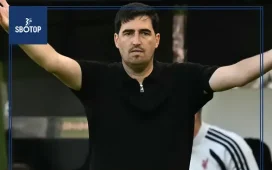
Declan Rice has declared himself ready to return at full strength as England prepare for their highly anticipated 2026 World Cup semi-final against Argentina.
The Arsenal midfielder had been struggling with a stomach illness that forced him to spend much of the build-up to England’s quarter-final against Norway in bed. He missed training sessions, was temporarily separated from the main squad to reduce the risk of the illness spreading and entered the match with doubts surrounding his ability to complete 90 minutes.
Rice nevertheless started against Norway, demonstrating his determination to help England in one of their most important matches of the tournament. He was withdrawn at half-time as manager Thomas Tuchel attempted to protect his condition and make an attacking tactical adjustment.
England recovered from a difficult contest to defeat Norway 2-1 after extra time, booking a semi-final against defending champions Argentina at Atlanta Stadium on Wednesday, July 15. Rice subsequently returned to training and informed England’s medical staff that he felt capable of starting the match.
His recovery represents a major boost for a team preparing to confront Lionel Messi, Alexis Mac Allister, Enzo Fernández and an Argentine midfield known for its technical quality, aggression and tactical intelligence.
Rice’s Illness Created Serious Concern
Rice’s health became a significant issue before the Norway quarter-final.
The 27-year-old reportedly developed a stomach bug after England’s Round-of-16 victory over Mexico. The illness affected his preparation and kept him in bed for approximately three days before the quarter-final. He also missed two training sessions while England’s medical team monitored his recovery.
Because the symptoms were believed to be contagious, Rice was isolated from teammates for part of that period. Tournament illnesses can create major problems because squads live, train, travel and eat together. A virus spreading through the group shortly before a knockout match could affect several players at once.
England therefore had to balance two priorities. They needed to help Rice recover quickly, but they also had to protect the rest of the squad.
The situation was made more concerning by Rice’s existing physical workload. He had been managing neural discomfort affecting his hamstring and lower back during the tournament, while an exhausting club season had placed additional demands on his body.
Rice had already missed England’s group-stage win over Panama as his condition was managed. He later returned for the knockout rounds, but the stomach illness created a new challenge at the most demanding stage of the competition.
A Difficult 45 Minutes Against Norway
Although he was not fully recovered, Declan Rice was selected to start the quarter-final in Miami.
The decision reflected his importance to Tuchel’s system. Rice protects the defence, competes for loose balls, supports England’s pressing and provides security when attacking players move forward. Leaving him out of a World Cup quarter-final would have required a substantial tactical change.
However, it quickly became clear that Rice was operating below his normal physical level. The extreme conditions in Miami added to the difficulty, with England and Norway forced to manage heat, humidity and the possibility of extra time.
Tuchel later explained that he knew Rice would be unlikely to complete the entire match after spending several days in bed. The midfielder was therefore replaced at half-time, allowing England to introduce fresh energy and alter their attacking structure.
His withdrawal was not evidence that he had suffered a major new injury. It was primarily a precaution based on illness, fatigue and the tactical requirements of the match.
England continued without him and eventually secured a 2-1 extra-time victory. Jude Bellingham scored both goals as Tuchel’s team once again demonstrated its ability to recover from adversity.
The victory gave Rice several additional days to rebuild his strength before facing Argentina.
Rice Reports Significant Improvement
England’s medical staff received positive news when Rice rejoined training before the semi-final.
Reports indicated that he was approaching full fitness, was no longer isolated and expected to start against Argentina. Rice also personally assured the medical team that he felt ready to play.
That confidence matters because a player may be medically available without being physically prepared for the intensity of a World Cup semi-final.
Rice will be asked to cover large distances, contest repeated duels and react quickly when Argentina move the ball through midfield. He may also need to play for 120 minutes if the match goes to extra time.
England cannot afford to select him purely because of his reputation. Tuchel needs a midfielder capable of pressing, recovering and maintaining concentration throughout the contest.
The signs from training suggest Rice has recovered sufficiently to perform those duties. His determination to play is unsurprising, given the magnitude of the fixture and England’s opportunity to reach their first World Cup final since 1966.
England Need Rice Against Argentina’s Midfield
Rice’s availability could be decisive because Argentina’s greatest strength is not limited to Messi.
Lionel Scaloni’s team possess several midfielders capable of controlling possession and adapting their positions during matches. Mac Allister can move between deeper and more advanced roles, Fernández offers passing range and intensity, while Leandro Paredes can dictate play from in front of the defence.
Argentina also use midfield rotations to create space for Messi. One player may move wider to drag an opponent away while another occupies the central area. Messi can then receive between the lines, turn and attack England’s back four.
Rice must help prevent those situations.
His role may involve screening passes into Messi, following midfield runners and supporting England’s centre-backs when Argentina’s forwards move into deeper positions. He will also need to communicate constantly with Bellingham, Elliot Anderson and whichever additional midfielders Tuchel selects.
England cannot simply assign one player to follow Messi everywhere. Argentina’s captain is too intelligent in his movement and can pull a dedicated marker into areas that damage the team’s defensive shape.
Instead, England must defend spaces collectively. Rice will be central to that plan because his positioning can close passing lanes without forcing the defence to step forward unnecessarily.
Stopping Messi Requires More Than Man-Marking
The semi-final will mark Messi’s first senior international appearance against England, adding another remarkable element to a rivalry already filled with famous moments.
At 39, the Argentine captain remains central to his country’s attack and entered the semi-final level among the tournament’s leading scorers with eight goals. Argentina have required difficult victories and extra-time performances to reach the last four, but Messi continues to influence their most important attacking sequences.
England goalkeeper Jordan Pickford has warned that the team cannot concentrate exclusively on Messi because Argentina possess threats throughout the side. That assessment is correct.
If Rice and England’s midfield become too focused on the captain, space may open for Mac Allister, Fernández, Julián Álvarez or Lautaro Martínez. Argentina are particularly dangerous when opponents lose their defensive balance while trying to stop one individual.
Rice must therefore judge when to approach Messi and when to hold his position. If Messi receives with his back to goal, England may attempt to pressure him immediately. If he drops toward the halfway line, following him too far could leave a gap behind.
Those decisions require physical sharpness and mental clarity—two qualities that can be affected by illness. England will hope Rice’s recovery has restored both.
The Importance of England’s Counter-Press
Rice will also have a major responsibility when England possess the ball.
Tuchel’s side are expected to use Bellingham, Bukayo Saka and Harry Kane to attack Argentina’s defensive structure. However, committing numbers forward creates a risk if possession is lost.
Argentina transition quickly after winning the ball. Messi can deliver an immediate forward pass, while Álvarez and other attackers are willing to run into space behind the defence.
Rice often provides England’s protection against those counterattacks. He positions himself behind the advanced midfielders, collects second balls and stops opponents before they can accelerate toward goal.
His recovery speed will be tested. If England lose possession with their full-backs high, Rice may need to cover several metres before making a challenge or delaying the attack.
A mistimed attempt could create an open route toward the penalty area. An unnecessary foul could also give Messi a dangerous free kick.
Rice must be aggressive without becoming reckless. England need his intensity, but they also need him available for the entire match.
Tuchel Has Alternatives if Rice Cannot Finish
Although Rice is expected to start, England have shown that they can adjust without him.
Elliot Anderson produced an outstanding performance after Rice left the Norway quarter-final. He covered 14.8 kilometres, completed 94 percent of his passes and operated in several midfield roles as England fought through extra time.
Morgan Rogers also contributed after being introduced, offering physical power and attacking movement. His long-range attempt played a part in the sequence that produced Bellingham’s winning goal.
Those performances give Tuchel options.
Rice may be ready to start without being prepared to complete 120 minutes. England could use Anderson alongside him and later introduce Rogers or another midfielder if greater attacking urgency is required.
Tuchel could also manage Rice’s workload according to the match situation. If England take the lead, he may remain deeper and conserve energy by protecting central spaces. If they fall behind, Rice may be asked to carry the ball forward and support attacks more aggressively.
The quarter-final demonstrated that England’s bench can alter the match. Rice’s return strengthens the starting line-up, but Tuchel does not have to depend on him alone.
England’s Resilience Has Defined Their Campaign
England have not reached the semi-final through perfect football.
They have experienced injuries, suspensions, illness, difficult weather and several uncomfortable matches. Yet Tuchel’s players have repeatedly found a way to survive.
England defeated Croatia 4-2 in their opening group match, drew with Ghana and overcame Panama before progressing through the expanded knockout stage. They then beat DR Congo, recovered to eliminate Mexico with ten men and defeated Norway after extra time.
Their knockout victories have required patience and emotional strength. England have twice come from behind, showing an ability to remain composed when their tournament appeared to be in danger.
Rice’s recovery reflects that wider resilience.
He could have accepted that the Norway match arrived too soon after his illness. Instead, he started, contributed for 45 minutes and trusted his teammates to complete the job after he was withdrawn.
Now he has another opportunity to influence England’s campaign.
Also Read: