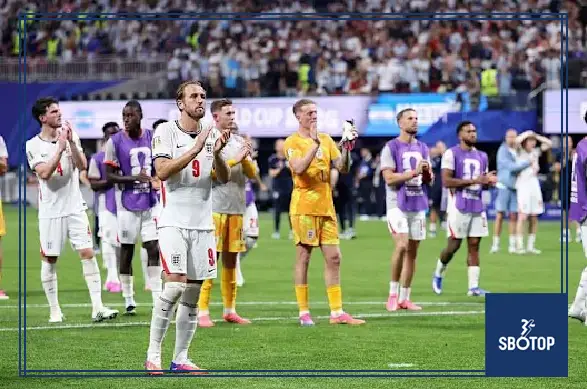
England’s World Cup semi-final defeat by Argentina has created a debate that reaches far beyond one late goal, one substitution or one disappointing night in Atlanta.
The central question is brutally simple: why did England retreat after taking the lead?
Anthony Gordon’s second-half goal placed the Three Lions within sight of their first men’s World Cup final since 1966. For much of the contest, Thomas Tuchel’s side had defended intelligently, frustrated Lionel Messi and carried a genuine threat whenever they moved forward.
Yet the match changed once England began protecting the advantage rather than building on it.
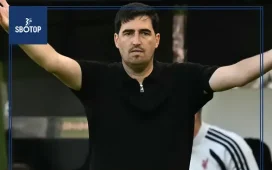
Gordon was replaced by centre-back Ezri Konsa in the 72nd minute, signalling a move to a back five. Dan Burn and Nico O’Reilly followed ten minutes later, by which point England had six recognised defenders on the pitch. Enzo Fernández equalised in the 85th minute before Lautaro Martínez headed Argentina into the final during stoppage time.
The result alone was painful. The manner of the defeat made it worse.
England averaged only 12 per cent possession between Gordon’s opener and Argentina’s winning goal. After switching to a back five, the Three Lions barely entered the opposition half, failed to register another touch inside Argentina’s penalty area and became increasingly dependent on desperate clearances.
That collapse has now produced different interpretations from inside and around the England camp. Captain Harry Kane argued that simply attempting to hold the lead was insufficient. Tuchel accepted that his players became passive but maintained that the tactical structure itself was not the main problem.
Those positions are not completely incompatible, but they reveal an important tension. Was England’s retreat caused by the manager’s changes, by the players’ instinctive response to pressure, or by a combination of both?
The answer will shape how Tuchel prepares the team for Euro 2028.
England Had the Match Where They Wanted It
Before the collapse, England’s performance contained much to admire. Tuchel’s team were disciplined without becoming completely negative. Elliot Anderson stayed close to Messi, Djed Spence defended aggressively on the left and Gordon repeatedly offered an escape route with his speed.
Argentina enjoyed possession but found it difficult to create clear openings. England remained compact through the centre, forcing the defending champions into wider areas and reducing Messi’s opportunities to receive between the lines.
When England won the ball, they did not always keep it for long, but they possessed enough attacking threat to make Argentina cautious.
That balance mattered.
A team defending against Messi cannot focus exclusively on the space around its own penalty area. It must also give Argentina’s defenders a reason to hesitate before advancing. Gordon provided that reason.
The breakthrough arrived in the 55th minute. England attacked with purpose, Gordon completed the move and the emotional direction of the semi-final changed instantly. Tuchel later argued that the Three Lions deserved their lead and described the performance up to that point as one of their strongest of the tournament.
For approximately an hour, England had not looked like a side overwhelmed by the occasion. They looked organised, competitive and capable of reaching the final.
That is why the retreat remains so difficult to understand.
The Debate Begins with Harry Kane
Kane’s post-match assessment was direct. England’s captain believed the team played well for the majority of the contest but acknowledged that the approach changed once Gordon scored. Rather than continuing to compete for control, England appeared to focus almost entirely on preserving the one-goal advantage.
Kane’s conclusion was that such an approach was not enough at the highest level.
His comments were not an open attack on Tuchel, but they were clearly significant.
Captains rarely criticise a manager’s tactical plan directly immediately after a major tournament defeat. Kane did not name the substitutions as the only cause, yet his emphasis on England trying to hold on inevitably drew attention towards Tuchel’s decisions.
The striker’s frustration was understandable.
Once Gordon left the field and England dropped into a deeper structure, Kane became isolated against Argentina’s centre-backs. Long clearances reached him without sufficient support, meaning even successful first contacts rarely developed into sustained possession.
England’s captain could not slow the match, bring midfielders forward or help the team establish territory.
His complaint was therefore not merely philosophical. The tactical retreat made his own role almost impossible.
Kane’s position appears to be that England needed greater ambition after taking the lead. They did not necessarily need to attack recklessly, but they required enough threat to prevent Argentina from controlling every remaining phase.
That view has been strongly supported by former England players and pundits.
Tuchel Insists the Problem Started Earlier
Tuchel’s defence is more complicated.
The England manager accepted that the side became too passive, conceded too many crosses and failed to reverse Argentina’s momentum. However, he argued that these problems began before the switch to a back five.
According to Tuchel, England were already losing duels and dropping deeper in their original shape. Argentina were finding gaps, winning aerial challenges and creating repeated opportunities from wide areas. The additional defender was intended to close those spaces and make England more active when confronting the opposition’s wingers.
From that perspective, the Konsa substitution was a response to a problem rather than the cause of it.
Tuchel also rejected the idea that simply introducing another attacker would automatically have restored control. England were struggling to keep the ball, win second challenges or escape their own half. The manager believed a more offensive replacement might not have solved those issues.
There is logic in that explanation.
Argentina had begun increasing the pressure shortly after Gordon’s goal. Lionel Scaloni removed a defensive midfielder, introduced Nico González and moved towards a more aggressive attacking structure before Tuchel changed formation. The momentum shift did not begin at the exact moment Konsa entered.
Tuchel’s argument is therefore that England’s physical and technical decline forced the tactical adjustment.
However, the scale of the retreat after the substitution makes it difficult to separate structure from behaviour.
A Back Five Without an Escape Route
The problem was not simply that England used five defenders.
Many elite teams protect narrow leads with a back five. Such a shape can provide security against crosses, create numerical superiority inside the box and allow wing-backs to press wide players without exposing the centre.
The system failed because England could not combine defensive security with any method of escaping pressure.
Gordon’s removal was particularly damaging.
The winger had scored, but his value extended beyond the goal. His speed forced Argentina to leave defenders behind the ball. Even an inaccurate clearance towards his side of the pitch had the potential to become a counter-attack.
When Konsa replaced him, Argentina recognised that England’s quickest outlet had disappeared.
The champions pushed their defensive line higher. Their midfielders took more aggressive positions, and the full-backs advanced without the same concern about being exposed.
England moved from a 4-2-3-1 into a 5-4-1, but the distances between Kane and the rest of the team became enormous. There was no wide runner ready to chase clearances and no midfielder close enough to collect second balls.
Sky Sports’ analysis found that England completed only a handful of passes in Argentina’s half after the switch and recorded just one touch in the final third before the winning goal.
More defenders did not create more control.
They simply increased the number of England players standing close to their own goal.
Did the Players Retreat or Were They Instructed To
This is where the disagreement becomes most interesting.
Tuchel has insisted that he wanted the back five to defend actively. He expected England’s wide defenders to step out towards Argentina’s wingers, while the extra centre-back protected the spaces inside.
Instead, England continued dropping.
The players stopped engaging outside the penalty area and allowed Argentina’s passers more time. Messi, who had been restricted effectively for much of the evening, began receiving the ball without immediate pressure.
Tuchel’s position is that no tactical system could succeed once England became so passive.
The players may see the situation differently.
When a manager removes a goalscorer for a centre-back while leading a World Cup semi-final, the psychological message is unavoidable. Even when the instruction is to remain aggressive, the substitution communicates that defensive survival has become the priority.
Players naturally respond by protecting space, avoiding risky passes and moving closer to their own penalty area.
The result can become self-reinforcing.
Each clearance provides temporary relief, which encourages another retreat. Every failed attempt to retain possession pushes the defensive line deeper. The team eventually stops looking for ways to control the match and focuses only on surviving the next attack.
That appears to be what happened to England.
Tuchel may not have instructed the players to defend on the edge of Pickford’s six-yard box, but his substitutions created the conditions in which that outcome became increasingly likely.
The Dressing-Room Debate Does Not Mean a Rift
The phrase “camp divided” should not be interpreted as evidence of a broken dressing room.
There is no clear indication that England’s players have turned against Tuchel or that the manager has lost the support of the squad. The debate concerns how the match was managed, not whether the team remains united.
Kane’s comments reflected disappointment and a different interpretation of England’s response after scoring. Tuchel has praised the squad’s mentality and effort throughout the tournament, while the Football Association continues to support him ahead of Euro 2028.
Healthy teams should be capable of discussing tactical mistakes honestly.
The danger would be pretending there is nothing to analyse.
England have suffered similar defeats before. They led Croatia in the 2018 World Cup semi-final and Italy in the Euro 2020 final before losing control. The managers, players and circumstances were different, but the pattern was recognisable.
When England move ahead in a major knockout match, the instinct to protect the lead often becomes stronger than the desire to continue imposing their game.
Former goalkeeper Joe Hart argued that Tuchel’s response looked uncomfortably similar to the defensive decisions for which Gareth Southgate was frequently criticised. Wayne Rooney claimed England lost their attacking purpose, while Micah Richards said the manager had been hired to provide a different solution in precisely these moments.
The discussion inside the squad may therefore be necessary.
England cannot solve the problem without first agreeing on what the problem actually is.
Argentina’s Changes Exposed England’s Hesitation
While England were protecting their advantage, Argentina were making substitutions designed to transform the match.
Scaloni removed Leandro Paredes and added González, shifting towards a 4-2-4. Later, he withdrew a full-back and introduced Martínez, committing another striker while England were still ahead.
The contrast was striking.
Argentina responded to falling behind by increasing their attacking risk. England responded to moving ahead by reducing theirs.
This did not guarantee Argentina’s comeback. More attacking players can create defensive vulnerabilities, and England might have exploited those spaces had they retained Gordon or introduced another quick winger.
Instead, the Three Lions allowed Argentina to take risks without consequences.
Fernández’s equaliser arrived in the 85th minute after sustained pressure. Martínez then scored in the 92nd, meeting Messi’s delivery to complete the turnaround.
Messi’s late influence was a direct product of England’s deeper positioning.
Earlier, Anderson and the midfield had limited his ability to receive freely. During the closing stages, England’s attention shifted towards protecting the penalty area, giving the Argentina captain more time outside it.
The greatest player on the pitch did not need many openings.
England eventually gave him enough.
Fatigue Complicates the Judgement
Tuchel has also pointed towards the physical cost of England’s tournament.
The squad had travelled extensively across North America, played in difficult heat and competed at altitude during the knockout stage. The manager believed those demands reduced the players’ ability to sustain their earlier intensity against Argentina.
That explanation should not be dismissed.
England’s press became less effective after the hour mark. Midfielders were slower to close gaps, the defensive line lost confidence stepping forward and Argentina began winning more second balls.
The changes were partly an attempt to protect tired players.
Yet fatigue made retaining an outlet even more important.
A team lacking energy cannot defend repeated attacks indefinitely. It needs moments of possession, fouls won in advanced areas and counter-attacks that force the opposition to run backwards.
By removing Gordon and adding defenders, England reduced their chances of achieving any of those objectives.
The physical decline explains why Tuchel considered changing the structure. It does not fully justify choosing a structure that left England almost permanently without the ball.
Also Read: