France and England will attempt to recover from painful semi-final defeats when the two European heavyweights meet in the 2026 FIFA World Cup third-place play-off in Miami.
Neither nation expected to be preparing for this match. Both arrived at the tournament with ambitions of lifting the trophy, and each reached the final four with a squad containing some of the most recognisable players in world football. Spain and Argentina ultimately ended those dreams, leaving France and England to compete for the bronze medal rather than the championship.
The psychological challenge may be as important as the tactical one.
France must respond after being comprehensively beaten 2-0 by Spain, while England have had less time to process a dramatic 2-1 loss to Argentina. Thomas Tuchel’s side led through Anthony Gordon before conceding twice late in the match, with Enzo Fernández equalising and Lautaro Martínez completing the comeback.
The third-place fixture will take place at Miami Stadium on Saturday, 18 July, with kick-off scheduled for 10pm in the United Kingdom. England are attempting to secure their best men’s World Cup finish since winning the competition in 1966, while France are seeking a positive conclusion to Didier Deschamps’ final match as national-team coach.
What is often dismissed as a consolation match therefore carries considerable meaning for both teams.
Two Teams Recovering From Different Defeats
France and England may have lost at the same stage, but the nature of their eliminations was very different.
France were controlled by Spain for long periods of their semi-final. Les Bleus struggled to establish possession, create clear opportunities or release their talented forwards into dangerous areas. Their expected-goals total of 0.31 was their lowest recorded figure in a World Cup match since detailed data became available, illustrating how effectively Spain restricted them.
Spain’s opening goal arrived from the penalty spot after Lucas Digne fouled Lamine Yamal. Pedro Porro added a second after the interval, and France never produced the sustained attacking response required to change the match.
The reaction in France was severe. National media described the performance as a collective failure, with criticism directed not only towards individual defenders but also towards the team’s lack of technical authority and emotional response.
England’s defeat was more agonising because victory appeared so close.
Gordon’s goal placed the Three Lions ahead against Argentina, and Tuchel’s side were within minutes of reaching their first World Cup final for 60 years. However, England gradually retreated, surrendered control and allowed Lionel Messi more influence during the closing stages.
The decision to introduce additional defenders attracted criticism after Argentina scored twice late in the contest. Tuchel defended his tactical intentions but admitted that England became too passive and failed to control possession after taking the lead.
France were outplayed. England were overtaken.
Both must now find the emotional strength to compete again.
Why the Third-Place Match Still Matters
The bronze-medal match is frequently described as unnecessary.
Players have spent weeks travelling, training and competing in demanding conditions. After losing a semi-final, many would naturally prefer to return home rather than prepare for another fixture that cannot deliver the trophy.
Critics argue that the match exists primarily for television, ticket sales and tournament scheduling. The emotional contrast with the final is also unavoidable: two teams compete for the championship, while the losing semi-finalists are asked to perform again after their greatest ambition has disappeared.
Yet the fixture is not completely without value.
A victory allows a team to finish the tournament positively, gives younger players experience and offers supporters one final opportunity to celebrate a successful campaign. It also creates a clear distinction between the third- and fourth-best finishers.
For England, the historical incentive is especially significant.
The Three Lions have appeared in two previous World Cup third-place play-offs and lost both. Italy defeated England 2-1 in 1990, while Belgium won 2-0 in 2018. Victory over France would therefore give England their first bronze medal and their best finish on foreign soil.
France have greater experience in the fixture. They have played in three previous third-place matches, winning against West Germany in 1958 and Belgium in 1986 while losing to Poland in 1982. Only Germany have appeared in more World Cup bronze matches.
The result may not produce the celebration associated with a final, but it will still enter both countries’ tournament records.
Deschamps Prepares for His France Farewell
The match carries exceptional personal significance for Deschamps.
The France coach is expected to take charge of the national team for the final time, bringing an extraordinary era to an end. The third-place play-off will be his 187th match as manager, and his 121 victories are more than any other coach in the history of Les Bleus.
Deschamps has led France through one of the most successful periods in their history.
He guided the team to the 2018 World Cup title, the 2022 World Cup final and another deep run in 2026. He also reached the European Championship final in 2016 and won the UEFA Nations League.
His style has not always received universal admiration. Critics have sometimes argued that France played too cautiously despite possessing an exceptional group of attackers. Supporters of Deschamps respond that international football is defined by results, adaptability and tournament survival rather than constant entertainment.
Whatever the tactical debate, his record is remarkable.
Ending his tenure with a heavy semi-final defeat would feel incomplete. Victory against England would provide a more fitting final image: Deschamps leaving the team after another top-three World Cup finish.
His players are likely to understand the emotional significance.
Kylian Mbappé, Antoine Griezmann, Mike Maignan, William Saliba and the other senior figures have an opportunity to deliver one final victory for a coach who has shaped their international careers.
Tuchel Must Restore England’s Confidence
Tuchel faces a different challenge.
Unlike Deschamps, he is not preparing to leave. The German coach has stated that he remains fully committed to leading England towards Euro 2028, and the Football Association continues to support him despite the controversy surrounding the Argentina defeat.
The third-place match is therefore part of a longer project.
England must show that the semi-final collapse has not damaged the confidence developed throughout the tournament. Tuchel’s side defeated DR Congo, Mexico and Norway during the knockout rounds, demonstrating resilience and attacking quality before falling narrowly short against the defending champions.
The manager will also want a response to the criticism of his substitutions.
England’s retreat against Argentina revived memories of previous tournament defeats in which the team became increasingly defensive after taking the lead. Tuchel was appointed partly because England wanted a coach capable of improving their game management in the most difficult matches.
A bold, energetic performance against France would not erase the semi-final, but it would help restore trust in the direction of the team.
Another passive display would increase the pressure.
Kane and Mbappé Offer Elite Attacking Quality
The match could feature two of the world’s leading goalscorers.
Harry Kane enters the contest with six goals at the 2026 World Cup, equalling the highest total recorded by an England player at a single edition. Gary Lineker scored six in 1986, while Kane previously reached the same figure in 2018. Jude Bellingham has also matched that total during this tournament.
Kane’s semi-final was frustrating. He did not record a touch inside Argentina’s penalty area, reflecting how isolated he became once England dropped deeper.
Against France, he will want greater involvement.
England must place runners close to their captain, deliver the ball into the penalty area earlier and avoid leaving him surrounded by centre-backs without support. Gordon, Bukayo Saka, Cole Palmer or another attacking midfielder could be crucial in creating that connection.
France will look towards Mbappé.
The captain has carried enormous expectations throughout the tournament. His pace, movement and finishing remain France’s greatest attacking weapons, but Spain prevented him from receiving the ball in favourable positions.
England’s defensive line will face a difficult decision.
If they push too high, Mbappé can attack the space behind them. If they defend too deeply, France’s midfielders and wide players may gain time to create opportunities around the penalty area.
The duel between Mbappé and England’s right-sided defenders could become one of the defining battles.
Michael Olise Could Be France’s Creative Key
France’s attack is not built around Mbappé alone.
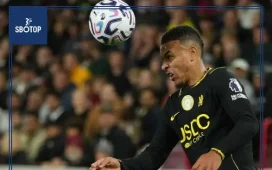
Michael Olise has been one of the most productive creators at the tournament. He leads the 2026 World Cup with five assists, all from open play, and has consistently provided accurate deliveries and intelligent passes around the penalty area.
Only Pelé has recorded more assists at a single World Cup since 1966, according to the tournament statistics cited by England’s official match centre.
Olise’s role may become even more important if Deschamps rotates his starting line-up.
Third-place matches often give coaches an opportunity to reward players who received fewer minutes earlier in the tournament. France could rest several established starters, but Olise’s creativity would still offer structure to an experimental attack.
England must stop him from receiving freely between midfield and defence.
If Declan Rice, Bellingham or England’s central defenders allow Olise time to turn, France can quickly release Mbappé or Ousmane Dembélé into space.
Gordon Has Earned Another Opportunity
Gordon may be one of England’s most motivated players.
The winger scored the opening goal against Argentina and has contributed to four goals across his last four World Cup appearances. His combination of speed, direct running and willingness to attack space gave England an outlet during the semi-final.
His substitution became central to the debate about England’s late retreat.
Once Gordon left the pitch, Argentina were able to advance with less concern about defending the space behind them. England lost their principal counter-attacking threat and struggled to escape their own half.
Tuchel could respond by starting Gordon again and asking England to maintain greater ambition regardless of the score.
France’s defenders are physically strong, but they may be vulnerable when forced to turn towards their own goal. Gordon’s pace could create problems, particularly if France’s full-backs advance aggressively.
Rotation Could Produce an Open Match
Predicting the starting line-ups is difficult.
Both managers must assess fatigue, injuries and the emotional condition of their players. Some stars may be rested, while squad members who have waited throughout the tournament could receive an opportunity.
Third-place matches are often more open than semi-finals or finals because the tactical pressure is different.
Teams are no longer protecting a route to the championship. Coaches may be willing to take greater risks, players can attack with more freedom and defensive structures may become less disciplined as the contest progresses.
France and England possess enough attacking depth to produce an entertaining game even with significant rotation.
France could use Bradley Barcola, Dembélé, Olise, Désiré Doué or Marcus Thuram around Mbappé. England have Saka, Palmer, Gordon, Eberechi Eze and other players capable of supporting Kane.
The freshness of the substitutes may become decisive in Miami’s demanding conditions.
A Familiar World Cup Rivalry
This will be the fourth World Cup meeting between France and England.
England won the first two encounters, defeating France 2-0 in 1966 and 3-1 in 1982. France claimed the most recent match, winning 2-1 in the 2022 quarter-final.
That Qatar meeting remains painful for England supporters.
France advanced through goals from Aurélien Tchouaméni and Olivier Giroud, while Kane scored one penalty but missed another late in the match. The defeat ended another promising England campaign.
The broader head-to-head record has also favoured France in recent years. England have won only one of their last nine meetings with Les Bleus and have not defeated them competitively since the 1982 World Cup.
Those statistics add another incentive for Tuchel’s team.
England can claim a historic third-place finish while also ending a poor competitive run against one of Europe’s strongest nations.
The Midfield Battle Will Shape the Match
The central areas could determine whether the game becomes controlled or chaotic.
France possess powerful midfielders capable of winning duels and progressing the ball. Tchouaméni, Adrien Rabiot and Eduardo Camavinga provide different combinations of physical strength, defensive coverage and passing quality.
England can respond with Rice, Bellingham and other technically gifted options.
Bellingham’s energy will be important if he starts. France may attempt to restrict him physically, preventing him from carrying possession into attacking areas.
Rice must help England avoid the problem that damaged them against Argentina: losing second balls and becoming trapped close to their own penalty area.
Whichever team establishes midfield control will give its attackers the greatest opportunity to influence the match.
However, fatigue may make sustained pressing difficult. Spaces could open after half-time, rewarding the side with the freshest substitutes and the quickest transitions
Also Read: