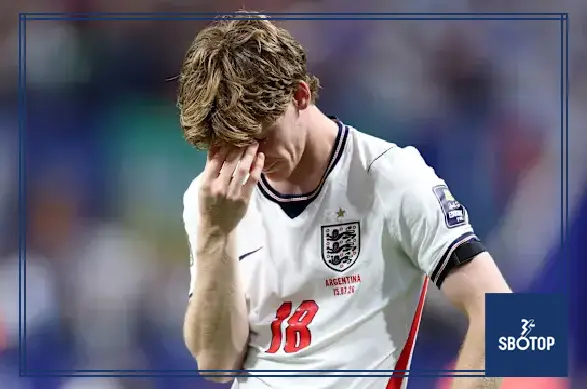
Anthony Gordon has delivered an emotional message to England supporters after the Three Lions’ World Cup dream ended in a devastating semi-final defeat by Argentina.
The winger had appeared ready to become one of the defining heroes of England’s campaign when he scored the opening goal in Atlanta. His finish placed Thomas Tuchel’s side within touching distance of their first men’s World Cup final since 1966 and briefly convinced millions of supporters that decades of waiting might finally be ending.
Instead, Argentina produced a late comeback. Enzo Fernández equalised in the 85th minute before Lautaro Martínez scored the winner during stoppage time, turning England’s greatest night of hope into another painful chapter in the country’s tournament history.
Gordon later described himself as truly devastated and admitted that he genuinely believed this was England’s moment. His message thanked the supporters who travelled across the United States, those watching from home and the teammates who had built such a strong connection throughout the competition.
The words captured the wider national mood: pride in the journey, anger at how the semi-final escaped and exhaustion at another opportunity disappearing so close to the finish.
Gordon’s Goal Made the Dream Feel Real
For several minutes after Anthony Gordon scored, England’s long wait seemed ready to end.
The breakthrough arrived in the second half after a disciplined performance in which England had limited Argentina’s most dangerous combinations. Gordon attacked the decisive moment with confidence, finishing the move and sending the England end into celebration.
It was the sort of goal every young player imagines scoring: a World Cup semi-final, an elite opponent and a place in the final suddenly within reach. Gordon celebrated with teammates before turning towards the supporters, absorbing the emotion pouring from the stands. The goal temporarily transformed six decades of pressure into belief.
The winger had already played an important role throughout the tournament. His direct running gave England speed on the left, his delivery created opportunities for Harry Kane and his willingness to attack defenders offered an outlet when matches became tense. Reports credited him with one goal and three assists across six World Cup appearances.
Yet his semi-final contribution looked destined to overshadow everything else.
The cruelest part was that England had placed themselves in a winning position and could see the final ahead.
A Substitution That Changed the Match
Gordon left the pitch in the 72nd minute, replaced by centre-back Ezri Konsa as Tuchel moved towards a back five.
The decision became one of the most heavily debated moments of the semi-final. England had already begun losing territory, and Tuchel later argued that the tactical switch was designed to confront Argentina’s growing pressure. However, removing Gordon also took away England’s quickest counter-attacking threat.
Argentina’s defenders could push higher without fearing the same pace in behind. Kane became increasingly isolated, England struggled to retain clearances and the entire team moved closer to Jordan Pickford’s goal.
The numbers reflected the retreat. England barely entered Argentina’s half during the closing stages and allowed the defending champions to attack repeatedly. Lionel Messi, previously restricted by England’s midfield discipline, found more freedom to influence the match as pressure increased.
Gordon could only watch from the bench as the game changed.
That helplessness may have intensified his heartbreak. Gordon had created the lead, yet he had no opportunity to protect it, extend it or respond once Argentina equalised. England’s bench could only watch as the late winner turned disbelief into defeat.
England Retreat and Argentina Strike
England’s defensive shape initially resisted Argentina, but the pressure became relentless.
Fernández’s equaliser arrived after England failed to clear the danger and allowed another attack to develop around their penalty area. The goal changed the emotional balance immediately. Argentina sensed vulnerability, while England suddenly looked like a team trying to reach extra time rather than one capable of recovering control.
Martínez then delivered the decisive blow. His stoppage-time goal completed the turnaround and sent Argentina into the final against Spain. The reigning champions celebrated a comeback built on persistence, tactical aggression and their refusal to accept defeat.
England were left with questions.
Should they have retained Gordon as an attacking outlet? Did the players retreat more deeply than Tuchel intended? Could the midfield have demanded possession rather than clearing the ball repeatedly? Was fatigue responsible, or did anxiety take control once the final appeared close?
Dan Burn later admitted that England became passive after scoring and defended too deeply. He said the team had executed its plan well before the goal, but Argentina’s increasing number of crosses and chances eventually made an equaliser feel likely.
Those comments aligned with what supporters had witnessed. England’s problem was not simply the presence of extra defenders. It was the disappearance of ambition.
“I Thought This Was Our Time”
Gordon’s message resonated because it expressed the belief shared by the squad and supporters.
England have experienced repeated tournament disappointment, but every generation creates its own reason to hope. The 2026 team had survived difficult matches, displayed resilience and reached the final four with growing confidence.
They recovered from difficult moments against DR Congo and Mexico before overcoming Norway after extra time in the quarter-final. Jude Bellingham scored twice in that victory, including the decisive goal that carried England into the semi-finals.
Those results strengthened the feeling that this campaign might be different.
England were not always fluent, but they repeatedly found solutions. Kane delivered goals, Bellingham drove the midfield, Pickford made important saves and players such as Gordon contributed at decisive moments.
The squad also appeared emotionally united. Gordon referred to what the group had built together and wanted the trophy for his teammates and England, not only for personal glory.
His belief that it was “our time” was not arrogance. It was the conviction of a player who had watched the team overcome repeated obstacles.
A Heartfelt Thank You to Supporters
Gordon also directed his message towards the fans.
Thousands of England supporters travelled across North America, while millions more watched from homes, pubs and public screenings. Gordon recognised that commitment.
His thanks carried particular weight because supporters had spent much of the tournament responding to uncertainty. England’s performances were not always convincing, and criticism followed Tuchel’s approach, but the team continued progressing.
By the semi-final, hope had returned fully.
Gordon’s goal produced one of the tournament’s loudest English celebrations. The noise represented more than joy at a single score. It was the release of years of frustration and the sudden belief that a new memory might replace so many familiar disappointments.
His message did not attempt to soften the failure with empty promises. He acknowledged that the pain would remain for some time.
That honesty mattered. Supporters wanted evidence that the players understood the scale of the missed opportunity, and Gordon clearly did.
The Burden of England’s Long Wait
Every England team carries 1966 into major tournaments.
The achievement remains a source of pride, but the passing years have transformed it into pressure. Every promising campaign is measured against the possibility of ending the wait.
England came close in 1990 and 2018, losing World Cup semi-finals after taking the lead. They reached European Championship finals in 2021 and 2024 but failed to win either.
The Argentina defeat followed an uncomfortable pattern. England moved ahead, became cautious and eventually lost control.
That history explains why Gordon’s disappointment extended beyond one match. He knew the team had been close to changing how this generation would be remembered.
Reaching another semi-final represented progress, but the players did not travel to the tournament simply to match previous achievements. They wanted the final and the chance to become world champions.
Gordon had scored the goal that could have broken the cycle. Instead, the cycle continued.
Gordon Emerges Stronger Despite the Pain
The defeat should not obscure Gordon’s development during the tournament.
He entered the World Cup competing for a place in an England attack filled with established stars. By the knockout stage, his pace and directness had become important parts of Tuchel’s plan.
Gordon attacks space quickly, carries the ball forward without hesitation and works aggressively when England lose possession. His movement stretches defensive lines and creates room centrally.
The semi-final goal demonstrated another quality: composure.
Gordon did not rush the opportunity or appear overwhelmed by the occasion. He finished like a player who believed he belonged at the highest level.
His emotional response after elimination also showed maturity. He did not blame the manager, the substitutions, his teammates or the officials. He focused on collective disappointment and gratitude.
That approach will strengthen his position within the squad.
International careers are shaped by responses to failure. Gordon now understands the tiny margins separating history from heartbreak.
Tuchel Faces Difficult Questions
While Gordon’s message concentrated on unity, England’s management must confront the tactical reasons behind the defeat.
Tuchel said the team gave everything and argued that the defensive change was intended to solve problems that had already appeared. He acknowledged that England lost control but defended the thinking behind his substitutions.
The debate will continue because Gordon’s removal became symbolic.
Keeping him on the pitch would not have guaranteed victory. He may have been tired, Argentina were building pressure and England needed greater defensive protection.
However, every substitution communicates an idea.
Replacing a goalscoring winger with a centre-back told Argentina that England’s priority had shifted from threatening a second goal to protecting the first. Even if Tuchel wanted his wing-backs to defend aggressively, the players responded by retreating.
England must learn how to protect leads without abandoning possession and counter-attacking danger.
That lesson will define Tuchel’s work before Euro 2028.
One Final Match Before England Return Home
England’s tournament is not technically over. They are scheduled to face France in the third-place play-off in Miami, giving both beaten semi-finalists one final chance to finish positively.
Players must recover from the collapse of their greatest ambition and prepare for a fixture that cannot deliver the trophy they wanted. Rotation is likely, but the game still carries meaning.
Victory would secure England’s best men’s World Cup finish since 1966 and provide a better final memory for the supporters. It could also give Gordon another opportunity to demonstrate the qualities that made him so important during the campaign.
The bronze medal will not remove the pain of losing to Argentina.
It can still represent pride, professionalism and the refusal to allow one defeat to determine the squad’s final act.
For supporters, his openness offered no easy consolation, but it confirmed that the man who created England’s hope felt the loss as deeply as they did.
Also Read: