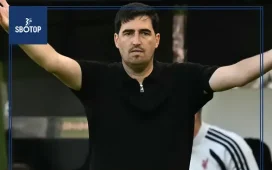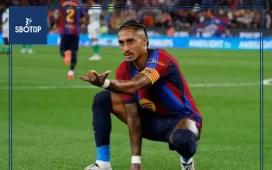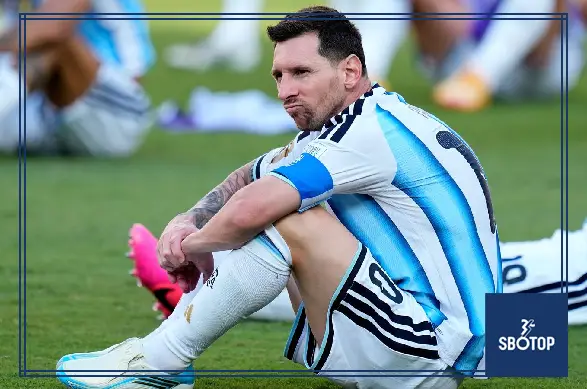
Lionel Messi had produced almost every imaginable ending during his extraordinary international career. He had scored decisive goals, survived dramatic penalty shootouts, inspired remarkable comebacks and finally lifted the World Cup in Qatar. As Argentina prepared to defend their crown against Spain, another perfect conclusion appeared possible.
It never arrived.
Instead, the 2026 World Cup final became a celebration of Spain’s collective strength, tactical discipline and exceptional squad depth. La Roja defeated Argentina 1-0 after extra time at New York New Jersey Stadium, with substitute Ferran Torres scoring the decisive goal in the 106th minute.
Torres’ winner gave Spain their second men’s World Cup title, 16 years after Andrés Iniesta’s extra-time strike against the Netherlands secured their first. Argentina’s hopes of retaining the trophy disappeared after a match in which Messi was carefully contained and Emiliano Martínez was forced to produce a record-breaking performance merely to keep his team competitive.
The scoreline may suggest a balanced final decided by one narrow moment. The reality was far more convincing. Spain controlled the ball, created the chances and forced Argentina deeper as the contest continued. La Albiceleste resisted courageously, but they rarely looked capable of imposing themselves on the game.
By the time Torres finally broke through, it felt less like a sudden twist and more like the inevitable reward for Spain’s persistence.
A Final Framed Around Messi
Much of the discussion before kick-off focused on Messi. At 39, Argentina’s captain had indicated that this would be his final World Cup appearance. Four years after completing his career by lifting the trophy in Qatar, he had returned for one more attempt at football’s greatest prize.
The narrative was irresistible. Messi could become a two-time world champion, help Argentina secure consecutive titles and close his World Cup career with another defining performance. Standing across from him was Lamine Yamal, the Spanish teenager widely viewed as one of the players capable of shaping football’s next era.
The final was therefore presented by many as a meeting between football’s established master and its emerging superstar. Yet the match was not decided by either of them.
Messi struggled to influence the game because Spain refused to give him the conditions he needed. Whenever he moved into midfield, Rodri and the Spanish defenders reduced the available space. When he attempted to receive closer to goal, Argentina lacked the possession and territory required to support him.
The veteran forward could not create a shot on target, while Argentina did not register their first attempt until the second period of extra time. Messi continued searching for openings, but Spain’s structure ensured that every touch took place under pressure.
There were no trademark dribbles through several defenders, no disguised pass that split the Spanish back line and no late finish to rescue Argentina. The final masterpiece anticipated by millions never materialised.
Spain Establish Control
Spain approached the final with the confidence of a team that understood exactly how it wanted to play. Luis de la Fuente’s side moved the ball patiently, stretched Argentina across the width of the pitch and immediately pressed after losing possession.
Rodri was central to everything. The midfielder positioned himself behind Spain’s more advanced players and continuously offered a safe passing option. His awareness allowed him to control the speed of the match, slowing the tempo when patience was required and accelerating it when Argentina’s defensive shape briefly opened.
Fabián Ruiz and Dani Olmo moved into intelligent spaces ahead of him, while Pedro Porro and Marc Cucurella pushed forward from full-back. Spain’s positioning forced Argentina to defend with almost every player behind the ball.
Lamine Yamal produced an early effort as Spain signalled their attacking intentions. Mikel Oyarzabal also tested Martínez, but Argentina’s goalkeeper appeared prepared for the pressure.
Spain’s dominance did not immediately produce a goal, yet it prevented Argentina from establishing any rhythm. Julián Álvarez became isolated against Pau Cubarsí and Aymeric Laporte. Rodrigo De Paul and Alexis Mac Allister spent more time tracking Spanish runners than supporting attacks. Messi repeatedly dropped deeper in an attempt to become involved.
Every time Argentina recovered possession, Spain’s counter-press closed the available exits. The defending champions were forced into hurried passes or hopeful clearances, allowing La Roja to begin another attack.
Martínez Produces a Final for the Ages
Spain would have settled the contest much earlier without Martínez.
The Argentina goalkeeper had already developed a reputation as a player who embraced major occasions, and he once again demonstrated his ability to perform under enormous pressure. Martínez repeatedly denied Spain as their attacks became more frequent and dangerous.
Some saves were comfortable because Spanish efforts travelled directly toward him. Others required excellent positioning, sharp reactions and complete concentration. He remained calm as Argentina’s defenders retreated closer to their own goal, organising the players in front of him while preparing for the next wave of pressure.
Martínez finished with 12 saves, the highest number recorded by a goalkeeper in a men’s World Cup final. Spain took the first 20 attempts of the match and nine of its first 10 corners, but Argentina remained level largely because of the man in goal.
His performance created a strange tension. Spain were clearly superior, yet every missed opportunity increased the possibility that Argentina might survive until penalties. Martínez’s shootout record made that prospect particularly dangerous for La Roja.
For long stretches, Argentina’s plan appeared to depend on precisely that scenario: defend, frustrate Spain and trust their goalkeeper to decide the contest from the penalty spot.
Injuries Disrupt Argentina’s Defence
Argentina’s defensive resistance came at a physical cost. Lisandro Martínez was forced off before half-time, requiring Nicolás Otamendi to enter earlier than expected. Cristian Romero later suffered an injury after delivering a committed performance at the heart of the defence.
Lionel Scaloni responded by adding more defensive protection, but every adjustment reduced Argentina’s ability to threaten Spain in transition. The deeper Argentina moved, the farther Messi and Álvarez became separated from meaningful support.
Nicolás Tagliafico worked tirelessly against Yamal, while Gonzalo Montiel and later Nahuel Molina attempted to contain Spain’s attacks on the opposite side. Their effort was admirable, but Argentina increasingly resembled a team trying to survive rather than one attempting to retain the World Cup.
Spain continued probing. Olmo found pockets of space, Porro advanced beyond Yamal and Cucurella supported attacks from the left. Still, Martínez and the defenders protected the penalty area.
The longer the deadlock continued, the more important the substitutes became.
De la Fuente Turns to His Bench
De la Fuente possessed attacking options capable of changing the character of the final. Instead of abandoning Spain’s principles, he introduced players who could execute them with greater speed and freshness.
Torres replaced Oyarzabal shortly after the hour. Pedri entered midfield, giving Spain another technically gifted player capable of receiving the ball in crowded areas. Nico Williams later replaced Álex Baena and immediately offered a more direct threat from the left.
The changes transformed Spain’s attack.
Williams stayed wide, challenged defenders and attacked space with confidence. His acceleration forced Argentina’s increasingly tired back line to turn toward its own goal. Pedri helped Spain circulate possession more quickly, while Torres moved across the defensive line searching for a gap.
The starting players had established Spain’s authority. The substitutes gave that authority a sharper edge.
Torres nearly made an immediate impact but could not convert his first opportunity. Williams also appeared to score during extra time, only for the goal to be disallowed because of an earlier foul. Rather than becoming frustrated, Spain maintained their pressure.
De la Fuente’s decisions reflected the greatest advantage Spain possessed over Argentina: their performance did not depend on one individual. When one attacking combination failed, another could be introduced without weakening the team’s identity.
Fernández’s Dismissal Changes the Calculation
Argentina’s already difficult task became significantly harder near the end of normal time.
Enzo Fernández, who had previously received a yellow card, launched into a reckless challenge on Cubarsí during added time. The referee produced a second booking, reducing Argentina to 10 players before extra time began.
The dismissal was damaging both tactically and psychologically. Argentina had spent most of the match defending, and they now had to survive another 30 minutes without an important midfielder.
Scaloni had little choice but to reorganise. Álvarez was eventually sacrificed for Marcos Senesi, leaving Messi as Argentina’s only meaningful attacking outlet. The decision revealed their objective: reach penalties and trust Martínez.
Spain responded by increasing the pressure. Their full-backs pushed higher, midfielders moved closer to the penalty area and Williams continued attacking from the left.
Argentina’s defenders threw themselves into blocks and clearances, but the spaces were beginning to grow. Fatigue slowed their reactions. Spain sensed the breakthrough was approaching.
Torres Writes His Name Into History
The decisive moment arrived one minute into the second period of extra time.
Spain built another attack and worked the ball toward the right. Porro delivered a deep cross toward the far side of the penalty area, where Williams rose and intelligently directed a header back into the centre.
The ball dropped into a dangerous space.
Torres reacted first.
He moved ahead of the defenders and struck powerfully with his left foot, sending the ball beneath the crossbar before Martínez could make another intervention. After stopping Spain repeatedly, the Argentina goalkeeper was finally beaten.
It was Spain’s 20th attempt of the final and Torres’ first goal of the tournament. The substitute had entered without any guarantee that a chance would arrive, yet he remained prepared for the one moment that mattered most.
His celebration reflected the magnitude of the finish. Torres sprinted toward the corner as teammates chased him from across the pitch. The Spanish substitutes left the bench, supporters erupted and De la Fuente embraced members of his staff.
Torres had joined Iniesta in scoring an extra-time goal to win a World Cup final for Spain. For a player who had not started the match, it was a remarkable transformation from squad option to national hero.
Williams deserved significant credit as well. His decision to head the ball into Torres’ path rather than attempt a difficult finish demonstrated awareness and composure. Spain’s goal had been created and completed by two substitutes.
The super-subs had delivered the World Cup.
Also Read: