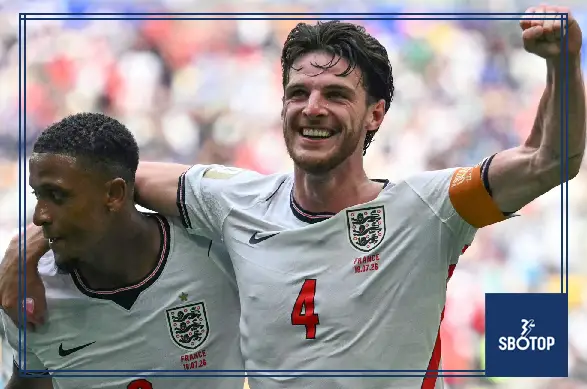
Declan Rice ended England’s 2026 World Cup campaign with a bronze medal, a spectacular victory over France and a personal achievement no previous Three Lions captain had managed. Yet the Arsenal midfielder had little interest in presenting those milestones as proof that England’s mission had been completed.
Wearing the armband in place of the rested Harry Kane, Rice inspired England to a chaotic 6-4 win in the third-place play-off. He opened the scoring, created another goal and became the first England player to record both a goal and an assist in his first World Cup appearance as captain. The achievement placed him alongside distinguished names such as Alan Shearer, David Beckham, Steven Gerrard and Kane while allowing him to establish a record of his own.
For Rice, however, individual history offered limited comfort.
England had travelled to North America with the ambition of winning the World Cup. Their campaign ended with their best finish at the tournament since 1966, but another painful knockout defeat ensured that the trophy remained out of reach.
The dramatic win over France allowed Thomas Tuchel’s side to finish positively. It did not erase the frustration of losing 2-1 to Argentina in the semi-final, when England came close to reaching the biggest match in international football before falling short once again.
Rice’s message after the tournament was therefore direct. He was proud of the group, proud to captain his country and proud of the response against France. But he was also tired of England repeatedly celebrating progress without securing the trophy they continue to chase.
A Historic Night for England’s New Captain
Tuchel made seven changes for the bronze-medal match, giving several players who had carried heavy workloads an opportunity to rest. Kane was among those left out of the starting side, creating an opportunity for Rice to lead England at a men’s World Cup for the first time.
The Arsenal midfielder did not require long to make his mark.
After winning possession in midfield, Rice moved forward and curled a fine effort into the net after two minutes and 14 seconds. It was the second-fastest goal England have scored at a World Cup, behind only Bryan Robson’s strike after 28 seconds against France in 1982.
Rice then delivered the corner from which Ezri Konsa scored England’s second goal. With the captain controlling midfield and setting the emotional tone, the Three Lions raced into a four-goal lead before half-time.
France responded during a remarkable second half, but England retained enough attacking threat to secure a 6-4 victory. Bukayo Saka completed a hat-trick, while Rice finished his first World Cup match as captain with a goal, an assist and a bronze medal.
No England player had previously contributed both a goal and an assist in his first World Cup game while wearing the armband. Kane recorded two goal involvements when he scored twice against Tunisia in 2018, but Rice became the first to combine scoring with creating.
Rice Surpasses Famous England Leaders
The record carried extra significance because of the players Rice joined. Shearer scored in his first World Cup match as captain against Tunisia in 1998. Beckham provided an assist against Sweden in 2002. Gerrard scored against the United States in 2010, while Kane struck twice during England’s victory over Tunisia eight years later.
All four made a direct contribution in their first World Cup appearance as skipper. None recorded one goal and one assist in that match.
Rice also became only the 14th player to captain England at a men’s World Cup. The list includes some of the most important leaders in the national team’s history, including Billy Wright, Bobby Moore, Bryan Robson, Peter Shilton, Beckham, Gerrard and Kane.
He also became the first Arsenal player to lead England at a men’s World Cup.
Those achievements underline Rice’s evolution. He entered senior international football as a promising defensive midfielder. He has since developed into one of England’s most influential players, capable of protecting the defence, carrying possession forward, delivering set pieces and contributing goals.
The France match showed every part of that development. Rice recovered the ball before scoring, delivered the assist for Konsa and continued driving England forward even when the game became increasingly unpredictable.
It was the performance of a player comfortable with responsibility.
Pride Mixed With Frustration
Rice’s reaction after the final whistle was not dismissive. He understood the importance of finishing third and recognised the resilience required to defeat France only days after the devastating semi-final loss.
However, he also made it clear that England’s players no longer want to be congratulated simply for reaching the closing stages of tournaments.
“We’re tired of saying we’re proud of coming in semi-finals and quarter-finals,” Rice said while explaining that England ultimately want to win.
That frustration reflects the changing expectations surrounding the national team.
There was a time when reaching a World Cup semi-final would have been viewed as an exceptional achievement for England. Their run in 2018 restored belief after years of disappointing tournament exits. Reaching the Euro 2020 final represented another major step, while returning to the European Championship final in 2024 demonstrated consistency.
Yet repeated progress has also created a new pressure. England are no longer satisfied merely to participate in important matches. The squad contains players performing at the highest level for leading European clubs, and several have now experienced multiple deep tournament runs.
The definition of success has changed.
Another Tournament of Small Margins
Rice believes England remain extremely close to winning a major trophy. He pointed to the narrow nature of the semi-final defeat and argued that major matches are often settled by decisions and moments inside the penalty areas.
That assessment is understandable.
England were not eliminated in the group stage or comprehensively defeated by an obviously superior opponent. They reached the semi-final, competed with Argentina and remained within one result of the final.
Such defeats can be especially difficult to process because they provide both encouragement and regret. England can see evidence that they belong among the strongest international teams, but they can also identify the moments in which another historic opportunity disappeared.
Rice’s frustration comes from living through that pattern repeatedly.
He has been part of England teams that lost the Euro 2020 final on penalties, exited the 2022 World Cup against France, suffered another European final defeat in 2024 and then fell to Argentina in the 2026 World Cup semi-final.
Each campaign has produced reasons for optimism. Each has also ended without the trophy.
Rejecting the Comfort of Moral Victories
Rice’s comments should not be interpreted as disrespect toward England’s bronze-medal finish. Rather, they represent a refusal to allow respectable results to lower the squad’s ambition.
Third place at a World Cup is a significant achievement. England’s victory over France secured their best finish at the tournament on foreign soil and their highest overall placing since winning the competition in 1966.
The players were entitled to celebrate the performance. They had responded to emotional disappointment with energy, aggression and attacking freedom.
But Rice understood the danger of allowing that result to become an excuse.
England did not begin the tournament hoping to finish third. The objective was to reach the final and win it. That target remains unfulfilled regardless of how entertaining the play-off became.
Elite teams must be able to recognise progress without becoming comfortable with falling short. Rice’s comments suggest England’s senior players are attempting to maintain that distinction.
They can appreciate the journey while demanding a different destination.
Leadership Beyond the Armband
Rice’s suitability for the captaincy is not based only on his performance against France.
At club level, he has developed into a central figure for Arsenal. He accepts responsibility in possession, sets standards through his work rate and communicates constantly with teammates. His intensity is visible whether his team is defending a narrow lead or chasing a result.
Those qualities translate naturally to international football.
England’s official captain remains Kane, whose goals, experience and consistency make him one of the most important figures in the team’s history. Rice does not need to replace him to become a major leader within the squad.
Modern teams rarely rely on a single voice. They require several players capable of taking responsibility during difficult moments. Kane can lead the attack, while Rice influences the midfield and helps connect different areas of the team.
Jude Bellingham, Saka and other senior players also possess leadership qualities. That shared responsibility could become especially important as England prepare for the next stage of Tuchel’s project.
Tuchel’s Faith Rewarded
Giving Rice the armband was one of several decisions Tuchel made before the third-place match.
The head coach faced a difficult psychological challenge. His players had spent the previous days processing the loss to Argentina. Some were physically exhausted, while others may have questioned the importance of playing for bronze when the World Cup final had been their real objective.
Tuchel responded by rotating heavily and trusting the new starting side to create its own energy.
Rice became the symbol of that approach.
His early goal removed any suggestion that England would approach the match reluctantly. The players pressed, attacked and produced one of the most extraordinary first halves of the tournament.
Assistant coach Anthony Barry described the team as playing with “broken hearts” and praised their ability to create such a performance through pride in representing England.
The victory demonstrated the depth available to Tuchel. England could make seven changes and still score six times against a France team filled with elite talent.
That depth strengthens the belief that a major trophy is achievable. It also increases the pressure to deliver one.
The Arsenal Influence
Rice’s performance offered Arsenal supporters another example of how significantly his game has expanded.
Once viewed primarily as a defensive midfielder, he now operates with greater freedom. His ability to recover possession remains essential, but he is increasingly effective when advancing into attacking areas.
The goal against France came from exactly that combination. Rice won the ball, recognised the available space and finished confidently from distance.
His set-piece delivery has also become an important weapon. The corner for Konsa’s goal was not an isolated contribution but part of a wider improvement in his ability to create chances from dead-ball situations.
These developments make Rice more difficult for opponents to contain. If they allow him space, he can carry the ball forward. If they press aggressively, he can release it quickly. If they defend too deeply, he can threaten from distance or deliver into the penalty area.
For England, that versatility is extremely valuable.
International tournaments often produce tight matches in which conventional attacking patterns fail. Midfielders who can score, create and dominate physically give coaches additional solutions.
England’s Midfield Foundation
Rice’s importance will extend far beyond the captaincy record.
England’s next major challenge is to build a midfield capable of controlling decisive matches rather than merely competing in them. Rice is likely to remain the foundation of that unit.
His partnership with Bellingham offers a compelling balance. Rice provides defensive awareness, athleticism and ball progression, while Bellingham can operate closer to goal and attack the penalty area.
Tuchel must determine how to maximise both players without asking either to perform too many roles. England have sometimes looked strongest when Rice receives support from another disciplined midfielder, allowing Bellingham greater attacking freedom.
The head coach also has younger options to develop. Competition for places should help prevent the team from becoming predictable.
What appears certain is that Rice will remain central. He combines tournament experience with an age profile that should allow him to influence England for several more years.
Also Read:
- SBOTOP World Cup Final Fallout: Argentine Press Rallies Behind Messi’s Side After Disappointing Defeat to Spain
- SBOTOP Spain vs Argentina: Messi Denied a Final Masterpiece as Super-Subs Deliver World Cup Glory for La Roja
- SBOTOP: Harry Kane Backs Thomas Tuchel’s England Project and Keeps 2030 World Cup Dream Alive