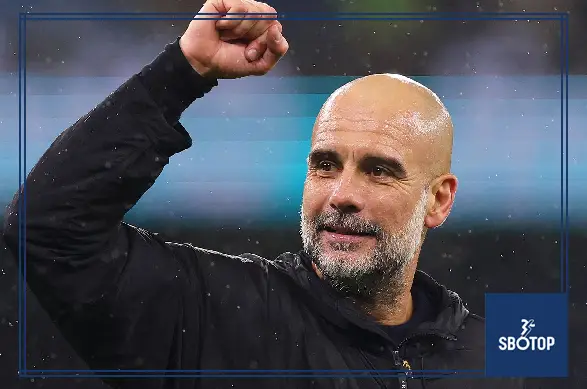
The Italian Football Federation has opened discussions with Pep Guardiola as it searches for a new head coach capable of rebuilding one of international football’s most famous but increasingly troubled national teams.
Guardiola has emerged as the most ambitious candidate under consideration following the departure of Gennaro Gattuso, who resigned in April 2026 after Italy failed to qualify for a third consecutive FIFA World Cup. Talks have taken place, but no agreement has been reached, and the decorated Catalan coach is understood to be considering whether he is ready to return to management so soon after leaving Manchester City.
The prospect of Guardiola taking charge of the four-time world champions would represent one of the most striking appointments in international football history. It would unite a coach renowned for transforming elite clubs with a national team urgently seeking a new identity, greater technical consistency and a long-term route back to the top of the global game.
Italy’s interest is also an acknowledgment that modest change may no longer be enough. Missing one World Cup could be regarded as a painful failure. Missing two suggested a deeper structural issue. Failing to reach three consecutive tournaments has created a full national football crisis.
The FIGC must now appoint someone capable of doing more than selecting a squad and preparing for individual fixtures. Italy need a coach who can define how the senior team should play, reconnect the national side with its development system and restore belief among players and supporters.
Guardiola would unquestionably bring authority, imagination and international attention. The challenge is determining whether his methods, personality and current plans can be aligned with the realities of national-team football.
Gattuso’s Departure Left Italy Searching Again
Gattuso was appointed in June 2025 after Luciano Spalletti’s exit. His immediate responsibility was to guide Italy through the remaining World Cup qualification campaign and avoid another devastating absence from the tournament.
Italy reached the play-offs but were eliminated by Bosnia and Herzegovina following a penalty shootout in March 2026. The defeat confirmed that the Azzurri would miss a third successive World Cup, extending an extraordinary decline for a nation that lifted the trophy in 2006 and won the European Championship in 2021.
Gattuso resigned shortly afterwards, accepting responsibility for the failure. His departure once again left the federation needing to reconsider the direction of the national team.
The situation is particularly concerning because Italy’s recent coaching changes have not produced lasting stability. Different managers have arrived with contrasting tactical ideas, but none has managed to establish a structure capable of delivering consistent qualification and tournament success.
The problem cannot be placed entirely on Gattuso. He inherited a difficult situation and had limited time to reshape the team. However, the federation could not ignore the consequences of another missed World Cup.
Italy now need a project extending beyond the next few competitive matches. The new coach must prepare the side for the European Championship cycle and begin building towards the 2030 World Cup.
Why Guardiola Has Become the Dream Candidate
Guardiola’s reputation makes him an obvious target for any federation seeking a transformational appointment. His club career has been defined by sustained success at Barcelona, Bayern Munich and Manchester City. He has won domestic championships in Spain, Germany and England while developing teams recognised for their technical quality, positional discipline and control of possession.
At Barcelona, Guardiola refined a style based on short passing, intelligent movement and aggressive recovery of the ball. His team became one of the most celebrated sides in football history.
At Bayern, he introduced new positional ideas and further developed his ability to adapt players to several tactical roles.
His decade at Manchester City demonstrated that his methods could dominate the Premier League. Guardiola won multiple league titles and led the club to a historic treble, including its first Champions League triumph.
He left City in May 2026 after an enormously successful period and indicated that he intended to take time away from coaching. That planned break remains one of the biggest obstacles facing Italy.
The FIGC nevertheless believes the challenge may appeal to him. Guardiola has previously discussed the possibility of managing a national team, and Italy would offer a project with enormous prestige.
Unlike a club position, the role would not involve daily training or a long domestic season. It would provide a different rhythm and could allow Guardiola to apply his ideas without immediately returning to the constant pressure of club management.
Italy Are Offering More Than a Coaching Job
Reports suggest the FIGC is attempting to present Guardiola with a broad football project rather than a conventional national-team contract.
The federation wants the next coach to influence the technical direction of Italian football, working with senior officials to create greater consistency between the national side and the country’s youth structures.
Paolo Maldini and Leonardo have reportedly played leading roles in presenting the proposal. Their involvement indicates that the federation wants to build a credible sporting organisation around the new coach rather than simply appointing a high-profile name.
For Guardiola, this could be an important part of the attraction. He has always been interested in the broader development of players and football culture.
A role with influence over youth development, coaching principles and long-term technical planning could offer him a challenge different from anything he has previously experienced.
However, such authority would need to be clearly defined. National federations involve political, administrative and regional interests that differ greatly from the structure of an elite club.
At Manchester City, Guardiola worked within an organisation designed to support his football philosophy. Italy would need to convince him that the federation is prepared to make similarly serious structural commitments.
Financial Questions Remain Significant
Guardiola was among the highest-paid coaches in club football, and the Italian federation cannot normally compete with the salaries available from leading European clubs or wealthy national associations.
FIGC president Giovanni Malagò has acknowledged that hiring Guardiola would require exceptional financial arrangements. Reports suggest the federation may consider making an exception to its usual salary limits because of the coach’s status and the importance of the appointment.
Even then, Guardiola would almost certainly have to accept substantially less than he earned at Manchester City.
The financial decision may therefore reveal his true motivation. If he is attracted primarily by the sporting project, history and opportunity to reshape Italian football, a compromise could be possible.
Commercial support may also play a role. The appointment of Guardiola would generate enormous global interest, potentially increasing sponsorship, broadcasting attention and merchandise income.
Yet the federation must avoid allowing financial excitement to replace careful planning. Hiring an expensive coach without addressing development, infrastructure and squad quality would not solve Italy’s deeper problems.
Guardiola’s Relationship with Italian Football
Although Guardiola has never managed in Serie A, he has a personal connection with Italian football.
During his playing career, he represented Brescia and Roma between 2001 and 2003. That period gave him direct experience of Italian tactical culture, training methods and football society.
He has also maintained professional relationships with Italian coaches, players and executives throughout his career.
Italy’s traditional emphasis on tactical detail may appeal to him. Italian football has long valued intelligent positioning, defensive organisation and the ability to interpret different phases of a match.
Guardiola’s philosophy is usually associated with attacking possession, but his teams are also built on detailed defensive structures. Their ability to control space and prevent counterattacks is central to his success.
His approach would not necessarily reject Italy’s tactical heritage. It could instead modernise and reinterpret it.
The question is whether the current generation of Italian players can carry out his demanding ideas with the limited preparation time available in international football.
The Challenge of Applying Guardiola’s Methods
Guardiola’s football depends heavily on repetition.
At club level, he works with players every day. He can spend weeks developing movements, relationships and positional habits.
National-team coaches have only short training camps before competitive matches. Players arrive from different clubs, tactical systems and physical conditions.
This makes it difficult to install complex positional structures.
Guardiola would need to simplify some of his principles. He could not expect the same level of detailed understanding that he developed over several seasons at Manchester City.
The most successful international coaches often build clear systems that players can understand quickly. They rely on a limited number of strong principles rather than constantly changing tactical details.
Guardiola would therefore face an important test of adaptation.
He could still ask Italy to control possession, create numerical advantages and press immediately after losing the ball. However, these ideas would need to be communicated efficiently.
His squad selection would also become crucial. He would need players with the technical intelligence to interpret several positions and make decisions under pressure.
Italy’s Technical Problems Go Beyond the Coach
Guardiola’s appointment would create excitement, but Italy’s failures cannot be explained only by coaching.
The national team has experienced recurring problems in several areas.
Italy have often struggled to produce elite attacking players capable of deciding major matches. The country still develops technically intelligent midfielders and tactically disciplined defenders, but it has lacked consistent goal scorers at international level.
Many young Italian players also receive limited opportunities at the biggest Serie A clubs. Teams competing for titles frequently rely on established foreign players, making it more difficult for domestic prospects to gain experience.
The pathway from youth football to senior international competition needs improvement.
Italy also require greater consistency in the style used across different age groups. Young players should arrive in the senior squad already familiar with certain tactical principles.
A coach of Guardiola’s stature could help create that alignment, but he could not implement it alone.
Clubs, academies, coaches and federation officials would need to cooperate. Without wider reform, the national team would remain dependent on short-term solutions.
The Potential Effect on Italy’s Players
Guardiola’s arrival would immediately change the expectations placed on the squad.
Players would need to become more comfortable receiving possession under pressure. Defenders would be expected to participate in building attacks rather than simply clearing danger.
Midfielders would have to understand spacing, body orientation and the timing of movement. Wingers might be asked to remain wide in some phases and move into central spaces in others.
Forwards would have responsibilities beyond scoring. They would need to press intelligently, link play and create space for teammates.
Versatility would become particularly valuable. Guardiola has repeatedly improved players by changing their positions or giving them hybrid roles.
An Italian full-back could become an additional midfielder during possession. A central midfielder might drop into defence. A winger could move inside as a playmaker.
This approach could help Italy become less predictable.
However, players would need to accept detailed instruction and constant tactical correction. Guardiola’s standards are extremely high, and his methods can be mentally demanding.
Could Guardiola Restore Italy’s Identity?
Italy’s supporters do not merely want qualification. They want to recognise the national team again.
The Azzurri have historically been associated with intelligence, resilience, tournament experience and the ability to produce their best football under pressure.
Recent failures have weakened that identity.
Guardiola would bring a clear vision, but it would differ from the traditional image of Italy as a defensively reactive side.
His team would seek to control matches through the ball. Defence would begin with positioning and pressing rather than retreating towards the penalty area.
Some supporters may view this as a dramatic break from Italian tradition. Others could see it as a necessary evolution.
In reality, the greatest Italian teams have rarely been as one-dimensional as stereotypes suggest. They have combined organisation with outstanding technical quality.
Guardiola’s task would be to create a modern identity that respects Italy’s strengths while addressing the requirements of contemporary international football.
A Non-Italian Coach Would Be a Major Cultural Change
Italy have traditionally trusted domestic coaches to lead the national team.
Appointing Guardiola would therefore represent a major cultural decision. The federation would be admitting that one of the country’s most important football institutions could benefit from external leadership.
Some critics may argue that a nation with Italy’s coaching tradition should be capable of producing its own solution.
Italian football has developed many outstanding managers, including Carlo Ancelotti, Antonio Conte, Roberto Mancini, Marcello Lippi and Fabio Capello.
Others will respond that the seriousness of the current crisis requires the best available candidate, regardless of nationality.
Guardiola’s appointment would not mean rejecting Italian coaching. His staff would likely include local figures who understand the federation, language and player pool.
The project could also create opportunities for Italian coaches to study and work alongside one of the game’s most influential managers.
Also Read: