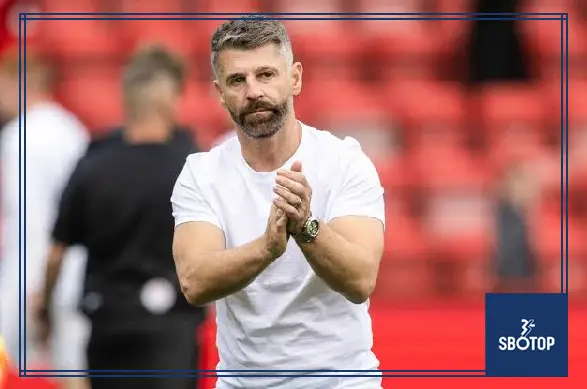
Stephen Robinson believes Aberdeen can become a powerful force in Scottish football again, and the Dons manager has identified Hearts as evidence that clubs outside the traditional Old Firm can build sustainable success.
Since taking charge at Pittodrie in March 2026, Robinson has repeatedly spoken about restoring ambition, consistency and belief to a club that has underperformed in recent seasons. His immediate task was to stabilize Aberdeen, but his long-term objectives extend well beyond avoiding trouble in the lower half of the Scottish Premiership.
Robinson wants the Dons to become regular top-six finishers, qualify for European competition and challenge for domestic trophies. More significantly, he believes Aberdeen should eventually be capable of competing much closer to Celtic and Rangers.
That ambition may sound difficult in a league shaped heavily by financial inequality, but Robinson does not consider it unrealistic.
Hearts have shown him why.
The Edinburgh club’s progress has demonstrated that intelligent recruitment, strong leadership, clear planning and unity between the football department and ownership can produce results even without the Old Firm’s resources. Robinson has therefore encouraged Aberdeen to study the principles behind Hearts’ rise rather than simply admire their success from a distance.
For the Dons, following that example does not mean copying every tactical or recruitment decision made at Tynecastle. It means developing a similarly coherent identity and refusing to accept that financial disadvantage makes meaningful progress impossible.
Robinson Begins a Major Aberdeen Project
Aberdeen appointed Robinson after a deeply disappointing period in which the club struggled for stability and consistency.
The Northern Irishman arrived from St Mirren on a contract running until the summer of 2029, bringing more than 400 matches of managerial experience. Aberdeen highlighted his record of developing players, producing competitive teams and outperforming available resources when confirming his appointment.
Those qualities were especially attractive to the Pittodrie hierarchy.
Aberdeen remain one of Scotland’s largest and most historic clubs, but their recent performances have not consistently reflected their reputation, support or infrastructure. Frequent managerial changes and uneven recruitment prevented the team from developing the continuity needed to challenge near the top of the division.
Robinson inherited a club requiring both immediate improvement and long-term reconstruction.
He understood that expectations would be greater than at some of his previous clubs. At Motherwell and St Mirren, impressive results were often celebrated because they had been achieved with limited budgets. At Aberdeen, competing for a place in the top half should be viewed as a basic requirement rather than an exceptional accomplishment.
That difference did not discourage him.
Instead, it formed part of the attraction.
Robinson has described Aberdeen as a club with the history, support and facilities to become successful again. His challenge is to ensure those advantages are translated into a stronger team on the pitch.
Why Hearts Provide the Ideal Reference Point
Robinson’s interest in Hearts is based on what their progress represents.
Hearts have shown that a club outside Glasgow’s dominant two can create a structure capable of challenging consistently near the top of the Scottish Premiership. Their success has been built through careful recruitment, financial growth, strong support and a willingness to set ambitious targets.
When Robinson first discussed his vision after arriving at Aberdeen, he pointed to Hearts as proof that the Dons could eventually disrupt the established order. He argued that the Tynecastle club had demonstrated what could be achieved when the correct people, players and planning were brought together.
The comparison is particularly relevant because Aberdeen and Hearts share several characteristics.
Both have large and passionate fanbases.
Both possess significant histories within Scottish football.
Both expect to compete in the top half and pursue domestic trophies.
Both must attempt to close a major financial gap to Celtic and Rangers.
Hearts have not eliminated that gap, but they have shown that it does not have to prevent progress.
For Robinson, that is the most important lesson.
Aberdeen should not begin each campaign assuming third place is the absolute limit or that challenging the Old Firm is impossible. The club must instead create conditions in which sustained improvement allows more ambitious objectives to become realistic.
Ambition Must Be Supported by Structure
Talking about challenging the biggest clubs is easy.
Building an organization capable of doing it is much harder.
Robinson understands that Aberdeen cannot depend on motivational speeches or isolated transfer successes. Progress must be supported by every part of the club.
Recruitment needs to be consistent.
Players must fit the manager’s style.
The academy must provide a route toward the first team.
Sports science and medical departments must keep important players available.
Senior executives must understand the football strategy.
Supporters must see evidence of a clear direction.
Hearts’ development has illustrated the importance of alignment. When ownership, recruitment staff and coaching departments pursue the same objectives, clubs can make better decisions over several seasons.
Aberdeen have not always enjoyed that level of stability.
Too often, one managerial project has been abandoned before it could mature, with the next coach arriving to rebuild the squad according to a completely different idea.
Robinson’s contract until 2029 suggests Aberdeen are attempting to change that pattern.
The club must now give him enough time and support to create a recognizable identity.
A Large Summer Rebuild
The scale of Aberdeen’s summer activity demonstrates how seriously Robinson is approaching the task.
Recent reports indicate that the Dons have undergone a substantial squad overhaul, adding numerous players while allowing several others to leave. Robinson has focused heavily on recruiting footballers with experience of the Scottish game, reducing the risk associated with adaptation.
That approach reflects practical thinking.
A player arriving from another country may possess greater technical potential, but adjusting to the intensity, climate, physicality and specific demands of Scottish football can require time.
Robinson wants players capable of contributing quickly.
His recruitment has therefore included individuals familiar with the Premiership and the standards required to perform consistently in the division.
Lewis Mayo and Brad Lyons were among those linked with moves from Kilmarnock as part of the manager’s early plans, while other additions have been selected to strengthen the squad’s physical level and competitive depth.
The objective is not merely to collect experienced names.
Robinson wants players who are hungry, tactically disciplined and comfortable with the high-energy football he intends Aberdeen to play.
Recruitment Is the Foundation
For clubs without the Old Firm’s spending power, recruitment is perhaps the most important factor in success.
Aberdeen cannot afford too many expensive mistakes.
Every signing must have a clear purpose, whether improving the starting lineup, increasing competition or providing future transfer value.
Hearts’ progress has highlighted how strong recruitment can gradually transform an entire club.
The right player can improve results immediately.
A developing player can later be sold for a profit.
That income can then be reinvested into the squad.
Over several transfer windows, such a model creates momentum.
Robinson has previously succeeded by identifying footballers who were undervalued or needed a different environment. At St Mirren, he built competitive squads without access to the financial resources available at Aberdeen.
Pittodrie should therefore provide him with a larger platform.
However, a bigger budget also brings greater responsibility.
Supporters will expect signings to improve the team rather than simply add numbers.
Recruitment must be coordinated carefully between Robinson, sporting director Lutz Pfannenstiel and the wider football department.
If that relationship works, Aberdeen may finally develop the continuity necessary to build rather than restart every summer.
Creating a Stronger Dressing Room
Robinson places considerable importance on character.
Technical quality remains essential, but he also wants players who respond well to pressure and accept collective responsibility.
Aberdeen’s recent struggles were not always caused by a lack of ability.
Confidence, discipline and unity also became significant issues.
Teams that lose regularly can develop negative habits. Players may become cautious, supporters can grow impatient, and every mistake begins to feel more damaging.
Changing that mentality requires strong personalities.
Robinson wants a dressing room in which standards are enforced by players as well as coaches. Experienced professionals must guide younger teammates, while every squad member must understand that reputation alone will not guarantee selection.
Hearts have benefited from developing that competitive internal culture.
Aberdeen need something similar.
A successful team does not rely entirely on instructions from the technical area. Players must recognize problems during matches and respond independently.
Leadership throughout the squad will therefore be central to Robinson’s project.
A High-Energy Football Identity
Robinson’s teams are usually associated with intensity, organization and direct attacking purpose.
He wants Aberdeen to play at a tempo that excites supporters and places opponents under pressure.
That does not mean abandoning technical football.
Instead, the Dons must combine quality in possession with aggressive movement and disciplined pressing.
When Aberdeen lose the ball, Robinson wants a rapid collective reaction.
When they recover possession, he wants players to attack space with confidence.
Set pieces are also likely to remain important.
Scottish Premiership matches are frequently decided by small margins, particularly when teams are closely matched. Strong delivery, intelligent movement and physical commitment can produce valuable points throughout the season.
Robinson’s preferred style should suit the atmosphere at Pittodrie.
Aberdeen supporters traditionally respond positively to energetic teams that compete physically and attack with conviction.
Restoring that connection between the crowd and players could become a significant advantage.
Pittodrie Must Become Difficult Again
Successful Aberdeen teams have always benefited from making Pittodrie an intimidating place for visiting opponents.
In recent seasons, too many teams have arrived believing they could leave with points.
Robinson wants to change that mentality.
Home form provides the foundation for almost every successful league campaign. A team that wins regularly in front of its own supporters builds confidence, momentum and a clear identity.
The crowd also becomes more influential when players give them reasons to believe.
Early tackles, sustained pressure and attacking intent can quickly increase the intensity inside the stadium.
Robinson understands that supporters do not demand perfection.
They do expect commitment and purpose.
If Aberdeen establish consistent home dominance, top-six qualification becomes significantly more achievable. It would also allow the Dons to approach away matches with greater freedom because they would not constantly be attempting to recover points dropped at Pittodrie.
Hearts’ home strength at Tynecastle has been a major part of their progress.
Aberdeen must create their own version of that advantage.
European Football as a Regular Objective
Robinson does not want Europe to become an occasional reward for Aberdeen.
He wants continental qualification to form part of the club’s normal expectations.
European football provides several benefits.
It raises the club’s profile.
It creates valuable revenue.
It helps attract stronger players.
It gives supporters memorable occasions.
It also forces the squad to develop greater depth and tactical adaptability.
Robinson has experience of leading teams into Europe, having brought St Mirren continental football for the first time in almost four decades. His period in Paisley also included three consecutive top-six finishes and a major cup victory, achievements that helped make him an attractive option for Aberdeen.
At Pittodrie, he will be expected to repeat and eventually improve upon those results.
Aberdeen’s size means European qualification should be treated as a serious annual ambition.
However, achieving it consistently will require a squad capable of managing domestic and continental fixtures without a dramatic drop in performance.
Competing With Hearts, Not Merely Copying Them
Although Hearts provide inspiration, they are also direct competitors.
Robinson is not studying the Edinburgh club because he wants Aberdeen to remain behind them.
He wants the Dons to reach and eventually surpass their level.
That distinction matters.
Hearts’ success has raised expectations for other clubs with similar support and resources. Aberdeen can no longer point solely to the Old Firm’s financial dominance as an explanation for underachievement when another non-Glasgow club has demonstrated a route toward progress.
The competition between Aberdeen, Hearts and Hibernian could become one of the most important elements of the Scottish Premiership.
Each club wants European qualification.
Each expects top-six football.
Each believes it possesses the support required to become the strongest team outside Celtic and Rangers.
Only a limited number of places are available.
Aberdeen must therefore improve quickly enough to prevent Hearts from extending their advantage.
Also Read: