Manchester City suffered their first defeat of the season as Paris Saint-Germain won 4-2 at the Etihad Stadium, overcoming a second-half response led by Erling Haaland.
The Norwegian scored twice, but City could not repair the damage inflicted before half-time. Désiré Doué, Ousmane Dembélé and Vitinha gave PSG a three-goal advantage inside 32 minutes, leaving Enzo Maresca’s team facing an enormous recovery task.
Maghnes Akliouche added the visitors’ fourth between Haaland’s goals, ensuring City’s improved performance after the interval did not produce a comeback.
Pep Guardiola watched from the stands on his first return to the Etihad since leaving the club at the end of the previous season. His presence added significance to an already compelling Champions League occasion, but the decisive action belonged to the teams on the pitch.
For City, the evening combined defensive shortcomings with attacking encouragement. For PSG, their first-half precision proved sufficient despite a demanding finish.
PSG Strike Twice in Rapid Succession
The visitors took the lead through Doué in the 13th minute. Dembélé doubled the advantage in the 15th, giving PSG two goals before City had properly recovered from the first setback.
That sequence changed the match. City needed to respond while avoiding further exposure against opponents already demonstrating speed and accuracy in attack.
From a tactical perspective, conceding twice so quickly creates competing demands. Players must regain control without allowing urgency to stretch the distances between defence, midfield and attack.
PSG exploited the situation effectively. Their early goals provided an advantage, but their continued attacking threat prevented City from treating the opening burst as an isolated problem.
Maresca’s side still had time to recover, yet the challenge had become considerably more difficult. They needed goals against a team capable of punishing the spaces created by an increasingly ambitious response.
Vitinha Deepens City’s First-Half Problems
Vitinha made it 3-0 in the 32nd minute, extending PSG’s control of the scoreboard and reinforcing the scale of City’s difficulties.
The midfielder’s finish completed a first half in which the visitors repeatedly found ways to threaten. Their danger was not limited to one forward or one route towards goal.
For City, the third concession meant that a single attacking moment would no longer substantially change the match. They needed a sustained recovery while preventing PSG from adding further damage.
That balance proved elusive before the interval. City produced attacking opportunities, but none became a goal.
The half-time score therefore reflected a decisive difference in execution. PSG had converted their attacking quality into a commanding lead, while City entered the dressing room needing both tactical adjustments and a much stronger return from the chances they created.
Maresca Changes the Shape of the Contest
Maresca responded at half-time by introducing Matheus Nunes, Ayyoub Bouaddi and Iliman Ndiaye.
The changes were followed by a noticeably more threatening City performance. The hosts began creating opportunities with greater frequency and made PSG defend under sustained pressure.
It would be too simple to attribute every improvement to the substitutions alone. The score also affected how both teams approached the second half, with City needing to take greater risks.
Nevertheless, the substitutes made direct contributions. Ndiaye supplied the cross for Haaland’s first goal, while Bouaddi later created his second.
Their involvement gave Maresca evidence that his adjustments had helped improve the attacking connection around the striker. The limitation was equally clear: producing a better half did not erase the three-goal deficit already established.
City had changed the direction of the contest, but they still needed an exceptional recovery.
Haaland Gives City a Route Back
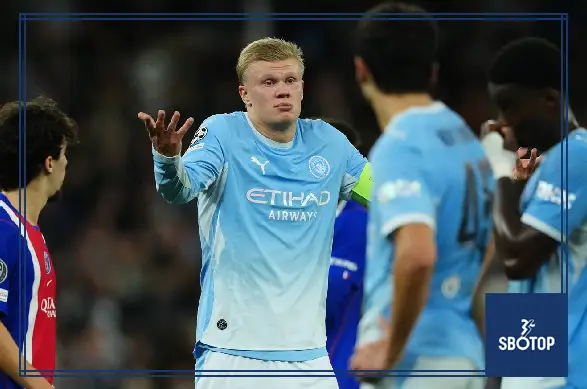
Haaland scored in the 53rd minute, heading in Ndiaye’s delivery to reduce the deficit to 3-1.
The goal gave City a tangible return for their improved attacking play. It also changed the immediate challenge for PSG, who could no longer rely on their first-half advantage remaining untouched.
For the hosts, scoring relatively early after the restart preserved time to pursue another goal. Their pressure now carried a more credible possibility of turning the match into a close finish.
Haaland’s contribution underlined the importance of providing him with service in dangerous areas. His finishing could influence the game once teammates were able to connect with his movement.
However, City still needed to protect themselves while attacking. A recovery from three goals behind required more than relentless forward momentum; it also depended on denying PSG another decisive opportunity at the opposite end.
Akliouche Restores PSG’s Three-Goal Cushion
PSG scored again in the 62nd minute through Akliouche, whose shot escaped Gianluigi Donnarumma’s attempted save and crossed the line.
The goal was a major setback for City. Having reduced the deficit and increased the pressure, they were suddenly three goals behind again.
Donnarumma’s handling was central to the incident, but the wider defeat cannot reasonably be assigned to one mistake. City had already conceded three times before the interval.
The significance of the fourth goal lay in its timing. It interrupted the recovery and increased the number of successful attacking moments City needed.
For PSG, it provided valuable protection against the pressure that followed. Their second-half defending was tested repeatedly, but Akliouche’s contribution ensured that City’s improvement had to overcome an even greater numerical disadvantage.
The visitors had found a crucial answer during a phase increasingly shaped by the hosts’ attacking urgency.
A Second Haaland Goal Keeps Hope Alive
Haaland scored again in the 75th minute, finishing from Bouaddi’s cutback to make it 4-2.
The goal maintained the possibility of a dramatic conclusion. City were still two behind, but they had enough time to make PSG uncomfortable if another opportunity could be converted quickly.
That opportunity almost arrived when Haaland threatened a hat-trick, only for Matvey Safonov to deny him.
The sequence captured the difference between creating a potential comeback and completing one. City generated enough danger to keep the match competitive, but the final steps required additional successful finishes.
Haaland’s double was a substantial individual contribution within a losing performance. It demonstrated his capacity to punish openings without providing a complete remedy for the team’s earlier problems.
City could draw encouragement from the quality of their response while recognising that the decisive margin remained intact.
Woodwork and Saves Frustrate the Hosts
City’s second-half pressure produced further chances, with the frame of the goal and PSG’s defensive interventions helping preserve the visitors’ advantage.
Those moments explain why the final score did not capture every change in momentum. PSG controlled the first half, but they did not pass through the second without significant difficulty.
At the same time, chances that strike the woodwork remain missed opportunities. They indicate danger without adding to the score.
The distinction matters when assessing whether City deserved a different result. Their attacking performance supplied grounds for encouragement, but a hypothetical version in which every close attempt becomes a goal cannot replace what happened.
PSG completed the match with four goals and City with two. The hosts’ improvement made the contest more demanding for the visitors, yet it arrived after a first half that had left little room for further errors.
Donnarumma Saves a Late Penalty
Donnarumma stopped a late penalty from former City forward Ferran Torres after Nunes fouled Nuno Mendes.
The save prevented PSG from extending their lead and provided the goalkeeper with a positive intervention after the handling error associated with the fourth goal.
It did not, however, create enough time or momentum for City to reverse the result. The hosts were unable to turn that reprieve into further goals.
For PSG, the missed penalty was an opportunity to make the closing moments more comfortable. Their failure to convert did not ultimately alter the destination of the points.
The incident illustrated the match’s fluctuating character. Even during City’s stronger period, PSG retained the ability to threaten. Even after making a costly mistake, Donnarumma could still contribute an important save.
Neither detail erased the larger pattern: the visitors’ early advantage remained decisive.
Guardiola Watches a New Chapter Unfold
Guardiola’s attendance attracted understandable attention. This was his first visit back to the Etihad since departing, and his former team was now operating under Maresca.
His presence created an obvious comparison between past and present, but there is no factual basis for claiming it caused City’s difficulties or influenced individual decisions.
Likewise, expressions or gestures in the stands cannot establish a detailed tactical judgement unless accompanied by a verified explanation. The match should not be turned into an imagined account of Guardiola’s thoughts.
The relevant sporting assessment concerns Maresca’s team: their first-half vulnerability, the changes made at the interval and the attacking response that followed.
Guardiola witnessed all three. His return formed part of the occasion, while responsibility for preparation, selection and the response to PSG’s performance belonged to the current coaching staff and players.
A Defeat with Clear Lessons for City
The 4-2 result ended City’s unbeaten start and rewarded PSG’s outstanding first-half execution.
Maresca had evidence of problems to address, particularly the loss of balance during the early scoring burst. He also had evidence that adjustments could help his team threaten elite opposition.
Haaland’s two goals and the substitutes’ contributions gave substance to that encouragement. Yet a stronger second half could not compensate fully for entering the interval three goals behind.
For PSG, victory demonstrated the value of establishing a decisive advantage and finding another goal when the contest became less comfortable.
Any prediction about how a future meeting would unfold remains speculation. This match offered a confirmed conclusion: PSG took their opportunities early, City responded too late, and Haaland’s finishing could not prevent the first defeat of Maresca’s season in front of a returning Guardiola.
Also Read: