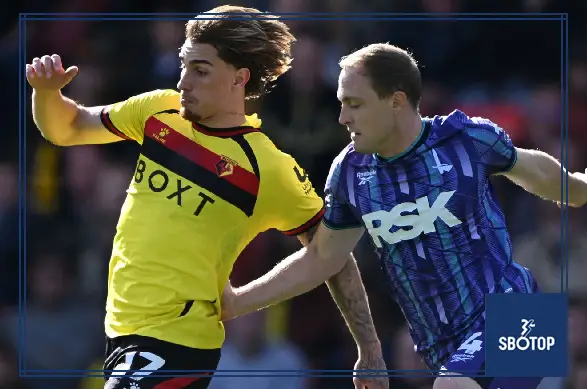
Watford delivered a much-needed response to a bruising week by beating Charlton Athletic 2-0 at Vicarage Road on Saturday, October 17, 2026. Second-half goals from Luca Kjerrumgaard and Jordan Zemura secured three Championship points and gave head coach Alessio Dionisi a welcome result after consecutive heavy defeats.
The Hornets had conceded nine goals across losses to Burnley and Cardiff City, leaving confidence fragile and scrutiny intense. Against Charlton, they produced a more assertive performance, created opportunities and protected their lead long enough to settle the contest in stoppage time.
The clean sheet mattered almost as much as the goals. Watford had recently struggled to contain opponents, but this time their defensive work provided a platform for victory. Charlton had opportunities to change the outcome, yet their failure to convert helped extend their own winless league sequence to eight matches.
A Difficult Week Demanded a Response
Watford entered the fixture after losing 4-0 to Burnley and 5-1 at Cardiff.
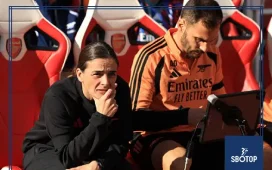
Those results had pushed the team into the relegation places and intensified dissatisfaction around the club. Dionisi faced questions about performances, while owner Gino Pozzo was also the subject of supporter criticism.
The distinction between scrutiny and a confirmed managerial decision remained important. Reports and speculation about Dionisi’s position did not amount to an official dismissal, and he remained in charge for Charlton’s visit.
His immediate task was practical: improve the performance, reduce mistakes and give the players a route towards a positive result.
Watford’s response showed that the previous defeats had not prevented them from competing with purpose. However, one victory could only begin the process of rebuilding confidence. The problems exposed during the preceding week still required attention beyond a single afternoon.
Dionisi Makes Five Changes
Dionisi altered five positions from the team that had lost at Cardiff, seeking a better balance and a stronger response.
Krepin Diatta made his first Watford start, while Marc Bola returned to the starting side following injury. Soumaila Coulibaly, Iker Bravo and Kjerrumgaard were also selected.
The changes offered different options across the pitch, but their success depended on the collective performance rather than the number of new names alone.
From a tactical perspective, fresh selection can help a team adjust its movement, defensive coverage and attacking connections. It can also create uncertainty if relationships are not clear.
Watford largely avoided that problem. They began with energy and showed enough organisation to sustain their attacking intent.
The revised line-up did not make the contest straightforward, but it helped establish a performance considerably more competitive than the two that had preceded it.
Charlton Miss an Early Opportunity
Charlton could have taken the lead when Miles Leaburn met Ivan Mesik’s cross but headed wide.
The opportunity was important because an opening goal would have placed further pressure on a Watford side already dealing with poor results. Instead, the hosts escaped without damage.
That possibility should remain a counterfactual rather than a certainty. Scoring first would not automatically have guaranteed Charlton victory, just as missing the chance did not settle the match.
What it did mean was that Watford could continue developing their performance with the score level.
For Charlton, the moment illustrated a recurring challenge within the game: creating an opening is only part of the task. The quality of the final action determines whether promising attacking work produces an advantage.
Leaburn’s miss would become more costly once Watford found their own breakthrough.
Watford Show Greater Attacking Purpose
The Hornets created opportunities of their own, with Diatta testing Arthur Okonkwo during an encouraging start.
Bravo helped connect play, while Bola’s forward movement offered another route into the attacking third. Watford appeared more willing to carry the ball and commit opponents than their recent results might have suggested.
Myron Boadu also threatened, although the hosts could not convert their first-half work into a goal.
The improvement was therefore real but incomplete. Watford were finding ways to trouble Charlton, yet finishing remained an obstacle.
In assessing that period, it is useful to separate attacking intent from attacking efficiency. A team can perform with greater confidence and still leave itself vulnerable if chances are not taken.
The home side needed to maintain its purpose without becoming careless. Charlton remained capable of threatening, and the goalless score preserved opportunities for both teams.
The Interval Arrives Without a Breakthrough
Neither side scored before half-time, leaving the contest open.
For Watford, the interval offered reasons for encouragement. They had competed more effectively and created enough to suggest a goal was possible.
For Charlton, it provided an opportunity to improve their use of possession and make more of their attacking situations.
A goalless first half can place particular demands on a team seeking to recover from heavy defeats. Patience is necessary, but prolonged uncertainty can also encourage rushed decisions.
Watford avoided allowing that tension to define the restart. They continued looking forward and generated another clear opportunity when Kjerrumgaard’s chested pass released Boadu.
The finish went wide, prolonging the wait. Nevertheless, the move showed that the hosts could create chances through combinations as well as individual running, keeping Charlton’s defence under pressure.
Kayembe Helps Create the Opening Goal
Watford finally went ahead in the 58th minute.
Edo Kayembe drove the attack forward and struck from outside the penalty area. Okonkwo could not hold the effort, and Kjerrumgaard reacted to convert the rebound from close range.
The goal combined initiative with anticipation. Kayembe forced the goalkeeper to respond, while Kjerrumgaard stayed involved rather than treating the initial shot as the end of the move.
That reaction was decisive. Rebounds create brief opportunities, often requiring an attacker to move before defenders can recover.
For Watford, the breakthrough rewarded persistence after earlier misses. For Charlton, it created a new challenge: they now had to find an equaliser against opponents with a lead to protect.
The match remained competitive, but the Hornets had finally turned their stronger attacking passages into something tangible.
Protecting a Narrow Lead Requires More Work
At 1-0, Watford could not regard the game as secure.
The hosts continued creating opportunities, but their inability to add an immediate second goal kept Charlton within reach. Kayembe remained influential, while Okonkwo made further interventions to prevent the margin increasing.
That phase tested Watford’s decision-making. They needed enough attacking ambition to pursue a second goal without losing the defensive organisation that had helped them reach this position.
A narrow advantage can become uncomfortable if a team retreats too deeply or repeatedly gives possession away. Equally, attacking without cover can provide opponents with the space needed to recover.
Watford’s performance contained moments of uncertainty, but they maintained the essential balance.
Charlton still had a chance to alter the outcome, although they were unable to build the sustained quality required to take control.
Ravaglia Contributes to a Valuable Shutout
Federico Ravaglia made an important contribution when Charlie Kelman threatened from close range during Charlton’s search for an equaliser.
The intervention helped preserve Watford’s advantage at a stage when one goal would have changed the mood of the contest.
The defensive effort also extended beyond the goalkeeper. Mattie Pollock and Coulibaly were prominent in a performance that required concentration whenever Charlton reached dangerous positions.
After conceding heavily in the previous two matches, maintaining a clean sheet offered Watford a concrete sign of improvement.
It should not be treated as proof that every defensive issue had been solved. Charlton still created chances, and future opponents would present different problems.
Nevertheless, the shutout had immediate value. It ensured that Kjerrumgaard’s goal remained enough to keep Watford ahead while they continued searching for the finish that would secure the points.
Substitutes Combine to Settle the Match
Zemura supplied that final goal deep into stoppage time.
Rocco Vata split Charlton’s defence with a pass, and the Zimbabwe international lifted his finish over the advancing Okonkwo. It was Zemura’s first goal for Watford.
The contribution from two substitutes gave the victory a decisive final moment. Fresh players had remained ready to influence the game, and their combination removed the uncertainty associated with a one-goal margin.
The finish also required composure. With the goalkeeper advancing, Zemura chose the lifted option and executed it accurately.
For Charlton, the second goal ended their realistic opportunity to recover. For Watford, it allowed the afternoon to close with a clearer reward for their work.
The scoreline now reflected both their attacking contribution and their success in preventing the visitors from finding an equaliser.
Dionisi Welcomes Togetherness, Jones Demands Better
Dionisi praised the unity shown by Watford after the match and acknowledged how difficult the preceding week had been.
His response combined satisfaction with recognition that improvement was still necessary. The result offered relief, but it did not erase the performances against Burnley and Cardiff.
Charlton manager Nathan Jones was critical of his side’s execution, including their passing, defending and use of opportunities.
Those assessments captured the contrasting outcomes. Watford had found a performance strong enough to interrupt a damaging sequence; Charlton had failed to capitalise on an opponent arriving under pressure.
The Hornets’ victory provided something concrete to build upon: goals, a clean sheet and evidence of a collective response. Whether it marked a lasting change would depend on subsequent performances. At Vicarage Road, however, Dionisi’s players completed the immediate task and gave their supporters a welcome afternoon of relief.
Also Read: