Max Dowman’s dismissal at Fleetwood Town left Arsenal confronting more than an unexpected Carabao Cup exit. The sight of Mikel Arteta addressing the 16-year-old as he walked towards the tunnel prompted questions about how a manager should respond when a young player makes a costly mistake.
Arteta’s explanation centred on preparation, emotional control and responsibility. He indicated that the circumstances surrounding the incident had been discussed before the match, while later insisting that support for Dowman would remain alongside the standards expected of every first-team player.
The episode became a difficult intersection of youth development and immediate competitive pressure. Dowman was a teenager experiencing a highly public setback; Arsenal were a team trying to avoid elimination. Understanding both realities is essential to assessing what happened and what can reasonably be concluded from the manager’s response.
The Incident That Changed Arsenal’s Closing Minutes
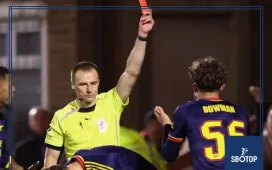
Dowman received a straight red card in the 85th minute after reacting to a strong challenge from Fleetwood’s Harrison Neal. The dismissal was recorded as violent conduct following an apparent kick towards his opponent.
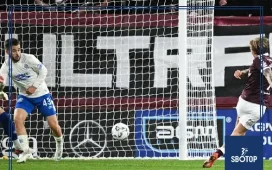
Arsenal were level at 1-1 and pursuing a winner when the incident occurred. Losing a player reduced their options during the closing stages, although it did not prevent them from creating further opportunities. The match eventually went to penalties, with Fleetwood winning the shootout 5-3.
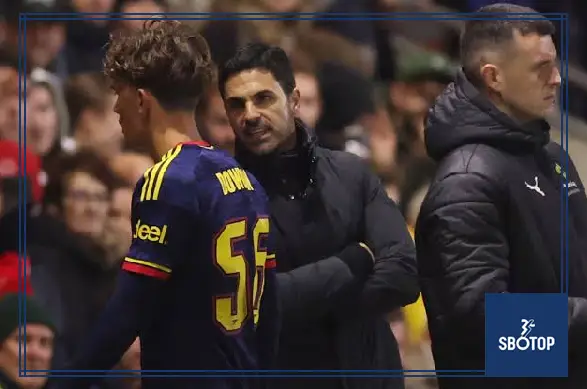
As Dowman left the field, Arteta leaned towards him and spoke. The exchange attracted immediate attention, but the exact words spoken beside the dugout were not publicly established. Arteta subsequently confirmed that his response concerned something discussed before kick-off. That explanation provides context without supplying a complete transcript of the conversation or revealing every detail of their preparation.
What Arteta Initially Chose to Explain
Arteta’s first response was limited. Asked about his words to Dowman, he referred to their earlier discussion and declined to elaborate further.
That restraint matters because the images alone encouraged interpretations that went beyond the available evidence. A brief exchange can show frustration, but it cannot reliably establish every intention behind it or the full relationship between those involved.
The manager also identified emotional management as part of Arsenal’s preparation for the fixture. His position was that players had been made aware of what to expect and the need to control their reactions.
That does not settle whether his response was appropriate. It does establish that he presented the incident as connected to a previously addressed concern. The distinction separates his stated reasoning from assumptions about a spontaneous breakdown in his relationship with the teenager.
Why the Touchline Response Drew Criticism
Paul Merson questioned Arteta’s approach, arguing that Dowman’s age called for reassurance as he left the pitch. Jobi McAnuff also expressed concern about the manager’s visible reaction.
Their criticism addressed the handling of a young player rather than suggesting that Dowman had no responsibility for his actions. It raised a legitimate question about timing: should an immediate public response prioritise comfort, with a fuller conversation taking place privately afterwards?
There is no single answer that can be demonstrated from this incident alone. Players respond differently to criticism, and viewers do not have access to every conversation within a club.
Nevertheless, the public nature of the exchange made scrutiny inevitable. Managers communicate to the player in front of them, but their gestures are also interpreted by teammates, supporters and audiences who may see only a few seconds of a complicated situation.
Arteta Later Set Out a Broader Position
In subsequent comments, Arteta acknowledged frustration and explained that he understood the consequences of a dismissal, particularly for Dowman. He said they had spoken afterwards and that there were no problems between them.
He also stressed that protecting a teenager did not mean removing expectations. His argument was that Dowman belonged in the first-team environment through his performances and training, but remained accountable to the team.
Arteta’s widely discussed reference to elite football being outside “Disneyland” expressed that position sharply. It was a description of the environment he believed Dowman needed to navigate, rather than an explanation of the original touchline wording.
The manager’s comments therefore combined two commitments: continued support and direct correction. Whether that balance works will be better assessed through the player’s development than through speculation about one uncomfortable departure from the field.
Youth Changes the Context, Not the Scoreboard
Dowman’s age is central to the discussion. A 16-year-old can possess the technical ability to compete against senior professionals while still learning how to manage confrontation, frustration and disappointment.
Those processes do not necessarily develop at the same speed. A player may recognise a difficult pass instantly yet struggle with a sudden emotional response after a heavy challenge.
Acknowledging that difference does not excuse retaliation. It helps identify what coaching needs to address. The useful objective is to make a better response available when a similar situation happens again.
For Arsenal, that requires more than telling Dowman to remain calm. Preparation can include clear expectations about disengaging from confrontations, seeking support and returning attention to the next phase of play. These are possible practical approaches, not a claim about the specific methods used inside the club.
Protection and Accountability Can Work Together
The debate often becomes unnecessarily narrow when support and discipline are treated as incompatible. A club can challenge a decision it considers excessive while also explaining why a player’s reaction created avoidable risk.
Likewise, a manager can believe an opponent’s challenge deserved stronger attention without endorsing what followed. The initial contact and the subsequent reaction are connected events, but they remain separate actions requiring assessment.
For a young player, consistency may be more useful than alternating between complete defence and complete blame. The message needs to explain which behaviour was unacceptable, why it mattered and what should happen next.
Support then gives that correction somewhere constructive to lead. It should help the player return to training and competition with a clearer understanding of the task, rather than allowing a single incident to become an enduring description of his character.
The Appeal and Its Confirmed Outcome
Arsenal appealed against Dowman’s dismissal, but the challenge was rejected and a three-match domestic suspension remained in place. Arteta expressed disappointment with that outcome.
The appeal’s failure established the disciplinary consequence. It did not eliminate disagreement about whether the original decision was proportionate, and it should not be presented as doing so. Equally, criticism of the decision does not change the fact that the suspension stood.
Keeping those points separate prevents opinion from replacing the official outcome. Supporters and commentators can debate the severity of a sanction while reporting accurately what was decided.
For the player, the practical consequence was lost availability. That is one reason emotional control matters beyond the immediate match: a brief reaction can affect selection and participation afterwards. The lesson is concrete even when the interpretation of the incident remains contested.
Dowman Was Not the Sole Explanation for Defeat
The dismissal became a prominent image of Arsenal’s exit, but it cannot reasonably carry the entire explanation. Fleetwood had taken the lead through Aaron Loupalo-Bi before Viktor Gyokeres equalised early in the second half.
Arsenal therefore spent most of the match facing a competitive contest with eleven players. Fleetwood’s defending, Jay Lynch’s goalkeeping and the visitors’ failure to turn opportunities into a winning margin all contributed.
Arteta’s post-match assessment distinguished effort from execution. He did not attribute the result to a general lack of application, instead pointing towards chances that were not converted.
That broader context matters when discussing a teenager’s responsibility. Dowman’s dismissal complicated the closing minutes; it did not retrospectively cause every earlier missed opportunity. Individual accountability should remain proportionate to the action being assessed, while the team’s performance receives its own examination.
What a Useful Response Would Look Like
The most meaningful next step is behavioural rather than rhetorical. Another strong challenge will eventually present a player with a choice, and progress would mean responding in a way that preserves both personal availability and the team’s position.
That does not require Dowman to become passive. Competitive aggression can be expressed through movement, pressing, tackling within the rules and demanding the ball again.
The distinction lies between influencing the contest and reacting in a way that removes the opportunity to influence it. For an attacking player, staying involved is itself a competitive advantage.
Arteta faces a parallel responsibility. His communication must make standards understandable while giving the teenager confidence that an error does not cancel his place in the club’s plans. Neither objective can be measured reliably through a single interview, gesture or result.
A Setback That Should Lead Somewhere
Fleetwood’s victory remains their achievement, while Arsenal must examine a missed opportunity and Dowman must learn from a consequential reaction.
The manager’s explanation offers context without closing debate. His stated aim is to combine protection with demanding standards; critics questioned how that message was delivered publicly.
For Dowman, the lasting issue is what follows. Better decisions under pressure would turn an uncomfortable episode into useful experience, while continued support would give those lessons a practical foundation. One red card need not define a young career. The response to it can help shape the player who returns.
Also Read: