

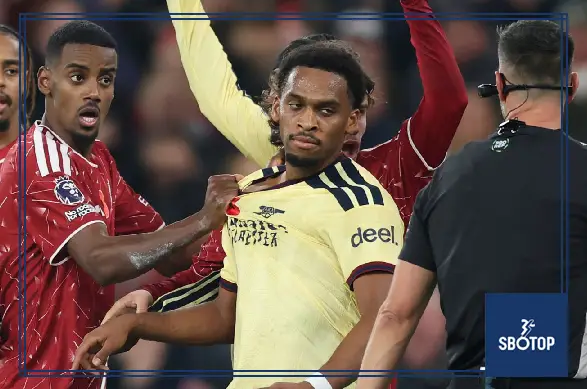
Liverpool should have been awarded a penalty when Jurrien Timber pulled Alexander Isak’s shirt during Arsenal’s 1–0 Premier League win at Anfield, the independent Key Match Incidents panel has concluded. Four of its five members judged that referee Andy Madley should have given the spot kick. A narrower majority, three to two, found that video assistant referee Stuart Attwell should have recommended an on-field review.
The incident came around the 20-minute mark on 1 November 2026, shortly after Kai Havertz had put Arsenal ahead. Isak was trying to reach a cross from Bradley Barcola when Timber grabbed his shirt. The Liverpool striker stayed on his feet, Madley allowed play to continue, and Attwell did not intervene. Havertz’s goal proved to be the winner. The panel’s findings, published on 11 November, identified an officiating error while leaving the result intact.
A Cross From Barcola and a Pull on Isak’s Shirt
Arsenal had taken the lead in the 16th minute when Havertz finished from close range after a contribution from Declan Rice. Liverpool had an opportunity to respond soon afterwards. Barcola delivered the ball into the penalty area, and Isak moved to meet it with his head. Timber pulled back on the striker’s shirt as he attempted to reach the cross.
The sequence mattered because the contact came during the action Isak needed to complete. A forward trying to head a cross has to judge where the ball will arrive, move into that space and time the attempt. A pull at that point can impede the movement even if it lasts only briefly. Isak remained upright, and the match continued without a penalty or a visit by Madley to the pitchside monitor.
The panel’s assessment centred on the effect of the pull. Four members considered Timber’s holding sufficient for a foul. The dissenting member thought the contact was short-lived and lacked a clear impact on Isak’s ability to continue his movement. The disagreement therefore concerned what the pull did to the striker’s attempt to reach the ball.
Why the Panel Held Two Votes
The first vote asked whether Madley made the right decision on the field. A four-to-one majority said he did not. In their view, Timber committed a holding offence inside his own penalty area. The second vote asked whether the evidence made the mistake clear and obvious enough for Attwell to intervene. On that question, the majority fell to three to two.
Those margins explain why a panel can conclude that a penalty should have been given while still debating the VAR decision. In a subjective penalty incident, the video official assesses the referee’s original call against the threshold for intervention. Footage can establish that a defender took hold of a shirt. Whether the grip restricted an attacker enough to warrant a penalty can require a further judgment about timing, movement and the player’s ability to challenge for the ball.
Two panellists considered the impact sufficiently open to interpretation that the high threshold for intervention had not been met. The other three considered the mistake clear enough for Attwell to recommend that Madley review the footage. Had that happened, Madley would still have made the final decision. The recommendation would have given him a chance to reconsider what he saw in real time.
Staying Upright Does Not Settle a Holding Decision
Holding an opponent is a direct-free-kick offence under the Laws of the Game. When a defender commits that offence inside their own penalty area while the ball is in play, the restart is a penalty. In assessing a contested shirt pull, officials consider whether the action restricted the opponent’s movement. The Premier League’s guidance for the season emphasised recognising clear holding that has a material impact.
An attacker can be impeded and still finish the action on their feet. Equally, visible contact with a shirt can be brief enough to have little effect. In Isak’s case, the relevant movement was his attempt to reach Barcola’s cross. The majority judged that Timber’s pull affected that attempt enough to warrant a penalty. The referee did not need to see Isak fall in order to reach that conclusion.
Liverpool head coach Andoni Iraola said after the match that he would tell Isak to go down in a similar situation next time. His reaction drew attention to the incentive a decision like this can create. A fall may make contact easier to spot at full speed. Here, the panel majority found enough evidence of a foul in the holding action itself, even though Isak tried to stay upright and play the ball.
Arsenal’s Lead Survived Liverpool’s Other Chances
The penalty incident was one of several opportunities Liverpool had to respond to Havertz’s goal. Florian Wirtz struck the woodwork, and Alexis Mac Allister had a headed chance that Iraola felt should have produced a goal. Liverpool put Arsenal under pressure for periods of the match but finished without scoring. The visitors protected their lead through the second half and left Anfield with all three points.
Iraola’s assessment went beyond the refereeing decision. He was critical of Liverpool’s opening spell and felt their performance improved after they fell behind. He also pointed to the positions his players reached inside the penalty area and their failure to finish those chances. The panel’s ruling supports his view that Liverpool deserved a spot kick. His assessment of the team’s start and finishing still helps explain how Arsenal came away with the win.
An awarded penalty would have given Liverpool a chance to equalise early in the match. A successful kick could have changed the score to 1–1, with most of the game still to play. The subsequent course of the match would have depended on the conversion and both teams’ responses. The firm conclusion is that Liverpool were denied the opportunity to take the kick. The points they might have earned from that position remain unknowable.
What the Independent Panel’s Review Can Establish
The Key Match Incidents panel reviews major refereeing decisions across Premier League matches. It has five members: three former players or coaches, one Premier League representative and one representative from Professional Game Referees, the body responsible for refereeing in England. Its published assessments explain how members judged both the original decision and any intervention or lack of intervention by VAR.
The timing distinguishes its work from Attwell’s role at Anfield. The match officials had to handle the incident during play. The panel assessed it afterwards and published its findings as part of the review of match round nine. That process could identify a missed decision and record the reasons for disagreement. It could not award Liverpool a penalty after the final whistle or alter a completed match.
Publishing both votes gives readers more information than a single verdict would. The four-to-one margin shows how strongly the panel favoured a penalty. The three-to-two margin shows that the case for VAR intervention was more closely contested. In this instance, the majority found errors at both stages. The reasons given by the dissenting members explain where the judgment was tightest.
One Missed Intervention in a Round With Seven Correct Overturns
The panel reviewed 34 key referee decisions in match round nine and judged 76 per cent of the on-field calls correct. It also found that all seven decisions overturned with VAR involvement in that round were corrected appropriately. The Isak incident illustrated a different problem. It was an occasion when a majority thought a review should have been recommended and none was.
At the time the findings were released, the panel had examined 196 key referee decisions across the season. It rated 86 per cent of the original decisions correct, rising to 97 per cent after VAR intervention was taken into account. Those figures cover the cases assessed by the panel. They describe how often it agreed with the original and final decisions across that set of incidents.
The Tottenham-sized weight of a single decision in a tight match is better understood through what was at stake in the moment. At Anfield, Liverpool were one goal down and Isak was within reach of a cross. The first question was whether Timber’s grip impeded him. The second was whether the footage made that effect clear enough to ask Madley to look again. The round’s broader figures provide context for VAR’s work, while the two votes explain what the panel thought went wrong in this particular sequence.
The Lasting Issue Is How Officials Judge the Effect of a Pull
The incident offers a specific test for future decisions involving holding in the box. When a defender takes hold of a shirt as a cross arrives, the timing and effect of the contact deserve close attention. An attacker may keep their balance and still lose the chance to get into position. A brief pull may have a material effect if it comes at the instant the attacker needs to move or jump.
At Anfield, the majority saw that effect in Timber’s challenge on Isak and believed the evidence justified a review. Arsenal’s 1–0 win remains the result, and Havertz remains the only scorer. The ruling establishes that Liverpool should have had a chance to respond from the penalty spot, while the split over VAR shows how much the decision depended on judging what the pull did to Isak’s movement.
Also Read: