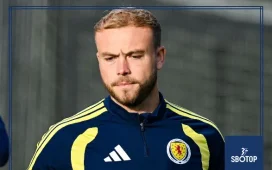



Scott McTominay has revealed that he underwent an electrical treatment for an irregular heartbeat two days before Scotland opened their 2026 World Cup campaign against Haiti. The Napoli midfielder described the experience at Hampden Park on 10 November, nearly five months after Scotland’s first appearance at a men’s World Cup finals since 1998. He started against Haiti and played in all three of Scotland’s group matches.
The treatment before the opener was followed by a separate procedure in September, when McTominay underwent a cardiac ablation in Manchester. Napoli said the September procedure was successful. By the time McTominay spoke publicly about what had happened in June, he was back playing for his club and had returned to the Scotland squad. His account filled in a part of the World Cup build-up that had been absent from the public explanation at the time.
What Happened Before Scotland Played Haiti
McTominay said the heart rhythm issue first came to light after Scotland arrived in the United States in early June. When he missed training before the tournament, the Scotland camp attributed his absence to a stomach complaint. It was only in November that he described being in hospital for treatment so close to the opening game.
He recalled lying in a hospital bed and preparing to be put to sleep for the procedure. The timing was difficult to absorb after a period in which he felt he had prepared well and was in good condition. Scotland were about to end a 28-year wait to play at a men’s World Cup, and one of their most experienced players was dealing with an unexpected interruption to his preparations.
McTominay said he considered himself fully fit when the Haiti match came around. He also made clear that he did not regard the experience as an excuse for how the tournament went. His comments distinguished the disruption of the preceding days from how he assessed his readiness to play. The public account establishes the timing and nature of the treatment as he described it. The details of the medical assessment before he took the field were not disclosed.
Scotland Won Their Opener, With McTominay Hitting the Post
Scotland beat Haiti 1–0 on 13 June in Foxborough, Massachusetts. John McGinn scored in the 29th minute to give Steve Clarke’s team three points. Scotland had chances before that goal, and McTominay was involved in two of them. He headed over from an Andy Robertson cross and, in the 17th minute, struck the post from outside the penalty area after good work on the wing by Ben Gannon-Doak.
At the time, those chances were part of the story of Scotland’s long-awaited return. McTominay’s subsequent disclosure added context to how he had reached the pitch. Two days after receiving treatment, he was in the starting line-up and getting into positions to threaten Haiti’s goal. His shot against the post came closer than his header to making him Scotland’s first scorer of the tournament, before McGinn provided the decisive finish.
The result gave Scotland a useful start in a group that also contained Morocco and Brazil. It was their only victory of the campaign. Morocco beat them 1–0 on 19 June, with Ismael Saibari scoring early, and Brazil won 3–0 in the final group game on 24 June. McTominay featured in both defeats. Scotland finished with three points and went out at the group stage.
Why McTominay Found the World Cup So Hard to Put Behind Him
McTominay described the aftermath as one of the most disappointing periods of his career. He said the frustration stayed with him for several weeks and that he needed time away to come to terms with the outcome. The reaction reflected both the importance he attached to the tournament and the gap between Scotland’s promising opening result and the way their campaign ended.
The sequence of matches helps explain that disappointment. Having beaten Haiti, Scotland entered their second fixture with a chance to build on three points. An early Morocco goal forced them to chase the game, and they finished without an equaliser. Against Brazil, they again failed to score. McGinn’s winner in the opening match remained Scotland’s only goal of the tournament.
McTominay spoke about the hospital visit and the group-stage exit in the same November appearance, but he resisted drawing a direct line between them. His account explains what he had to deal with before the tournament began and how he felt after it ended. Scotland’s elimination is a matter of record. How much, if at all, the episode affected any individual performance cannot be established from the results or his account alone.
The June Treatment and the September Ablation Were Separate Events
McTominay’s description of an electrical shock referred to the treatment he received immediately before the Haiti game. In general, doctors can use a controlled electrical shock to restore a regular heart rhythm, a treatment known as electrical cardioversion. McTominay described the shock and the timing publicly. The precise rhythm disturbance and full details of the June procedure were not disclosed.
The September treatment was identified more specifically. Napoli described the condition as a mild, benign arrhythmia and announced that McTominay would undergo pulsed field ablation. Ablation targets tissue involved in producing or sustaining an abnormal rhythm. The distinction matters to the timeline. McTominay received treatment in June, played in the World Cup, and later underwent the procedure Napoli announced after the issue continued to affect him back in Italy.
Napoli confirmed that the ablation took place in Manchester on 8 September. The club reported a successful outcome and said McTominay would rest for two weeks before resuming training. That update set out the immediate recovery plan. His return to competitive football came later, after he had spent September on the sidelines.
A Return to Napoli Followed by a Scotland Recall
McTominay began the club season with Napoli and played in their first two Serie A matches before the September procedure. His spell out overlapped with the start of Sébastien Pocognoli’s time in charge of Scotland. McTominay missed the new head coach’s first four matches, meaning the national team spent its opening Nations League fixtures under Pocognoli without the midfielder who had played throughout the World Cup group stage.
By November, McTominay had worked his way back into Napoli’s team. Before speaking at Hampden on 10 November, he had featured in all nine of the club’s matches since the preceding international break. He had also scored five goals since returning to action. That sequence provided a clearer picture of his comeback than a single appearance would have done. He was again playing regularly for his club and contributing in front of goal.
McTominay said he felt much better and was pleased to be playing again. He described the Manchester procedure as relatively straightforward from his perspective and said it had gone well. His assessment concerned his own experience. Napoli’s earlier statement had confirmed the outcome of the ablation, while his subsequent run of games showed how far he had progressed in returning to his football commitments.
Scotland’s November Fixtures Put Him Back on the International Stage
McTominay started against North Macedonia at Hampden on 13 November, his first Scotland appearance under Pocognoli. Scotland won 2–1. McGinn scored the opener and later converted a penalty after Elmin Rastoder had equalised. For McTominay, the match marked a return to international football three days after he had spoken about the treatment he received before the World Cup.
Scotland completed their Nations League group schedule away to Switzerland on 16 November and lost 4–0. The two results gave Pocognoli sharply different performances to assess in his first camp with McTominay available. They also moved the focus back to the current team. The midfielder’s September absence had kept him out of the opening matches under the new coach, and his November return allowed him to take part in that next stage.
There was a familiar detail in the win over North Macedonia. McGinn provided the goals at Hampden, just as he had supplied the winner against Haiti in June. The circumstances for McTominay had changed considerably between the two games. He went into the World Cup opener only two days after treatment. By November, he had returned from the ablation and already put together a run of appearances for Napoli before joining Scotland.
What the Disclosure Adds to Scotland’s World Cup Story
Scotland’s first World Cup win of 2026 was recorded in familiar football terms. McGinn scored, McTominay hit the post, and the team took three points without conceding. The midfielder’s disclosure added an event that supporters watching the game in June had no reason to know about. One of the players contesting headers and shooting from the edge of the area had been in hospital two days earlier.
The account also puts the year in a clearer order. The rhythm issue emerged in June, McTominay received treatment before the opener, and he completed Scotland’s group campaign. The problem returned while he was playing for Napoli, leading to the September ablation and a spell on the sidelines. Regular club appearances followed, then a return to the Scotland starting line-up in November.
For McTominay, the disappointment of the World Cup and the relief of playing again belonged to different parts of that sequence. He had wanted Scotland’s first appearance at the finals in a generation to last beyond the group stage. By the time he explained what happened before Haiti, he had already resumed the work interrupted first by the hospital visit and later by the ablation. His return to Hampden gave the story its next confirmed milestone.
Also Read: