The World Cup 2026 was expected to be another showcase of European dominance. With 16 representatives, Europe remains the most powerful confederation in terms of participation. Yet after the first wave of matches, the reality on the pitch tells a slightly different story — one filled with uncertainty, dropped points, and growing pressure on the continent’s biggest teams.
Despite being heavily favored, several European sides have struggled to impose themselves early in the tournament, raising questions about whether this generation can truly live up to expectations.
Europe Still Dominates in Numbers, But Not Yet in Results
Out of 48 teams competing at the World Cup 2026, Europe sends the largest contingent with 16 nations. This is significantly more than Africa’s 10 representatives and Asia’s nine, reinforcing Europe’s reputation as the strongest football region on paper.
Heading into the tournament, several teams were widely tipped as title contenders, including:
- France national football team
- England national football team
- Spain national football team
- Germany national football team
- Portugal national football team
- Netherlands national football team
However, early results have shown that reputation alone is not enough. Several European sides have already dropped crucial points in their opening matches.
Big Teams Stumble in Opening Matches
The most surprising theme of the opening matchday has been how many European favorites failed to secure wins.
One of the earliest shocks came from the Netherlands, who were held to a 2-2 draw by Japan. Despite leading at one stage, the Dutch side conceded late and had to settle for a single point.
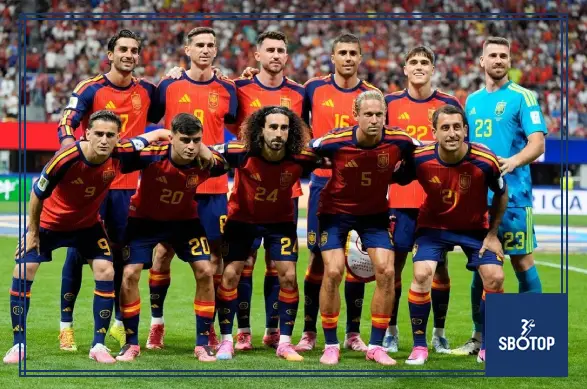
Spain also endured a frustrating start, being held to a goalless draw by tournament debutants Cape Verde. It was a match that exposed their lack of sharpness in the final third, despite dominating possession.
Belgium joined the list of underperforming teams after another draw, while Switzerland and Bosnia and Herzegovina also failed to start their campaigns with victories.
These results highlight a growing concern: European teams are controlling games but not finishing them.
Only Three European Wins So Far
Out of 10 matches played by European teams in the opening phase, only three ended in victory. That statistic alone has sparked debate among analysts and fans.
The wins came from three very different performances:
- Germany national football team delivered the most dominant display, crushing Curacao 7-1 in a statement victory.
- Sweden national football team impressed with a clinical 5-1 win over Tunisia, showing efficiency in attack.
- Scotland national football team secured a narrow but valuable 1-0 win against Haiti, grinding out a result in a tight contest.
On the other hand, teams like Czechia and Turkey suffered defeats, adding to the uneven start for the continent.
Overall, Europe’s early record stands at:
- 3 wins
- 5 draws
- 2 losses
Not disastrous — but far from dominant.
Why Are European Teams Struggling?
While it is still early in the tournament, several patterns are already emerging that may explain Europe’s inconsistent start.
Key factors include:
- Lack of finishing efficiency
Many teams are creating chances but failing to convert them into goals. - Strong opposition preparation
Non-European teams appear tactically well-prepared and highly disciplined. - Slow tournament adaptation
Several European squads look like they are still adjusting to World Cup intensity. - Overreliance on possession football
In some cases, control of the game has not translated into decisive attacking threat.
These issues suggest that Europe’s dominance is being challenged more seriously than in previous editions.
Pressure Builds on Remaining European Giants
The opening matchday is not yet complete. Six European teams have not played their first games, and expectations are now even higher for them to deliver.
All eyes will be on the remaining heavyweights, especially:
- France
- England
- Portugal
These teams are not just expected to win — they are expected to restore Europe’s authority in the tournament.
A strong start from them could quickly balance the statistics and silence early doubts. A poor start, however, could intensify scrutiny across the entire continent.
What Comes Next for Europe?
Despite the shaky beginning, it is important to remember that tournaments are not won in the first matchday. Many of Europe’s strongest teams are known for improving as competitions progress.
Still, the early signs suggest a more competitive global landscape than ever before. The gap between Europe and the rest of the world appears smaller, more tactical, and far less predictable.
Final Thoughts: A Wake-Up Call, Not a Collapse
Europe’s early performance at World Cup 2026 is best described as a warning rather than a failure. The continent still boasts elite talent, tactical depth, and historical dominance — but the opening games have shown that none of it guarantees results.
With the likes of France national football team and England national football team yet to play, there is still time to shift the narrative.
But one thing is already clear: the rest of the world is no longer afraid of Europe.
ALSO READ :
- SBOTOP Shock Reveal: Mohamed Salah’s Agent Once Offered Him to AS Roma But One Issue Killed the Deal
- SBOTOP From Trials to the World Cup: Yan Diomande Reflects on Ivory Coast, Leipzig, and His Rise
- SBOTOP Shock Twist in Transfer Talks: West Ham Refuse to Budge as Man Utd Chase Mateus Fernandes Hits a Wall