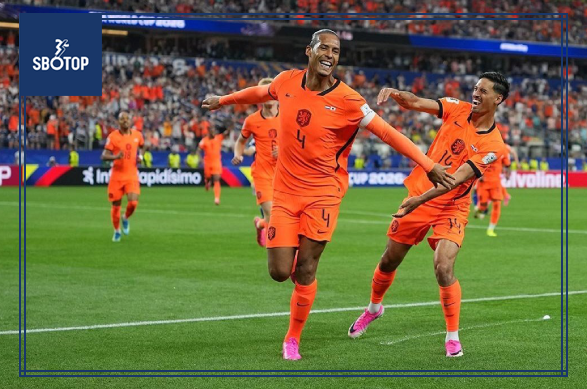
Netherlands captain Virgil van Dijk has voiced criticism over FIFA’s newly implemented hydration break policy at the 2026 World Cup, questioning whether the rule is necessary in every match situation.
The Dutch defender shared his thoughts after the Netherlands played out an entertaining 2-2 draw against Japan at AT&T Stadium on Sunday (15 June). Interestingly, the match was played in a fully air-conditioned venue, meaning extreme heat was not a factor during the game.
Van Dijk Questions Universal Application of Water Breaks
When asked about the effectiveness of mandatory water breaks, the 34-year-old centre-back responded with a light laugh before offering a candid opinion.
“Hydration breaks are quite interesting,” Van Dijk said. “I’ve watched almost every game before ours, and every time there’s a break, it almost feels like it’s made for advertising. That’s not something I personally enjoy.”
The Liverpool defender acknowledged that water breaks can be useful in extreme weather conditions, but stressed that they should not be applied uniformly across all matches.
“If the conditions are really hot, then of course it makes sense for player welfare,” he explained. “But I think every match should be assessed individually. Not every game needs the same treatment.”
Van Dijk later chose not to extend his criticism further, adding simply: “I think I’ve said enough about it.”
FIFA’s Mandatory Hydration Break Rule at World Cup 2026
FIFA introduced a three-minute hydration break in each half during the 2026 World Cup, following concerns about extreme heat conditions observed during previous tournaments, including matches at the FIFA Club World Cup.
The governing body stated that the rule was designed to protect players’ health and reduce the risk of heat-related exhaustion, especially in stadiums with challenging environmental conditions.
However, the decision has not been without controversy.
Critics argue that the rule goes beyond player safety and may also serve commercial interests. Since March, FIFA has allowed broadcast partners to use hydration breaks as advertising slots, leading to increased speculation that financial incentives may be influencing match interruptions.
As a result, some fans believe the frequent stoppages disrupt the natural rhythm and momentum of games, particularly when teams are building attacking pressure.
Tactical Advantage Hidden Behind Water Breaks
Beyond commercial concerns, some coaches have highlighted another unexpected impact of hydration breaks: tactical adjustments.
Germany head coach Julian Nagelsmann revealed that water breaks played a useful role in his team’s 7-1 victory over Curaçao, allowing him to refine tactical instructions during the match.
Nagelsmann noted that Curaçao used a rare diamond midfield formation, a system that is increasingly uncommon in modern football.
“Curaçao played with a diamond shape, and we adjusted our attacking structure before the hydration break,” he explained. “But it still takes time for players to adapt because you rarely face systems like that anymore.”
He also admitted that the break provided a valuable opportunity to reinforce instructions already given from the sidelines.
“The water break helped us remind the players of the tactical changes we had discussed on the board,” Nagelsmann added.
Growing Debate Over FIFA’s Decision
The introduction of hydration breaks has quickly become one of the most debated topics at the 2026 World Cup.
FIFA maintains that the rule is strictly focused on player health and safety, particularly in matches played under extreme heat conditions across multiple host venues.
However, players, coaches, and fans remain divided over its necessity in every match, especially in stadiums with controlled or mild climates.
Supporters of the rule argue that it protects player welfare and ensures consistent recovery time, while opponents believe it unnecessarily disrupts match flow and may even influence tactical momentum.
Van Dijk’s Comments Add Fuel to Ongoing Discussion
Virgil van Dijk’s remarks have further intensified the discussion surrounding the balance between player safety, match quality, and commercial interests at the World Cup.
As the tournament progresses, the hydration break policy is expected to remain under scrutiny, with more players and managers likely to weigh in on whether the rule enhances or disrupts the modern game.
What remains clear is that beyond the pitch, FIFA’s decisions continue to shape not only how football is played—but also how it is experienced by millions of fans around the world.
ALSO READ :