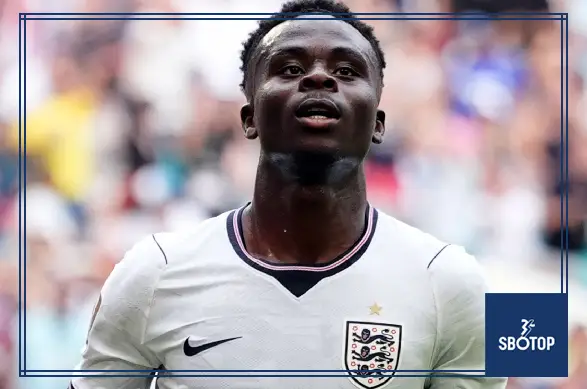
Bukayo Saka ended England’s 2026 World Cup campaign with the kind of performance that was impossible to ignore. In a breathtaking third-place play-off against France, the Arsenal winger scored a hat-trick as England claimed a remarkable 6-4 victory and secured their best finish at the tournament since lifting the trophy in 1966.
The match was supposed to be a consolation fixture between two teams still recovering from painful semifinal defeats. Instead, it became one of the most entertaining games of the tournament, producing ten goals, a dramatic French comeback and an emphatic response from an England side that had been criticised for its cautious approach against Argentina.
At the centre of it all was Saka.
His two first-half goals helped England establish a 4-0 advantage, while his late penalty completed the hat-trick and restored breathing space after France had threatened an extraordinary recovery. More importantly, his display offered a powerful answer to the questions surrounding his physical condition and limited involvement during the tournament.
After the final whistle, Saka made his position clear. Asked about his fitness, he responded: “I’m fit. I’m fit.” He also admitted that he would have liked more opportunities during England’s campaign, although he stopped short of openly criticising head coach Thomas Tuchel.
A Bronze-Medal Match Transformed into a Classic
Third-place play-offs are often treated as unwanted assignments. The players have already seen their dreams of reaching the final disappear, while managers must restore motivation only days after the most painful defeat of the tournament. England had lost 2-1 to Argentina in the semifinals after surrendering a lead. France, meanwhile, had been beaten 2-0 by Spain and missed the opportunity to reach a third consecutive World Cup final. Both teams entered the match in Miami carrying disappointment, fatigue and inevitable questions about what might have been.
Those circumstances could easily have produced a slow and cautious contest. Instead, England and France played with unusual freedom. Defensive organisation became secondary, attacking players were encouraged to take risks, and both teams repeatedly committed numbers forward.
England made seven changes from the team that started against Argentina, but the alterations did not reduce their attacking quality. Tuchel’s side played quickly, moved the ball forward with purpose and punished France whenever space appeared.
By half-time, England were 4-0 ahead through goals from Declan Rice, Ezri Konsa and two from Saka. It was an astonishing scoreline against a French team filled with elite talent, even allowing for the emotional damage caused by its semifinal elimination.
The opening 45 minutes represented almost everything England supporters had wanted to see more regularly during the tournament. There was width, direct running, movement between the lines and a willingness to attack before France could organise its defensive structure.
Saka was the player who benefited most from that change of approach.
Saka Seizes His Opportunity
Saka’s tournament had been complicated by physical concerns. He entered the World Cup after dealing with injury problems during the closing months of Arsenal’s season and did not start England’s opening two matches. Despite limited minutes, he still contributed three assists by the quarterfinal stage, showing that he remained capable of influencing games even when he was not playing regularly.
The biggest selection controversy arrived in the semifinal against Argentina. Tuchel chose Morgan Rogers instead of Saka, explaining later that he had a feeling Rogers could produce something special.
Rogers did contribute by assisting Anthony Gordon’s goal, so the decision was not without justification. However, England’s inability to maintain an attacking threat as Argentina increased the pressure ensured that Saka’s absence remained part of the discussion.
Saka’s combination of ball-carrying, acceleration and defensive discipline might have given England an outlet during the second half. His ability to receive possession under pressure, travel forward and draw fouls could potentially have relieved the pressure building around England’s defence.
There is no guarantee that starting him would have changed the semifinal result. Football cannot be reduced to one selection decision. Nevertheless, his performance against France inevitably intensified the debate.
Given a starting position on the right, Saka immediately looked energetic and decisive. He attacked defenders rather than simply retaining possession. He moved into central scoring positions and demonstrated the composure that has made him one of England’s most reliable attacking players.
His first goal arrived in the 37th minute. He struck again shortly before half-time, helping transform England’s encouraging start into a commanding advantage. Late in the second half, he converted from the penalty spot to complete the second hat-trick of his England career.
The achievement also placed him alongside one of the most celebrated names in English football history. Saka became only the second England player to score a hat-trick in a World Cup knockout match, following Geoff Hurst’s famous treble in the 1966 final.
Three Goals with Three Different Meanings
Each of Saka’s goals carried a different significance.
The first rewarded England’s aggressive approach and confirmed that the winger was ready to take responsibility. Rather than appearing cautious after his injury-affected preparation, he played with confidence and sharpness.
The second placed England in complete control before the interval. It also demonstrated Saka’s ability to maintain concentration after scoring. Some players become less involved after finding the net, but Saka continued searching for space and demanding possession.
The third was about composure.
France had transformed the match after half-time and reduced England’s four-goal lead to just one. Kylian Mbappé scored twice, with Bradley Barcola also finding the net, and the atmosphere of the contest changed dramatically. England, previously dominant, suddenly appeared vulnerable.
When England were awarded a late penalty, Jude Bellingham made sure Saka had the opportunity to complete his hat-trick. According to Saka, Bellingham protected the ball and encouraged him to take the kick.
Saka remained calm, converted the penalty and restored England’s two-goal advantage. France responded again through Ousmane Dembélé, but Bellingham scored in stoppage time to complete the extraordinary 6-4 victory.
The penalty was more than a statistical addition. It came at a moment when England needed someone to interrupt France’s momentum. Saka accepted that responsibility and delivered.
France’s Comeback Tests England’s Nerve
England’s first-half performance was excellent, but the second half also exposed familiar defensive concerns.
France emerged with greater intensity and immediately began reducing the deficit. Mbappé scored shortly after the restart and later added another, while Barcola’s finish brought France within touching distance of an astonishing equaliser.
At 4-3, England were no longer enjoying a comfortable celebration. The match had become a test of their ability to manage pressure, and memories of the semifinal collapse against Argentina were difficult to avoid.
Once again, England began retreating. Their control of possession weakened, the distances between attack and defence grew, and France were given opportunities to advance without facing enough resistance.
This did not erase the quality of England’s victory, but it showed that Tuchel still has significant work to do. A team with ambitions of winning Euro 2028 cannot regularly turn commanding leads into survival exercises.
The positive difference against France was that England found a way to respond. Saka’s penalty stopped the French surge, while Bellingham’s late goal finally settled the contest.
England’s resilience deserves credit. After the emotional damage of losing a semifinal, they could easily have collapsed when France recovered from 4-0 down. Instead, they regained enough control to finish the match and claim the bronze medal.
Saka’s Fitness Statement Changes the Conversation
Saka’s post-match comments were carefully delivered but impossible to separate from the selection debate.
He acknowledged that he would have liked to play more, adding that he preferred to make his statement on the pitch. His hat-trick gave those words additional weight.
Tuchel defended his semifinal decision and insisted that Saka had done everything expected of him. The England manager described the winger as a key player but maintained that his preference for Rogers had been a tactical choice rather than one forced by injury.
That explanation may settle the medical question, but it will not end the tactical discussion.
Saka is not simply a conventional winger. He contributes in several phases of the game. He can remain wide to stretch a defence, move inside to combine with midfielders, carry the ball during transitions and support his full-back defensively.
His tactical reliability is particularly valuable in knockout football. Coaches often prefer players who offer unpredictability in attack, but Saka combines creativity with discipline. He can follow a defensive plan without losing his attacking influence.
Against France, England benefited from his ability to make the correct decision quickly. When space opened, he attacked it. When opportunities appeared inside the penalty area, he moved into scoring positions. When the pressure of a hat-trick penalty arrived, he handled it.
This was not the performance of a player struggling physically. It was the performance of someone determined to remind everyone of his importance.
A Personal Triumph after a Difficult Tournament
Saka’s response also revealed the strength of his mentality.
Players rarely enjoy being left out of major matches, particularly when they believe they are ready to contribute. The disappointment becomes even greater when the team loses and the unused player must listen to public debate about the manager’s decision.
Saka could have approached the third-place match with frustration. Instead, he produced one of the finest individual performances of England’s tournament.
His reaction reflected the professionalism that has defined his career. He did not use the post-match interview to attack Tuchel or demand explanations. He admitted his desire for more playing time, confirmed his fitness and allowed his football to carry the argument.
That maturity is one reason he remains so important to England. International tournaments create emotional pressure that extends beyond the pitch. Players must cope with selection disappointment, criticism, fatigue and the expectations of an entire country.
Saka has repeatedly demonstrated that he can absorb that pressure without allowing it to change his personality or commitment.
England’s Best Finish in 60 Years
Third place was not England’s target when the tournament began. Tuchel and his players travelled to North America believing they could win the World Cup. Finishing behind the two finalists will therefore carry an unavoidable sense of disappointment.
However, the achievement should not be dismissed.
England had previously appeared in two World Cup third-place matches and lost both, falling to Italy in 1990 and Belgium in 2018. By beating France, they secured their highest finish since 1966 and their best-ever result at a World Cup held outside England.
The tournament also provided evidence that England possess a generation capable of remaining competitive. Bellingham finished with seven goals, setting a new England record for a single World Cup. Saka ended the competition with three goals and three assists, despite his restricted involvement.
There were also promising contributions from players such as Gordon and Rogers, showing that England’s attacking depth is not limited to the established names.
The challenge for Tuchel is to transform that depth into a clear and balanced system. Having many strong attacking players is an advantage only when the manager understands how and when to use them.
Mbappé Makes History despite France’s Defeat
Saka was the central figure in England’s victory, but Mbappé also left his mark on the match.
The French captain scored twice during the second-half comeback, taking his career World Cup total to 22 goals. He also reached ten goals at the 2026 tournament, strengthening his pursuit of another Golden Boot.
Mbappé’s performance showed why France remained dangerous even when trailing by four goals. His movement, finishing and determination forced England to keep defending until the final moments.
The match also marked the end of Didier Deschamps’ long spell as France manager. After 14 years in charge, the coach who led France to the 2018 World Cup title finished his tenure with a chaotic defeat rather than another final.
France’s second-half reaction offered a final example of the resilience developed during his reign, but their disastrous opening period proved too damaging to overcome.
Also Read: