England’s dramatic World Cup quarter-final victory over Norway should have been remembered primarily for Jude Bellingham’s match-winning brilliance. Instead, one of the tournament’s strangest controversies has placed an overhead camera cable at the centre of the debate.
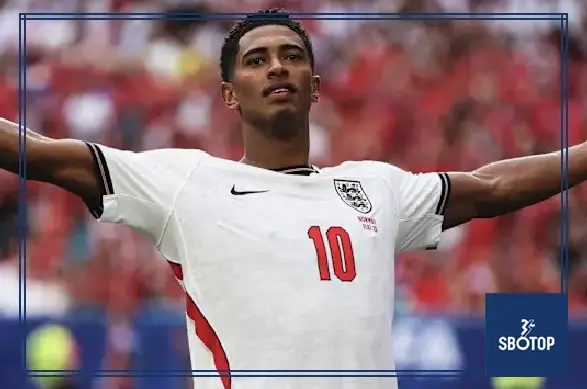
Thomas Tuchel’s side recovered from a goal down to win 2-1 after extra time, with Bellingham scoring both England goals. His first, delivered in stoppage time at the end of the opening half, restored parity and changed the momentum of the match. His second, scored early in extra time, carried England into the semi-finals.
Norway, however, remain convinced that the equaliser should never have been allowed to stand.
Immediately before the move that produced Bellingham’s first goal, Norway goalkeeper Ørjan Nyland launched the ball high from his own end. As it travelled through the air, the ball appeared on television replays to alter direction sharply and fall into an unexpected area. Norwegian players and staff believed it had clipped one of the cables supporting the Spidercam system above the pitch.
Had contact occurred, play should have been stopped and restarted with a dropped ball. Instead, England recovered possession, built an attack and equalised moments later.
FIFA later responded by pointing to data collected from the tournament’s Connected Ball technology. According to the governing body, the sensor inside the ball registered no unusual peak in its so-called “heartbeat” while it was airborne. FIFA therefore said there was no evidence that the ball had touched the overhead wire or that its flight had been changed by external contact.
That explanation has not satisfied Norway.
The Incident That Changed the Quarter-Final
Norway had every reason to feel encouraged before the disputed moment. Andreas Schjelderup had given them the lead in the 36th minute, producing a performance that threatened to extend one of the most memorable runs in the country’s football history. Norway had already eliminated Brazil and entered the quarter-final with confidence, defensive organisation and a dangerous attack led by Erling Haaland.
England struggled to create consistently during the opening half. Their possession was often slow, while Norway competed aggressively in midfield and looked comfortable protecting the central areas.
Then came the incident.
Nyland struck the ball high into the Miami night. Rather than continuing along what appeared to be its expected path, it dropped abruptly. Norway’s defensive structure briefly became confused, England collected possession and the attack ended with Bellingham scoring in the second minute of first-half stoppage time.
The equaliser gave England an emotional lift at the ideal moment. Norway went from preparing to carry a lead into the dressing room to being level before the interval.
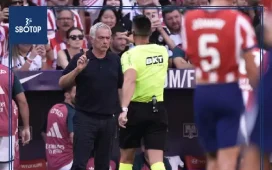
For Ståle Solbakken and his players, the frustration was not limited to the possibility that an external object had touched the ball. They believed the unusual drop directly contributed to the misunderstanding that allowed England to regain possession.
Solbakken later explained that the ball appeared to fall almost vertically in front of the Norway bench. Several players and staff members reacted immediately, convinced that its flight had been interrupted.
Why Norway Expected Play to Stop
Football’s laws are designed to account for outside interference. The overhead camera itself is not part of the field, nor are the cables used to move and support it. If the ball strikes such equipment and the contact affects play, the referee should stop the match. The appropriate restart would be a dropped ball rather than allowing either team to benefit from the unexpected deflection. The International Football Association Board’s rules state that play restarted after contact involving an outside agent should use a dropped ball, with possession generally restored to the team that would have retained or gained it.
In this situation, Norway had taken the goal kick. Had officials judged that the ball struck the Spidercam cable, England’s subsequent attack would not have been permitted to continue.
The argument is therefore not that Bellingham committed an offence. He finished the chance presented to him and had no responsibility for what may have happened earlier in the move.
The controversy concerns whether play should already have been stopped.
Former referee Mark Clattenburg argued that the suspected contact could have been considered within the reviewable attacking phase leading to a goal. Because England scored during the sequence that followed, the video officials had the opportunity to examine how possession had been gained and whether outside interference had influenced the move.
No intervention came.
FIFA Trusts the Connected Ball
FIFA’s defence of the decision relied heavily on its Connected Ball system.
The technology includes an internal sensor capable of detecting extremely small movements and contacts. It supplies data at high speed and has been used to support offside decisions, identify touches and assist officials during difficult incidents.
FIFA stated that the sensor showed no peak in the ball’s “heartbeat” while it was travelling through the air before Bellingham’s equaliser. On that basis, the organisation concluded there was no evidence of contact with the overhead wire.
Thomas Tuchel referred to the sensitivity of the technology after the match. The England manager noted that the same system had previously detected an extremely slight touch during another tournament incident. His point was simple: if the sensor could identify such minor contact, it should also have been capable of recording a collision with a camera cable.
Tuchel admitted that he had not personally seen the disputed moment and therefore deferred to the technology.
That position is understandable. Managers and players cannot examine every camera angle or technical reading while a match is unfolding. When officials say that the equipment has produced no evidence of interference, the game must continue.
However, FIFA’s wording is important.
The organisation said there was no evidence of contact in the sensor data. That is not exactly the same as proving beyond all possible doubt that contact did not occur.
Why the Television Pictures Created Doubt
The controversy grew because the available replays appeared, to many viewers, to tell a different story from the sensor.
From certain angles, the ball seemed to pass directly beside the cable before dropping suddenly. Norway’s players reacted as if something unexpected had occurred, while Nyland and the intended receiver both appeared confused by the ball’s altered path.
Those images created the impression that the camera system had influenced the play, even though FIFA’s data suggested otherwise.
This disagreement between visual evidence and technological evidence is what made the incident so unusual.
VAR controversies normally involve interpretation: whether contact was sufficient for a foul, whether a player deliberately handled the ball or whether an attacker interfered from an offside position.
The Spidercam debate was different. The basic question appeared factual: did the ball touch the cable or not?
Yet the two main forms of evidence did not produce an answer accepted by everyone.
FIFA trusted the sensor. Norway trusted what its players, staff and television viewers believed they saw.
Solbakken Refused to Blame the Defeat Entirely on the Cable
Despite his anger, Solbakken attempted to prevent the incident from defining Norway’s tournament.
The manager said he believed it was clear that the ball had touched something. He also acknowledged that the match would not be replayed and that Norway had no option except to accept the outcome.
Solbakken’s reaction was notable for its balance. He challenged the decision, explained why his team felt disadvantaged and expressed disbelief at the ball’s sudden movement. At the same time, he refused to claim that the cable was the only reason Norway lost.
He said he did not want the controversy to become the main story of Norway’s World Cup campaign. His players had reached their first tournament since 1998, defeated Brazil and pushed England beyond 90 minutes in a quarter-final. Solbakken believed those achievements deserved more attention than one disputed sequence.
That did not reduce his frustration.
His comments revealed the helplessness coaches often experience after officiating controversies. Once FIFA had reviewed the Connected Ball data and stated that no contact had been detected, there was no practical route to changing the decision.
Norway could disagree, but England’s goal remained valid.
Bellingham Turned the Debate Into a Match-Winning Performance
For Bellingham, the incident became attached to another decisive night in an England shirt.
He had no control over the Spidercam, the cable or the officials’ decision. His responsibility was to respond when England gained possession, and he did exactly that.
The equaliser gave England renewed belief before half-time. After a tense second period failed to produce another goal, Bellingham struck again in the third minute of extra time.
The midfielder capitalised on a defensive and goalkeeping error to score the winner, completing a performance that carried England into the semi-finals.
His second goal ensured that the controversial equaliser was not the final scoring action of the match. England still had to survive the second half, endure Norway’s pressure and find a winner during extra time.
That context matters when assessing the result.
Norway were unquestionably entitled to question the first goal. But England did not advance solely because of the disputed moment. They scored again and protected their advantage during the most demanding phase of the contest.
Bellingham’s ability to deliver twice under pressure became the sporting explanation for England’s progression, even as the cable dominated the discussion afterwards.
Norway Had Further Reasons to Feel Aggrieved
The Spidercam controversy was not the only moment to anger Norway.
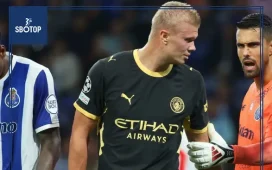
During the second half, they thought they had regained the lead, only for the goal to be disallowed after a VAR review identified an offence involving Haaland during the build-up.
That decision added to the sense within the Norwegian camp that the major calls had gone against them. England’s equaliser survived scrutiny despite the suspected cable contact, while Norway’s potential go-ahead goal was removed following video intervention.
The two incidents were not legally connected, and each had to be judged on its own evidence.
Nevertheless, football matches are experienced emotionally rather than as isolated rulebook exercises. From Norway’s perspective, the pattern felt punishing.
One disputed event helped England score. Another denied Norway a goal.
By the time Bellingham struck in extra time, Solbakken’s team had already spent considerable physical and emotional energy reacting to decisions they believed had shaped the contest.
Did VAR Have Enough Evidence to Intervene
The most difficult question is not whether the goal should have been disallowed if the ball struck the wire. The laws are relatively clear on that point.
The harder question is whether VAR had enough proof to establish that contact occurred.
Video officials are generally expected to intervene only when there is clear evidence of an error or a serious missed incident within an eligible category such as a goal decision. The attacking phase leading to a goal may be examined to determine whether an offence or other decisive event occurred before the ball entered the net.
The pictures appeared suspicious, but the cable was thin and the available angles may not have shown definite contact. The ball’s sudden drop could have been caused by its spin or flight rather than a collision.
FIFA then supplied sensor data indicating no impact.
Faced with conflicting signals, the VAR team apparently decided there was no clear basis for overturning the on-field decision.
That does not mean the process was convincing to supporters. A brief public explanation during or immediately after the check might have reduced confusion. Instead, many viewers saw Norway protesting while play continued without an obvious review.
By the time FIFA issued its technical explanation, the perception of injustice had already spread.
Also Read:
- SBOTOP: Messi Fires England Warning After Argentina Survive Switzerland Scare to Reach World Cup Semi-Final
- SBOTOP: England Face ‘Impossible’ Messi Mission in Historic World Cup Semi-Final Against Argentina
- SBOTOP: Harry Kane Reveals Tuchel’s Blunt Dressing-Room Message After England’s Unconvincing Norway Win