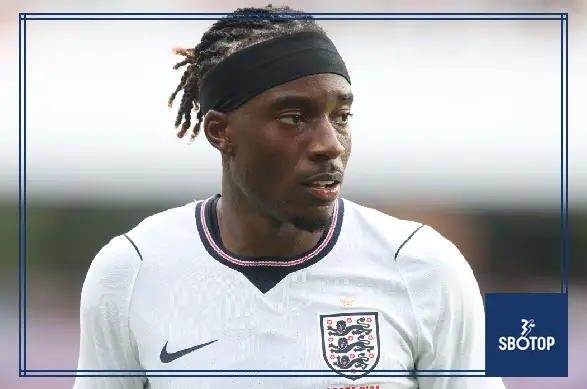
Zlatan Ibrahimovic has never been known for softening his opinions, and Noni Madueke became the latest player to receive one of the Swedish legend’s brutally direct assessments during England’s World Cup quarter-final against Norway.
Madueke was selected to start on the right wing in Miami, but his opportunity lasted only 45 minutes. The Arsenal forward struggled to influence the contest, repeatedly lost momentum in promising positions and was replaced by Bukayo Saka at half-time. While England eventually recovered to claim a dramatic 2-1 victory after extra time, Ibrahimovic was far from impressed by what he had witnessed from the winger.
The former AC Milan, Paris Saint-Germain and Manchester United striker suggested England had effectively been playing with ten men while Madueke was on the pitch. He then delivered the comment that quickly spread across social media, joking that the overhead camera cable involved in a controversial first-half incident had produced a better performance than the England international.
It was a ruthless line, perfectly suited to Ibrahimovic’s outspoken television personality. However, behind the humour was a serious question for Thomas Tuchel. With England preparing to face Argentina in the World Cup semi-finals, can Madueke still be trusted to make a decisive contribution on the tournament’s biggest stage?
Madueke Given a Major Opportunity
Madueke entered the Norway match with a significant chance to strengthen his position in Tuchel’s squad.
Saka had not been considered fully ready to start, opening the door for Madueke to operate from the right side of England’s attack. For a player competing with one of the national team’s most established performers, a World Cup quarter-final represented an ideal platform to make a statement.
The tactical conditions also appeared promising. Norway’s defensive shape left occasional space around the wide areas, while Harry Kane and Jude Bellingham were expected to occupy several defenders through the centre. Madueke’s responsibility was to remain wide, isolate his marker and use his acceleration to create openings.
Instead, the winger found it difficult to establish any rhythm. He received the ball in potentially useful situations but often delayed his next action. Several attacks slowed because he required additional touches before choosing whether to dribble, pass inside or return possession to a supporting teammate.
Ibrahimovic focused on that indecision. The former Sweden captain argued that Madueke repeatedly chose the wrong option and was not moving with sufficient intensity when England did not have the ball. His criticism suggested the winger’s difficulties were not limited to failed dribbles or inaccurate passes; he believed Madueke was failing to match the physical and mental urgency required by the occasion.
Ibrahimovic Delivers a Brutal Verdict
Ibrahimovic’s assessment came during Fox Sports’ coverage of the quarter-final.
He first observed that Bellingham had been England’s most active performer. He then contrasted the midfielder’s energy with Madueke’s lack of involvement, claiming the Three Lions looked as though they were playing with one fewer player.
During the interval, Ibrahimovic went even further. He said that he would remove Madueke immediately because the winger had contributed almost nothing during the opening 45 minutes.
Tuchel ultimately reached the same conclusion. Before the second half began, Madueke remained in the dressing room and Saka took his place on the right flank.
The speed of the substitution made the message difficult to ignore. Managers occasionally replace attacking players at half-time because of injury, fitness management or a planned tactical adjustment. In this case, Madueke’s individual performance was clearly part of the decision.
Tuchel was dissatisfied with England’s overall display and also replaced Declan Rice as he attempted to create a more adventurous structure. However, Madueke’s removal felt particularly significant because it represented a direct change in the wide position rather than a complete alteration of formation.
The Cable Joke Came from a Bizarre Controversy
Ibrahimovic’s most memorable remark was linked to one of the strangest incidents of the tournament.
Shortly before Bellingham scored England’s equaliser in first-half stoppage time, Norway goalkeeper Orjan Nyland sent the ball high into the Miami sky. Norway’s players and coaching staff believed the ball struck one of the cables supporting the stadium’s overhead camera system before dropping unusually quickly.
The sequence continued, England regained possession and Bellingham eventually scored. Norway coach Stale Solbakken raised the issue with the officials and later insisted that several players and staff members had seen the ball change direction.
FIFA said the connected sensor inside the match ball had detected no evidence of contact with the overhead wire. The goal therefore stood.
Ibrahimovic used the controversy to sharpen his criticism of Madueke. His joke that the cable had performed better than the winger was exaggerated for entertainment, but it perfectly captured the frustration surrounding Madueke’s first half.
The comment was particularly damaging because Madueke had entered the game hoping to become one of England’s central figures. Instead, the most frequently repeated description of his performance came through a comparison with an inanimate piece of stadium equipment.
The Numbers Supported Some of the Criticism
Ibrahimovic’s delivery was theatrical, but the available statistics provided support for his wider argument.
Madueke recorded only 28 touches during his 45 minutes on the field. He did not create a chance, completed only one successful dribble and managed just one pass into the final third. For an attacking player positioned on the right side of a team expected to control possession, those numbers showed how little influence he had on England’s play.
Statistics never explain an entire performance. A winger can stretch a defence through movement without receiving the ball, draw multiple opponents away from teammates or contribute through defensive pressing.
However, the visual evidence did not suggest Madueke was dominating through those less obvious actions. England’s attacks down his side lacked speed, and Norway were generally comfortable directing him toward areas where he could not create immediate danger.
His decision-making was perhaps the most frustrating aspect. There were moments when an early cross could have tested Norway’s centre-backs, but the opportunity disappeared after an extra touch. On other occasions, an inside pass toward Bellingham or Kane appeared available, yet Madueke attempted to beat his defender and lost momentum.
Against elite opposition, hesitation quickly removes attacking advantages. Ibrahimovic, who spent his career demanding confidence and authority from forward players, was always likely to judge such moments harshly.
England’s Overall Performance Also Deserved Scrutiny
It would be unfair to pretend Madueke was the only England player who struggled.
Tuchel’s team were slow in possession, technically careless and vulnerable whenever Norway attacked at speed. Andreas Schjelderup gave Norway the lead in the 36th minute, and England required Bellingham’s equaliser in stoppage time to avoid entering the break behind.
The second half remained difficult. Norway created threatening situations, had a goal disallowed following a VAR review and repeatedly tested England’s defensive organisation. Bellingham eventually scored the decisive goal in extra time after Nyland failed to secure a long-range effort.
The 2-1 victory sent England into another major-tournament semi-final, but Tuchel admitted that the quality of the performance had not satisfied him. He distinguished between the team’s strong mentality and its disappointing execution, arguing that England progressed because of resilience rather than fluent football.
Madueke therefore became the most visible example of a much broader problem. England’s build-up lacked tempo, their forwards often appeared disconnected and several players made avoidable mistakes.
Ibrahimovic’s focus on one individual made for compelling television, but Tuchel’s post-match comments showed that his concerns extended throughout the team.
Saka’s Introduction Changed the Right Side
Saka’s arrival did not instantly transform England into a dominant attacking force, but his presence gave the team a more reliable option on the right.
The Arsenal winger offered better positioning, quicker combinations and a stronger understanding of when to remain wide or move inside. His movement also helped create more space for England’s midfielders.
Saka’s experience matters in these moments. He has played in title races, Champions League knockout matches and multiple international tournaments. Even when he is not producing goals or assists, he generally understands how to maintain the team’s shape and keep an opposing full-back occupied.
Madueke is also an Arsenal player, but he remains less established at international level. His style is more dependent on direct confrontation. He wants to receive the ball, face his defender and attack with his stronger left foot.
When that first duel does not go well, he can sometimes become isolated from the rhythm of the team. That appeared to happen against Norway. Each unsuccessful action reduced his confidence, while the pressure to produce something meaningful seemed to increase with every possession.
Saka provided England with greater stability after the interval, supporting Tuchel’s decision to act immediately rather than hoping Madueke would recover later in the match.
Was Ibrahimovic’s Criticism Too Harsh
There is a difference between analysing a poor performance and publicly humiliating a player.
Ibrahimovic’s reputation was built partly on extraordinary self-confidence. As a player, he often made outrageous statements and embraced confrontation. That personality now makes him an entertaining television analyst, but his standards may not always leave room for context or development.
Madueke was playing in a World Cup quarter-final, in intense Miami conditions, against a Norway team that had already eliminated Brazil. England as a whole were performing below expectations, and the winger did not receive consistent support from the full-back or central midfield.
Those factors do not excuse every mistake, but they do complicate the picture.
A 24-year-old winger should not be defined permanently by one disappointing half. Madueke had earned his place in the squad through previous performances and possesses qualities that could still be useful against different opponents. His pace, unpredictability and willingness to attack defenders can change a match from the bench.
Ibrahimovic’s comment was effective as television, yet it should not become the only verdict attached to Madueke’s tournament. Football careers contain difficult nights, and the response to failure often reveals more than the failure itself.
Madueke Must Respond Mentally
The greatest challenge for Madueke now may be psychological rather than tactical.
Being substituted at half-time in front of a global audience is difficult enough. Seeing one of football’s most recognisable personalities turn the performance into a viral joke adds another layer of pressure.
Madueke must resist the temptation to respond publicly or become consumed by criticism. His most effective answer would be a productive contribution if another opportunity arrives.
Tournament football moves quickly. A player criticised after one match can become a national hero days later. Substitutes often decide semi-finals and finals because fatigue creates spaces that were unavailable earlier.
Madueke’s directness could become valuable against Argentina, particularly if England need to attack during the closing stages. He may be better suited to entering against tired defenders than carrying the responsibility of controlling an entire flank from the opening minute.
His reaction in training will also matter. Tuchel will observe whether he remains engaged, supports his teammates and demonstrates the determination required to recover.
Elite managers do not expect every player to succeed in every match. They do expect professionalism after disappointment.
Tuchel Faces an Important Selection Decision
England’s semi-final against Argentina will force Tuchel to make another major choice on the right wing.
Saka is the obvious starter when fully fit. His consistency, defensive discipline and relationship with Kane and Bellingham make him one of England’s most trusted attacking players.
However, the tournament has placed physical demands on the entire squad. If Saka cannot complete the match, Tuchel may need Madueke again.
The manager must decide whether the Norway performance was a one-off failure or evidence that the winger is not ready for the pressure of the final stages. He must also consider alternative options, including changing the structure or using another attacking midfielder from the right.
Dropping Madueke completely could protect England from a repeat of the Norway display, but it could also damage the confidence of a player who may still be needed.
Good tournament management often involves restoring players quickly. Tuchel must communicate honestly without making Madueke feel discarded.
The substitution sent a clear message about performance standards. The next step is ensuring that message produces improvement rather than fear.
Also Read: