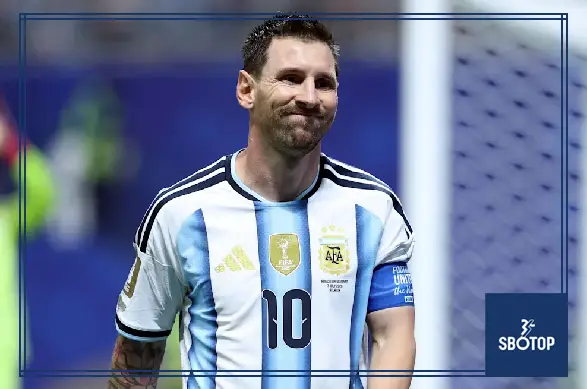
Joe Cole has delivered one of the boldest predictions of the 2026 World Cup by backing England to neutralise Lionel Messi and defeat Argentina in their eagerly anticipated semi-final.
The former England and Chelsea midfielder believes Thomas Tuchel’s team possess the athleticism, speed and attacking depth required to overcome the defending champions in Atlanta. Speaking before the heavyweight encounter, Cole declared that England would “put Lionel Messi to bed” and insisted he could feel an England victory “in my bones.”
His confidence was not presented as a cautious tactical assessment. It was a passionate prediction from a former international who believes England’s physical advantages can expose an Argentina side that has endured three demanding knockout matches.
Cole argued that England have too much pace for their opponents and confidently forecast that the Three Lions will reach the World Cup final. His comments immediately attracted attention because Messi remains the tournament’s joint-leading scorer and the central figure in Argentina’s attempt to retain the trophy.
Stopping one of football’s greatest players is rarely as simple as making a confident declaration. However, Cole’s optimism reflects a growing belief that England have the personnel to succeed where so many teams have failed.
Cole Refuses to Fear Messi
Messi’s reputation naturally dominates every preview involving Argentina. The eight-time Ballon d’Or winner has spent more than two decades deciding the biggest matches in club and international football. Even at the age of 39, he remains capable of changing a game through one pass, one dribble or one perfectly executed set piece.
Cole nevertheless refused to treat Messi as an unbeatable force.
When fellow pundit Micah Richards reacted cautiously to his prediction, Cole strengthened his position rather than withdrawing it. He argued that England’s speed would be too difficult for Argentina to manage and stated with complete certainty that Tuchel’s side would progress to the final.
His comments capture the mentality England will need.
Respecting Messi is essential. Becoming intimidated by him would be dangerous.
Teams that concentrate entirely on the Argentine captain can lose their shape, abandon their attacking ambitions and allow the rest of Lionel Scaloni’s side to control the match. England must recognise Messi’s influence without behaving as though their only objective is survival.
Cole’s message is that the Three Lions should approach the semi-final believing they are capable of hurting Argentina.
That confidence does not guarantee victory, but it prevents England from entering the contest with the psychological disadvantage of treating the defending champions as untouchable.
England’s Pace Supports Cole’s Argument
The strongest part of Cole’s prediction concerns England’s speed. Thomas Tuchel can select or introduce several explosive attacking players capable of carrying the ball into open space. England’s squad also possesses athletic midfielders who can cover large distances, press aggressively and support quick transitions.
That profile may be particularly useful against Argentina.
Scaloni’s team are technically accomplished and emotionally experienced, but they have shown vulnerability when opponents attack quickly. Switzerland caused problems during the quarter-final by competing physically, moving the ball into wide areas and forcing Argentina to defend over larger distances.
The defending champions eventually secured a 3-1 extra-time victory, although the score did not fully reflect the difficulty of the contest. Argentina required late goals from Julian Alvarez and Lautaro Martinez after Switzerland had equalised and forced the game beyond 90 minutes.
England should study those moments carefully.
Bukayo Saka’s direct running, Morgan Rogers’ power, Eberechi Eze’s close control and the movement of England’s other attacking options could test Argentina’s defenders. The objective will be to create situations in which those players can receive possession while moving forward rather than with their backs to goal.
Cole’s confidence is based partly on the belief that Argentina will struggle to match those physical qualities.
England must still produce the technical accuracy required to release their runners. Pace has little value when passes arrive late or possession is lost before the counterattack develops.
Messi Will Face England for the First Time
The semi-final will contain a remarkable personal milestone for Messi.
Despite facing nearly every major international nation during his extraordinary career, he has never played against England at senior level. The closest opportunity came in a 2005 friendly, but Messi missed the match after receiving a suspension following his international debut earlier that year.
The Atlanta semi-final will therefore become his first direct experience of one of Argentina’s most historic opponents.
Messi described the fixture as special because of England’s status as an international powerhouse. He also acknowledged the physical strain Argentina accumulated during their route through the knockout rounds and stressed the importance of recovering before the semi-final.
That admission may encourage Cole.
Argentina have required extra time in several knockout matches. They defeated Cape Verde 3-2 after 120 minutes in the round of 32, recovered from a two-goal deficit to eliminate Egypt in the last 16 and then needed extra time again against Switzerland.
Those experiences demonstrate resilience, but they also create fatigue.
England endured extra time against Norway, meaning Tuchel’s players will not enter the semi-final completely fresh. Argentina, however, have repeatedly been forced into exhausting contests.
Cole appears to believe England’s younger legs and greater pace will become increasingly influential if the match remains close.
Argentina’s Difficult Route Shows Their Character
It would be a mistake to interpret Argentina’s demanding knockout journey only as evidence of weakness.
Their ability to survive difficult situations demonstrates the mentality of champions.
Against Cape Verde, Argentina found a way through a dangerous contest. Against Egypt, they refused to accept elimination after falling 2-0 behind with only 11 minutes remaining. Against Switzerland, they responded to an equaliser and eventually took control in extra time.
Messi did not score in the quarter-final, ending a remarkable run of World Cup matches with a goal, but he still created Alexis Mac Allister’s opener from a corner. It was the first time since Argentina’s group-stage victory over Poland at the 2022 World Cup that he had completed a tournament match without scoring.
That statistic illustrates the scale of England’s challenge.
Even when Messi does not score, he can provide the action that changes the match.
Argentina’s confidence will also have grown from repeatedly overcoming adversity. Their players know they can recover from setbacks, survive extra time and deliver under extreme pressure.
Cole’s prediction may be bold, but England cannot assume Argentina will collapse if they fall behind.
Tuchel’s team may need to defeat the defending champions more than once psychologically: by taking the lead, resisting the response and continuing to compete when Argentina raise the emotional intensity.
England Have Developed Their Own Survival Instinct
England’s route to the semi-final has also been built on resilience rather than complete dominance.
Tuchel’s side defeated Norway 2-1 after extra time in the quarter-final, with Jude Bellingham scoring both goals. England had fallen behind and struggled to produce their best football, but their leading midfielder delivered an equaliser before completing the turnaround during the additional period.
The performance was imperfect.
Tuchel criticised England’s technical errors and lack of control, even while praising the mentality that allowed the team to advance. The manager knows that a similar level of football may not be enough against Argentina.
Yet England’s ability to survive difficult matches gives Cole another reason for optimism.
Previous England teams were often accused of allowing pressure to overwhelm them. The current squad has repeatedly demonstrated that it can remain competitive when matches become chaotic or emotionally uncomfortable.
Bellingham’s influence has been particularly important. His goals, physical presence and willingness to take responsibility have helped England progress even when the team’s attacking structure has not functioned smoothly.
Harry Kane provides another source of leadership and finishing ability. If England can improve the quality around those two players, they will carry a significant threat.
Cole’s prediction therefore rests on more than national loyalty. England possess match-winners who have already proved capable of deciding World Cup knockout ties.
Silencing Messi Requires a Collective Plan
England will not stop Messi by assigning one player to follow him everywhere.
Traditional man-marking can create more problems than it solves because Messi frequently moves away from central attacking areas. A defender or midfielder who follows him too far may open space for Alvarez, Mac Allister or another Argentine runner.
The better approach is likely to involve controlling the areas in which Messi becomes most dangerous.
England must remain compact between midfield and defence, preventing him from receiving possession freely near the edge of the penalty area. When he drops deeper, Tuchel’s players must decide whether to press him immediately or protect the passing lanes ahead.
Micah Richards noted that Messi is unusually difficult to mark because he does not perform the same defensive running as other forwards. His ability to remain away from the main action can make defenders lose track of him before he suddenly reappears in a dangerous position.
Communication will therefore be essential.
England’s midfielders cannot assume the defenders will always take responsibility for Messi. The centre-backs cannot step forward recklessly and leave spaces behind them.
The entire structure must move together.
Cole’s phrase about putting Messi to bed is memorable, but the real task will require concentration for every minute of the contest.
One moment of uncertainty could be enough for Messi to destroy an otherwise successful defensive plan.
England Must Also Disrupt Messi’s Supply Lines
Restricting Messi becomes easier when Argentina’s other creators are placed under pressure.
Enzo Fernandez, Alexis Mac Allister and the deeper midfielders provide the passes that allow Messi to receive the ball in advanced positions. England must prevent those players from controlling the tempo comfortably.
Kane’s role in the press could become important. He may not chase every defender, but he can direct Argentina’s buildup toward areas where Bellingham and England’s wide players are prepared to apply pressure.
Declan Rice and his midfield partner must then react quickly when possession becomes available.
Winning the ball is only the first stage. England must use those recoveries effectively.
Argentina’s shape may become vulnerable immediately after possession changes, especially when Messi remains high and several midfielders have moved forward to support the attack.
Those moments offer the opportunity Cole identified.
England can use their speed before Argentina reorganise. A quick pass into Saka, Rogers or another runner could transform a defensive action into a clear attacking situation.
The temptation will be to slow the game and protect possession. At certain moments, control will be necessary. At others, England must recognise that their advantage exists only for a few seconds.
Argentina Are More Than Messi
Cole’s comments naturally focused on Argentina’s captain, but England cannot reduce the opposition to one player.
Alvarez has already demonstrated his ability to score decisive goals. Lautaro Martinez provides another elite penalty-area threat, while Mac Allister and Fernandez possess the quality to control midfield phases.
Argentina’s defenders are also experienced in managing tournament football, and goalkeeper Emiliano Martinez has built a reputation for producing important saves in high-pressure matches.
Scaloni has created a team that supports Messi rather than simply waiting for him to solve every problem.
The players around their captain press, run and compete with enormous intensity. They accept that Messi may conserve energy without the ball because they believe his attacking contribution justifies the collective sacrifice.
England must therefore avoid becoming so focused on Messi that Argentina’s other players receive freedom.
A central midfielder stepping toward Messi may leave Mac Allister unmarked. A centre-back following him could open space for Alvarez. A full-back narrowing excessively may allow an Argentine winger to advance.
Cole’s prediction will be tested by the entire Argentine system, not only by its most famous component.
History Adds Weight to the Semi-Final
England and Argentina have produced some of the most memorable and controversial matches in World Cup history.
Their rivalry includes encounters in 1962, 1966, 1986, 1998 and 2002. England won the most recent World Cup meeting through David Beckham’s penalty in Japan, four years after Argentina eliminated them in a dramatic shootout.
The 1986 quarter-final remains the most famous chapter.
Diego Maradona scored both the controversial “Hand of God” goal and one of the greatest individual goals in World Cup history as Argentina advanced on their way to becoming champions.
The rivalry has also carried political and emotional significance beyond football. Before the 2026 semi-final, Scaloni attempted to reduce that tension by describing the contest as a football match that should be approached with respect.
That position is sensible, but history will remain present.
Supporters, former players and media coverage will repeatedly revisit the earlier meetings. Every controversial decision or physical challenge may be interpreted through the wider rivalry.
England must prevent emotion from damaging their discipline.
Aggression will be necessary, particularly in midfield, but reckless tackling or confrontation could provide Argentina with an advantage.
The best response to history is not pretending it does not exist. It is remaining composed enough to write a new chapter.
Also Read: