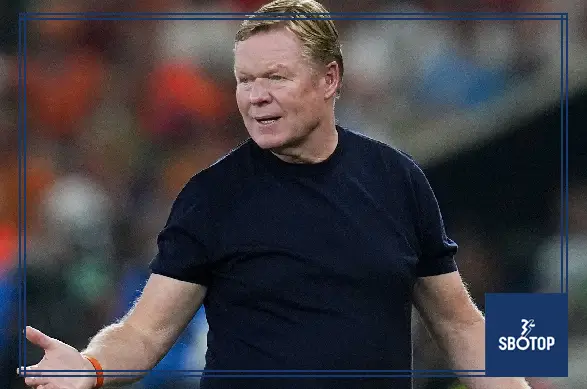
Ronald Koeman’s second spell as Netherlands head coach has ended in heartbreak, disappointment, and familiar Dutch frustration. The decision came after the Oranje were knocked out of the 2026 World Cup by Morocco in the round of 32, losing 3-2 on penalties after a 1-1 draw following extra time in Monterrey. Sky Sports reported that Koeman left his role for a second time after the elimination, having previously managed the national team from February 2018 to August 2020 before leaving for Barcelona.
For a coach so closely tied to Dutch football history, this was a painful ending. Koeman was not an outsider who briefly passed through the Oranje setup. He was one of the great Dutch football figures, a former national team hero, a European Championship winner as a player, and a coach trusted twice to guide the country back toward the top of international football. Yet his second tenure ended not with a deep World Cup run, but with a shootout defeat that left the Netherlands wondering how they allowed a winning position to disappear.
The timing made the exit feel even harsher. The Netherlands had topped Group F and reached the knockout stage with momentum, including a commanding 5-1 victory over Sweden. But against Morocco, the Dutch were less than a minute away from reaching the last 16 before Issa Diop’s stoppage-time header forced extra time and changed the story of the night.
A Late Equalizer That Changed Everything
The Netherlands looked set to survive a difficult knockout match when Cody Gakpo gave them the lead in the 72nd minute. Reuters reported that Wout Weghorst’s introduction gave the Dutch attack a clearer focal point, and his flick-on helped create the opening that allowed Gakpo to sweep a first-time finish beyond Yassine Bounou.
At that stage, Koeman’s plan appeared close to working. The Netherlands had been more cautious than many expected, but they had a lead, defensive structure, and enough experience on the pitch to manage the final minutes. Virgil van Dijk was organizing the back line, Bart Verbruggen had already made important saves, and Morocco were being forced to chase.
Then came the moment that changed everything. Substitute Chemsdine Talbi delivered a pinpoint cross from the left, and Issa Diop rose above Van Dijk to head Morocco level in stoppage time. Reuters described the goal as the strike that forced extra time after Gakpo’s opener had put the Dutch within touching distance of progression.
For Koeman, that header was more than a defensive lapse. It was the moment his second Netherlands reign began to unravel. Had the Dutch held on, his conservative setup might have been praised as smart tournament management. Instead, it became the subject of immediate scrutiny.
The Shootout That Broke Dutch Hopes
Extra time did not produce a winner, and the match went to penalties. Morocco eventually won 3-2, with Bounou saving Crysencio Summerville’s effort before Ismael Saibari converted the decisive spot kick. Reuters reported that Neil El Aynaoui and Justin Kluivert missed earlier attempts, Bart Verbruggen appeared to save Soufiane Rahimi’s penalty before the ball slipped under him and crossed the line, Quinten Timber fired wide, and Achraf Hakimi hit the post before Saibari settled the contest.
It was a brutal way for the Netherlands to exit. Penalty shootouts create clear villains and heroes, but this defeat was not simply about the players who missed. The Dutch had controlled their own destiny before the shootout began. They had the lead. They had the chance to finish the match. They had the defensive shape Koeman believed would give them the best chance of survival.
Instead, the Netherlands were dragged into football’s harshest lottery, and Morocco handled the pressure better. Bounou, already respected as one of the game’s finest penalty goalkeepers, delivered the decisive save. Saibari carried the final responsibility with calm authority. Morocco moved on to face co-hosts Canada in Houston, while the Dutch were left with another tournament scar.
For Koeman, the shootout defeat became the closing image of his tenure: a team close enough to progress, but not strong enough to complete the job.
Koeman Defends His Tactical Choices
In the immediate aftermath, Koeman did not apologize for his defensive approach. Reuters reported that he defended the decision to use five defenders, insisting it was not based on fear of Morocco but on analysis of the opposition and a desire to give the Netherlands a better chance of winning.
His argument was clear. Morocco had pace, physicality, and direct attacking threat. Koeman believed a more secure defensive setup would reduce the danger. He argued that the Netherlands gave away fewer chances than they had in group-stage matches, even if they were also less offensive. He also said he would have made the same tactical choice again.
That stance reveals the central tension around Koeman’s final match. From a purely tactical perspective, his plan almost worked. The Netherlands were seconds away from progression. But Dutch football is not judged only by results. It is judged by style, initiative, and the long-standing cultural expectation that the Oranje should attack, dominate, and impose themselves.
Koeman understood that criticism would come. He had dealt before with disapproval when moving away from the traditional Dutch school of attacking football. Against Morocco, he chose pragmatism. The result turned that pragmatism into a weakness in the public narrative.
The Burden of Dutch Football Ideals
No Netherlands coach works in a tactical vacuum. The national team carries decades of football identity: total football, positional intelligence, wide attacking play, courage in possession, and a belief that style matters. Even when Dutch teams do not win tournaments, supporters often expect them to play with imagination.
Koeman’s defensive setup against Morocco collided with that tradition. It was not irrational. In tournament football, coaches often become more cautious. Knockout matches are unforgiving, and the price of one mistake is enormous. But for the Netherlands, a back-five system in a last-32 tie against Morocco was always going to invite debate.
The problem for Koeman is that the result decided how the tactics were remembered. Had the Netherlands survived, the approach would have looked mature. Because Morocco equalized late and won the shootout, the setup looked reactive.
That is the cruelty of knockout football. Tactical debates are often settled not by theory, but by the final score. Koeman’s plan took the Netherlands close to the next round. It did not take them far enough.
Why Koeman Chose to Walk Away
Sky Sports reported that Koeman said the decision was not easy because of his close work with the coaching staff and players, but he felt the moment was right to spend more time with his wife, children, and grandchildren.
That personal explanation matters. Coaching an international team is not only about tactics and results. It is about pressure, travel, public scrutiny, and the constant emotional weight of national expectation. Koeman had carried that weight twice. The second time ended with a painful World Cup exit, but his decision to leave also reflected life beyond football.
His statement framed the departure not simply as resignation under pressure, but as a natural ending. Still, the football context cannot be separated from the timing. The Netherlands had just suffered a historic disappointment. A team expected to reach at least the last 16 went out in the first knockout hurdle. For a coach in his second spell, that was always going to force a reckoning.
Koeman leaves with pride in his work, but also with unfinished business. He restored periods of stability, guided the team through qualifying and group-stage challenges, and kept the Netherlands competitive. Yet the major tournament breakthrough never came.
A Second Spell That Promised More
Koeman’s first spell with the Netherlands began in 2018 and ended in 2020 when he left to take over at Barcelona. Sky Sports noted that this latest departure marks the second time he has left the Oranje job.
His return in 2023 came with a sense of familiarity and trust. The KNVB knew him. The players understood his stature. Supporters recognized his history. He was not appointed as an experiment; he was brought back as a figure of authority who could steady the national team.
There were positive moments. The Netherlands topped their group at the 2026 World Cup, and the 5-1 win over Sweden showed what the team could do when attacking rhythm and confidence aligned. But tournament legacies are shaped by knockout matches, not group-stage peaks.
That is why the Morocco defeat will dominate the memory of Koeman’s second spell. The Netherlands were not humiliated over 90 minutes. They were not outclassed from start to finish. But they failed at the moment when a top team must close the door.
Morocco’s Resilience Exposed Dutch Fragility
Morocco deserve enormous credit. Their victory was not a fluke. Reuters reported that they created better chances before the break, with Verbruggen making excellent saves from Ayoub Bouaddi and Neil El Aynaoui, while Hakimi hit the crossbar and forced another save as the Dutch struggled with his forward runs.
The Atlas Lions were not passive. They pushed, suffered, recovered, and found a late equalizer through Diop. In the shootout, they survived Hakimi’s missed chance to seal victory and still found the nerve to finish the job through Saibari.
That resilience exposed the Dutch problem. The Netherlands had talent and structure, but Morocco had the stronger emotional finish. Koeman’s team were organized for long stretches, yet they could not control the final moments. They had the lead, but not the authority to protect it.
This was the difference between a plan and a winning mentality. Koeman had a plan. Morocco had the last word.
Also Read: