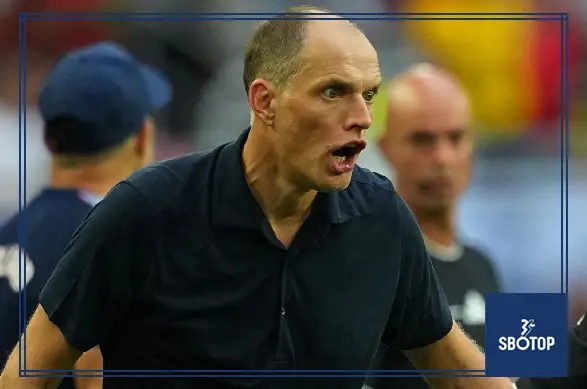
England reached the World Cup semi-finals after defeating Norway 2-1 in extra time, yet Thomas Tuchel emerged from Miami sounding less like a manager celebrating progress and more like one warning that his team had escaped by the narrowest margin. The result carried England into the last four for the fourth time, but Tuchel refused to let the occasion disguise the weaknesses he had watched for more than two hours.
His assessment was severe. England had shown courage and a refusal to accept elimination, but their football lacked control. Their passing was loose, their attacks were slow and technical errors repeatedly allowed Norway to regain momentum. Tuchel believed England had made a difficult quarter-final even more dangerous through their own decisions.
Jude Bellingham saw the night differently. The midfielder scored both England goals, dragging his team level before half-time and converting a rebound early in extra time. Told that Tuchel had described the performance as sloppy and fortunate, Bellingham replied: “Yeah, well, whatever.”
The remark became a major talking point before England’s semi-final. It suggested tension, but it also reflected two perspectives. Tuchel was thinking about the standard required to defeat Argentina. Bellingham was thinking about the suffering, effort and resilience that had just carried England through another punishing knockout match.
Norway Expose England’s Weaknesses
Norway entered without fear. Their victory over Brazil had strengthened the belief that they could trouble another major nation. Ståle Solbakken’s team defended with organisation but attacked with purpose, using Martin Ødegaard’s passing and the movement of Andreas Schjelderup, Alexander Sørloth and Erling Haaland to test England’s shape.
The intense Miami heat contributed to a cautious opening. England attempted to control possession but moved the ball too slowly to disrupt Norway’s structure. Harry Kane dropped away from the penalty area to find touches, leaving too few players threatening the space behind the defence. Norway looked comfortable without the ball and increasingly dangerous whenever they won it.
Their breakthrough arrived in the 36th minute. Patrick Berg dispossessed Kane near halfway and released Schjelderup down the left. The winger beat England’s makeshift full-back before sending a powerful shot or cross beyond Jordan Pickford. Norway nearly added another through Sørloth and Ødegaard, while a promising two-against-one disappeared when the final decision was delayed.
England were rattled, and Tuchel could already see the technical and positional problems that later dominated his post-match verdict.
Bellingham Restores Hope
England’s equaliser arrived in first-half stoppage time through the player who repeatedly accepts responsibility when the team’s structure begins to fail. Anthony Gordon moved the ball across the edge of the area, and Bellingham took control with the confidence of someone expecting to change the match.
His first touch carried him towards the box. His next movement took him away from a defender, and he directed a composed finish across Ørjan Nyland into the far corner. The timing was vital. Norway had been seconds from reaching the interval ahead; instead, they walked off level and regretting the chances they had wasted.
Solbakken later argued that a Norwegian clearance struck an overhead camera cable before England regained possession in the build-up. FIFA said data from the connected ball showed no evidence of contact. The incident added controversy, although the Norway coach insisted it should not overshadow his team’s wider achievement.
Bellingham’s goal changed the emotional atmosphere. It did not solve England’s tactical problems, but it reminded them that one moment of quality could erase a poor spell.
A Second Half Without Control
England returned with greater energy but still struggled to sustain pressure. Their possession was interrupted by inaccurate passes, and Norway continued to threaten through direct attacks. Haaland did not score, but his movement occupied defenders and created room for teammates.
Tuchel adjusted his side repeatedly. Morgan Rogers added direct running and a willingness to shoot from distance, while Djed Spence brought energy on the flank. England still lacked fluency, however, and the match remained uncomfortable.
Kane found the net only for the effort to be ruled out for offside. Norway also produced dangerous moments, and neither team found a winner in normal time. Both sides were forced into another exhausting 30 minutes.
That absence of control explains Tuchel’s frustration. England possessed greater squad depth and more tournament experience, but never transformed those advantages into dominance. They remained dependent on isolated moments rather than reliable attacking patterns.
The Extra-Time Winner
Three minutes into extra time, Rogers struck a powerful effort from outside the area. Nyland could not hold it, and the rebound fell into the six-yard box.
Bellingham had continued his run.
While Norway’s defenders paused, he reacted instantly and buried the loose ball. The finish was straightforward, but the instinct behind it was elite. After more than 90 minutes in oppressive conditions, Bellingham retained the concentration to anticipate an error and the energy to exploit it.
England led 2-1, but the remaining period brought anxiety. A penalty awarded for a challenge on Spence was overturned after video review, while Norway pushed for an equaliser. Haaland, who had scored seven tournament goals, was substituted during extra time after being kept scoreless for the first time in 16 international matches.
England survived, and Bellingham once again became the player separating progress from elimination.
Tuchel’s Uncompromising Verdict
Many managers would have used the result to protect their players and build momentum. Tuchel chose blunt honesty. He praised England’s mentality but made clear that he was dissatisfied with the quality of their performance.
He highlighted technical mistakes, slow circulation and the shortage of repeated attacking actions. England, in his view, had made life unnecessarily difficult and had been fortunate to progress. The criticism was not aimed at commitment. It was a warning that effort alone would not be sufficient against Argentina.
The reigning champions possess the quality and experience to punish the spaces Norway found. Lionel Messi, Julián Álvarez, Alexis Mac Allister and Lautaro Martínez offer different threats, and England cannot expect Bellingham to rescue them whenever possession breaks down.
Tuchel was speaking as a coach preparing for a stronger opponent. The result mattered, but the process offered reasons for concern.
Bellingham Defends the Players
Bellingham responded from the perspective of someone who had experienced the match physically rather than from the technical area. He pointed to the conditions and Norway’s quality, mentioning opponents such as Haaland, Ødegaard, Antonio Nusa and Sørloth.
His message was that England’s players deserved appreciation for their work. The match demanded repeated sprints, defensive recoveries and concentration in extreme heat. They fell behind, recovered and survived extra time. From Bellingham’s viewpoint, describing the display mainly through its mistakes risked overlooking the effort that made victory possible.
His “whatever” was dismissive, but what followed was measured. He praised teammates and focused on the collective shift rather than his own two goals. The response showed the protective instinct of a senior figure who did not want criticism to overshadow what England had achieved.
Tension Without a Crisis
The exchange generated discussion about the relationship between Tuchel and Bellingham. Their history made the moment sensitive: Tuchel had previously apologised after using the word “repulsive” while discussing aspects of Bellingham’s fiery behaviour.
Yet the disagreement after Norway did not necessarily represent a breakdown. Tuchel later clarified that he completely agreed with Bellingham’s praise for the team’s work rate, spirit and refusal to lose. His criticism concerned the standard of football, not commitment.
That distinction matters. A manager can admire mentality while remaining dissatisfied with execution. A player can accept that improvement is necessary while defending teammates from an overly negative verdict. Tournament pressure creates different emotional reactions; what matters is whether disagreement damages trust or sharpens focus.
The public exchange also places extra attention on England’s response in training. Senior players must ensure that criticism is absorbed without becoming personal, while Tuchel must communicate clearly enough for the squad to understand that his standards are intended to protect their ambition, not diminish their achievement. The next performance will reveal whether the disagreement produced irritation, motivation or both.
Bellingham’s Importance Is Beyond Debate
Any suggestion that Tuchel had lost confidence in Bellingham was contradicted by his praise. The manager called the midfielder world class and argued that his decisive influence required little explanation.
England would not be preparing for a semi-final without him. Bellingham scored twice against Mexico and twice against Norway, repeatedly delivering when the team needed rescue. His ability to carry the ball, attack the penalty area and influence the emotional rhythm of matches has made him England’s leading performer.
Tuchel’s challenge is to create a structure that supports that brilliance rather than depending entirely upon it. Bellingham and Kane had scored 12 of England’s 13 tournament goals after the Norway match. That concentration demonstrates their quality, but also exposes England’s reliance on two players.
The manager wants other attackers to reach dangerous positions more consistently. A wider scoring threat would give Bellingham greater freedom and make England harder to control.
England’s Identity Under Pressure
The Norway match raised a larger question about England’s identity. Are they a controlled team capable of dominating elite opponents, or a resilient knockout side surviving through defensive effort and individual brilliance?
So far, the second description appears more accurate. England repeatedly find solutions without producing complete performances. Their mentality carries them through difficult moments, and Bellingham supplies decisive quality.
There is value in that resilience. World Cups are rarely won through perfect football alone. Champions must survive poor periods, adapt to different opponents and remain calm when plans fail.
Yet England cannot rely permanently on chaos. Against Argentina, careless passing could give Messi opportunities against an unbalanced defence. Slow circulation could allow the champions to settle into a compact shape. Poor support for Kane could leave England predictable.
Tuchel’s criticism was therefore aimed at the difference between surviving a quarter-final and winning the tournament.
Also Read: