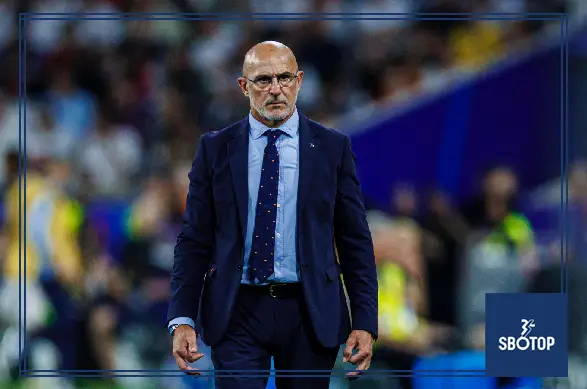
Spain’s route to the 2026 World Cup semi-finals has been built on control, patience and faith in their identity. Luis de la Fuente must now apply those principles against the tournament’s most explosive attack. France arrive in Arlington with Kylian Mbappé, Ousmane Dembélé, Michael Olise and another elite forward positioned around them. Spain’s response is not expected to be retreat or survival. Their plan is to own the ball, dictate the rhythm and force France to defend more often than they attack.
Executing it against Didier Deschamps’ side will require Spain’s most complete tournament performance. France possess the speed to punish a single loose pass, the physical power to dominate broken play and the individual quality to score before an opponent has reorganised. De la Fuente’s task is therefore to preserve Spain’s attacking ambition without leaving the spaces that Mbappé and Dembélé want to exploit.
Possession as Spain’s First Defensive Weapon
The clearest element of Spain’s tactical plan is possession. Alex Baena explained that La Roja intend to keep the ball, control the tempo and make France spend more time reacting than creating. This possession is a defensive mechanism designed to limit transitions for France’s front line.
When Spain circulate the ball successfully, Mbappé and the other French attackers are pushed farther from goal. They must either press, track runners or remain disconnected from their midfield. Every long Spanish sequence can reduce France’s rhythm and frustrate attackers who prefer exploding forward to defending repeatedly.
The danger appears when Spain become careless. A misplaced pass in midfield could instantly release France into open grass. For that reason, Rodri’s positioning and the support around him will be crucial. Spain must create short passing distances, offer several safe options and react immediately whenever possession is lost.
The Midfield Battle Will Shape the Semi-Final
France have made clear that they do not intend to surrender the centre of the pitch. Deschamps has spoken about competing for midfield control rather than simply waiting in a low defensive block. That decision creates the possibility of a fascinating tactical contest between two teams that want influence in the same areas.
Spain will seek numerical superiority around Rodri, Pedri, Fabián Ruiz and whichever midfielder joins them. Their aim will be to move France’s central players, create a free man and then accelerate through the next line. France, meanwhile, can use Adrien Rabiot, Manu Koné, Aurélien Tchouaméni or Warren Zaïre-Emery to close those spaces and challenge Spain physically.
If Spain control the midfield, Lamine Yamal and the opposite winger should receive the ball in favourable one-against-one situations. If France win that battle, Mbappé and Dembélé will attack a Spanish defence that has not had time to settle. The match may be shaped by each team’s first pass after possession changes.
Limiting Mbappé Without Losing Spain’s Shape
Mbappé is the most obvious threat, but Spain cannot allow their entire defensive plan to revolve around one player. France’s captain leads the scoring race and remains devastating when receiving the ball facing goal. Yet overcommitting defenders toward him would create space for Olise, Dembélé or Désiré Doué.
Spain’s best protection may come from controlling the supply rather than chasing Mbappé after he has accelerated. That means pressing France’s midfielders, blocking vertical passes and preventing their defenders from stepping forward comfortably. Pedro Porro or Marc Cucurella may also need support from a winger whenever Mbappé drifts toward their side.
The defensive line must judge its height carefully. Holding too high a position invites runs behind, but dropping too deep gives France time near the penalty area. De la Fuente will want a compact team, with the midfield close enough to the defence to close passing lanes without destroying Spain’s ability to press forward.
Counter-Pressing Must Be Immediate
Spain have defended remarkably well throughout the tournament, and much of that success has come from winning the ball back quickly. Their counter-press prevents opponents from lifting their heads and identifying forward runners. Against France, that reaction will become even more important.
When Yamal, Nico Williams or another attacker loses possession, the nearest Spanish players must close the ball instantly. The objective is not always to recover it with the first challenge. Sometimes the priority is merely to delay France, allowing Rodri and the defenders to restore structure.
A failed counter-press, however, could be disastrous. France are comfortable playing through pressure and can turn one successful escape into a clear chance. Spain must therefore press collectively rather than emotionally. One player charging forward alone would only open a passing lane behind him.
Yamal Can Force France Back
Much of the discussion has centred on how Spain will stop France, but De la Fuente also possesses attackers capable of changing French behaviour. Yamal is the most important. His ability to receive wide, beat defenders and create from the right can force France’s left side to remain cautious.
If Yamal begins winning duels, France may need to send a second defender toward him. That would reduce their freedom elsewhere and could create central space for Pedri, Dani Olmo, Mikel Oyarzabal or a late-arriving midfielder. Spain must exploit Yamal’s gravity rather than demand an individual miracle.
De la Fuente has expressed confidence that the teenager’s best performance of the tournament may still be ahead. The semi-final offers the ideal stage. Spain do not need Yamal to dominate every possession, but they need him to make France uncomfortable enough that their full-backs hesitate before joining attacks.
Spain’s Left Side Must Also Contribute
France will prepare heavily for Yamal, so Spain must avoid becoming predictable. Their left side needs to stretch the pitch, attack the space behind Jules Koundé and prevent France from tilting their defence toward the opposite flank.
Nico Williams, if selected, offers direct running and the ability to attack from a standing start. Other options may provide more control or movement inside. Whoever starts must make France defend the pitch’s full width.
Cucurella’s forward runs could also be valuable, although they carry risk. If he advances at the wrong moment and Spain lose the ball, Mbappé may find the space behind him. Coordination between the left-back, winger and nearest midfielder must therefore be precise.
Merino’s Late Impact Offers Another Route
Mikel Merino has become one of Spain’s most influential substitutes during the knockout phase. His late goals against Portugal and Belgium demonstrated the value of his timing, physical strength and ability to attack crowded penalty areas.
France’s defenders are powerful, but a tired defensive line can struggle with a fresh midfielder arriving from deeper positions. Merino gives De la Fuente a way to change the match without abandoning Spain’s structure. He can help protect possession, compete aerially and become an additional target when Spain need a goal.
His role highlights Spain’s depth because a semi-final may not be decided by the starters. Travel, heat and the physical demands of the expanded tournament mean substitutions could become decisive after the hour mark.
France’s Front Four Demand Constant Awareness
France’s attack is dangerous because it does not depend on one fixed pattern. Mbappé can begin centrally or drift left. Dembélé can attack either flank, carry the ball through pressure and shoot from distance. Olise often moves inside, connecting midfield and attack before releasing a runner. Doué or Bradley Barcola can add another layer of speed and unpredictability.
Spain cannot follow every movement individually; they must communicate, pass runners between zones and protect central spaces. If one centre-back is dragged too far wide, France can attack the gap he leaves behind.
Pau Cubarsí, Robin Le Normand, Dani Vivian or whichever partnership starts will need calm distribution as well as defensive concentration. France’s pressure may attempt to force Spain into hurried clearances, but De la Fuente will still want his team to play through the first line whenever possible.
Travel and Fatigue Add Another Challenge
Spain have covered considerably more distance than France during the tournament, travelling across several regions before reaching Texas. Baena acknowledged that the schedule had taken a physical toll, although Porro insisted the team had recovered fully.
That contrast could influence Spain’s tactical choices. An aggressive press requires energy, and maintaining possession demands constant movement to create passing angles. If fatigue appears late, France’s substitutes could attack spaces that were closed earlier.
De la Fuente must manage the tempo intelligently because Spain cannot play at maximum speed throughout. There will be periods when they need to slow possession, breathe with the ball and make France chase. Conserving energy without becoming passive will be one of the manager’s most delicate responsibilities.
Recent History Gives Spain Confidence
Spain have defeated France in two recent semi-finals, winning at Euro 2024 and again in a spectacular Nations League encounter in 2025. Those victories provide psychological confidence, but both camps have stressed that the current match is different.
France have evolved into a more aggressive attacking team, while Spain have developed greater maturity and depth. Past success proves that De la Fuente’s methods can trouble Deschamps, yet it does not guarantee another victory.
Those memories may matter. Spain know they can withstand French pressure and create chances. France, conversely, will be motivated to prevent a third consecutive semi-final defeat to the same opponent.
De la Fuente Refuses to Abandon Spain’s Identity
The central message from Spain’s camp is confidence rather than fear. De la Fuente has described the match as worthy of a final and said his team are prepared to suffer. That phrase does not suggest a defensive surrender. It reflects an understanding that even a possession-dominant side must survive difficult periods against France.
Spain’s identity will remain based on the ball, collective movement and aggressive recovery after possession is lost. Adjustments will be necessary, particularly around Mbappé’s pace, but De la Fuente is unlikely to replace his team’s strongest qualities with an unfamiliar low block.
Elite tournament coaching requires this balance: recognising France’s danger without letting it dictate every decision.
Fine Margins Will Decide the Contest
Both teams reached the semi-final through narrow but deserved quarter-final victories. France defeated Morocco 2-0, while Spain overcame Belgium 2-1 through another important contribution from Merino. Each side has demonstrated the ability to manage pressure and find decisive moments.
The semi-final could turn on one transition, set piece or midfield mistake. Spain’s plan is designed to reduce randomness by controlling territory and possession. France will attempt to increase uncertainty, using speed and individual quality whenever the game opens.
For Spain, the ideal performance would involve long periods with the ball, rapid counter-pressing and enough width to prevent France from protecting the centre. For France, success may come from disrupting that rhythm and attacking before Spain can reset.
- SBOTOP: Tuchel Slams England’s Norway Performance as Defiant Bellingham Shrugs Off Criticism
- SBOTOP: Bellingham’s Extra-Time Brilliance Fires England Past Norway and Into World Cup Semi-Finals
- SBOTOP: Álvarez’s Extra-Time Thunderbolt Sends Argentina Past Switzerland and Into England Semi-Final Clash