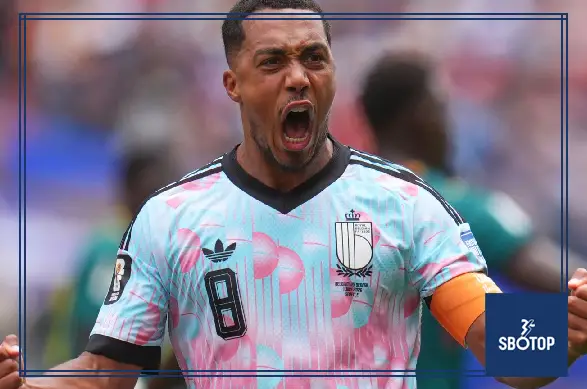
Belgium’s World Cup dream was almost gone. With only minutes left in normal time, Senegal were 2-0 ahead, playing with confidence, and seemingly marching toward a deserved place in the last 16. The Red Devils looked tired, frustrated, and short of ideas. Kevin De Bruyne had already been withdrawn, Jérémy Doku was off the pitch, and the match seemed to be slipping away from a Belgian side that had entered the knockout stage with high expectations but plenty of doubts.
Then football changed everything in a matter of minutes.
Romelu Lukaku pulled one back in the 86th minute. Youri Tielemans headed in the equaliser less than three minutes later. Extra time followed, tension rose, and just when a penalty shootout appeared inevitable, Tielemans became the central figure once more. A lengthy VAR review judged that Lamine Camara had fouled the Belgian captain inside the box, and Tielemans converted the resulting penalty in the 125th minute to complete a stunning 3-2 comeback win.
It was dramatic. It was controversial. It was cruel for Senegal. And for Belgium, it was the kind of escape that can either expose a team’s flaws or ignite a tournament run.
Senegal Had the Match in Their Hands
For most of the night, Senegal looked like the better team. They played with more clarity, sharper transitions, and greater emotional control. Habib Diarra gave them the lead in the 25th minute after Ismaila Sarr’s header struck the post, and Sarr doubled the advantage early in the second half with a powerful finish after bringing down a long ball that split Belgium’s defence.
At 2-0, Senegal had everything they wanted. They were compact without being passive, aggressive without being reckless, and dangerous every time Belgium lost balance in midfield. Their defensive shape forced Belgium into slow circulation, while their attackers carried enough pace to punish any mistake. For 85 minutes, it looked like a mature knockout performance from the Lions of Teranga.
That is why the collapse was so painful. Senegal were not outplayed for long stretches. They were not overwhelmed by Belgian superiority. They were beaten by a sudden swing of momentum, a few decisive moments, and one controversial refereeing decision at the very end.
Senegal coach Pape Thiaw later described football as a “cruel game” after watching his side lose a match they had been close to winning. He admitted Belgium’s late fightback hurt deeply and said his team believed the penalty should not have been awarded.
Belgium’s Late Spark Arrives from Nowhere
Belgium’s comeback was remarkable partly because there had been little evidence that it was coming. Until Lukaku’s goal, the Red Devils had struggled to create genuine danger. Senegal were comfortable defending crosses, closing passing lanes, and forcing Belgium into rushed decisions.
But elite teams often survive through moments rather than dominance. Lukaku, introduced from the bench, gave Belgium the physical presence they badly needed. With four minutes left in regulation time, he steered home Belgium’s first shot on target, suddenly changing the mood inside Seattle Stadium.
Senegal had barely recovered when Tielemans delivered the next blow. Leandro Trossard’s cross found the midfielder, who headed home Belgium’s second goal just two minutes and 39 seconds after Lukaku’s strike. In less than three minutes, Senegal went from controlling the match to fighting for survival.
That late double was not just about technique. It was about belief. Belgium had been poor for long periods, but they still had enough experience and firepower to punish a team that switched off for a few moments. Knockout football is often decided by exactly that: not who plays well for 85 minutes, but who survives every second until the final whistle.
Tielemans Takes Over the Story
Youri Tielemans’ role in this match was enormous. He scored the equaliser, won the penalty, and then converted the winning spot-kick under immense pressure. Before the penalty, Lukaku looked ready to take responsibility, but Tielemans later explained that the striker told him to take it, and the Belgian captain accepted the moment.
That decision said a lot about Tielemans’ mentality. After already dragging Belgium level, he could have stepped away from the pressure. Instead, he took the ball, waited through the tension, and produced the finish that sent Belgium through.
The penalty itself came with 124 minutes and 44 seconds on the clock, making it one of the most dramatic endings of the tournament and, according to Sky Sports and The Guardian, the latest goal in World Cup history.
Yet Tielemans’ heroics will always be tied to the controversy. For Belgium, he was the leader who kept calm when the game demanded nerve. For Senegal, he was the beneficiary of a decision they believed should never have been made.
Why the Penalty Was So Controversial
The decisive moment came when Lamine Camara challenged Tielemans in the box during the second period of extra time. The referee did not immediately point to the spot. Instead, VAR intervened, leading to a long review at the pitchside monitor. After several minutes, the penalty was awarded.
That delay made the decision even more divisive. When VAR takes so long to reach a conclusion, the natural question is whether the incident was truly clear and obvious. Sky Sports reported that pundits Gary Neville and Roy Keane disagreed with the call, with both suggesting the decision was harsh and too uncertain to justify such a major intervention.
Al Jazeera also reported that the decision sparked widespread controversy, with analysis questioning whether Tielemans had placed his foot in front of Camara and created the contact rather than being clearly fouled.
This is the recurring VAR problem in modern football. Technology is meant to correct obvious mistakes, but when a review takes several minutes and still leaves experts divided, it can feel less like justice and more like re-refereeing. Senegal’s frustration came from that grey area. They did not believe the contact was enough. Belgium did.
The scoreboard, however, recorded only one outcome: Tielemans scored, and Senegal were out.
Senegal’s Pain Goes Beyond the Scoreline
For Senegal, the defeat was devastating because it was so avoidable. They were leading 2-0 in the 85th minute. They had Belgium under control. They were minutes away from eliminating a European heavyweight and reaching the next round of the World Cup.
Then everything collapsed.
Krépin Diatta admitted that Senegal had failed in their mission despite being close to writing a beautiful chapter in their football history, while Habib Diarra said the team had only themselves to blame after failing to finish the job.
Those comments reveal the complexity of the defeat. Senegal were angry about the penalty, but they also knew they had lost control before that moment. A controversial decision decided the match, but Belgium’s comeback began earlier, when Senegal failed to protect a two-goal lead during the final minutes of normal time.
That is what will hurt most. The Lions of Teranga were not simply eliminated by VAR. They were eliminated by a combination of late panic, lost focus, Belgian pressure, and then the final penalty call.
Belgium’s Flaws Remain Clear
Belgium can celebrate, but they cannot ignore the warning signs. A team with their experience, quality, and ambition should not need a miracle to survive a last-32 match after being 2-0 down with minutes remaining. Their comeback was heroic, but the performance before that was deeply uneven.
The removal of De Bruyne and Doku in the 56th minute was one of the major talking points. Sky Sports noted that Belgium’s two late scorers rescued what had looked like a potential World Cup farewell for De Bruyne after he had been surprisingly taken off while his team were trailing.
That decision underlined Belgium’s tactical dilemma. They have elite names, but their rhythm is not always convincing. They can look slow in possession, vulnerable in transition, and overly dependent on individual moments. Against Senegal, those individual moments arrived just in time. Against stronger opposition, that may not be enough.
Still, survival matters. Belgium are alive, and sometimes a chaotic win can give a team more emotional momentum than a comfortable victory. If the Red Devils use this scare correctly, it could become a turning point.
Lukaku’s Redemption Moment
Romelu Lukaku’s contribution should not be overshadowed by the penalty controversy. Belgium were heading out before his goal. His movement, strength, and finishing changed the game at exactly the moment his team needed leadership.
Lukaku has experienced enough criticism in major tournaments to understand the weight of such moments. His goal was not just a consolation strike; it was the spark that made the impossible comeback believable. After that, Senegal no longer looked calm. Belgium no longer looked beaten.
His role in the penalty scene was also important. Reuters reported that Lukaku initially looked set to take the spot-kick but handed the ball to Tielemans at the last moment.
That small decision showed trust. It also showed that Belgium’s senior players still have a shared sense of responsibility. Lukaku did his job by bringing Belgium back into the match, then allowed Tielemans to finish the story.
A Match That Captured the Expanded World Cup’s Chaos
The new World Cup format has created more knockout matches, more tension, and more chances for unexpected drama. Belgium against Senegal was exactly the kind of game that justifies the expanded stage: a heavyweight in trouble, an African side minutes from glory, late goals, VAR controversy, and a final twist deep into extra time.
For neutral fans, it was unforgettable. For Senegal supporters, it was agony. For Belgium, it was a reminder that tournament football rarely follows a clean script.
The match also showed how thin the margins have become. Belgium were almost eliminated. Senegal were almost heroes. Tielemans was almost preparing for penalties. Instead, one review and one composed finish changed the future of both teams.
That is why this game will be remembered. Not because Belgium were dominant, but because they refused to disappear. Not because Senegal were poor, but because they were punished brutally for losing control at the wrong time.
The United States Challenge Awaits
Belgium’s reward is a last-16 meeting with the United States in Seattle. Reuters reported that Belgium came back from 2-0 down against Senegal to set up the match against the co-hosts, while defender Maxim De Cuyper warned that the Red Devils had to come down from their emotional high quickly.
That match will be a different kind of test. The U.S. will bring energy, pace, and home support. Belgium will bring experience, technical quality, and the confidence of surviving a near-disaster. But if they start as slowly as they did against Senegal, they may not get another chance to recover.
The biggest challenge for Belgium is balance. They need the urgency they showed late against Senegal, but without waiting until the final minutes. They need Tielemans’ leadership, Lukaku’s presence, and more control from midfield. They also need clarity around De Bruyne’s role, Doku’s impact, and how to avoid being exposed defensively.
Belgium are through, but they are not yet convincing. The win over Senegal was thrilling. The performance was not flawless.
Also Read: