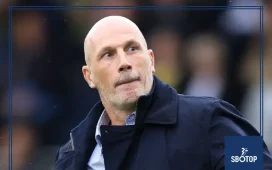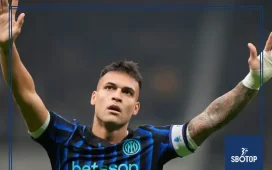
England’s 2-1 win over DR Congo was not beautiful, not comfortable, and certainly not the complete statement performance many supporters wanted from a World Cup knockout match. But it did reveal something important about Thomas Tuchel’s England: this is a team with a manager willing to intervene when a game is slipping away.
That matters. England did not appoint Tuchel simply to guide them safely through group-stage football. Gareth Southgate had already built a team capable of reaching the latter stages of major tournaments. The reason England turned to Tuchel was different. They wanted someone who could change matches in the decisive moments, someone capable of making brave tactical calls when the margins become brutal. Sky Sports highlighted exactly that point, noting that Tuchel’s England tenure will ultimately be defined by what he does in the biggest moments.
Against DR Congo, England were on the brink of a damaging upset. Brian Cipenga’s early goal had put them behind, frustration was building, and the match had begun to feel like one of those painful tournament nights that haunt a national team for years. Yet England survived. Harry Kane scored twice, but the comeback was also shaped by Tuchel’s changes, his touchline direction, and one bold reshuffle that changed the flow of the game.
For all the concerns still surrounding England, that is a positive sign.
The DR Congo Warning
The match in Atlanta began badly for England. DR Congo were brave, quick, and technically sharper than many expected. Cipenga’s seventh-minute goal punished England’s disorganisation, with Reuters reporting that Chancel Mbemba’s long pass exposed space before Cipenga finished powerfully from a tight angle.
That early goal did more than change the score. It changed the emotional tone. England suddenly had to chase. Their passing became rushed, their pressing was not always coordinated, and their defensive structure looked vulnerable to direct balls and transitions. The danger was not only that England were losing; it was that they were losing control of themselves.
Tuchel admitted afterward that DR Congo’s first shot had become their first goal and that the game immediately became more difficult. He also stressed that England improved after the first water break and eventually won because the substitutes contributed with real effort.
That detail matters. In a knockout match, the manager’s job is not only to pick the starting XI. It is to recognise when the plan is failing, calm the players, and create a different route to victory. England were not good enough for long periods, but they did not freeze. Tuchel did not wait passively for the game to fix itself.
Hydration Breaks Became Tactical Timeouts
One of the most interesting features of England’s comeback was the use of hydration breaks as tactical checkpoints. Sky Sports noted that England improved after those regrouping moments, with all eight of their first-half shots coming after they had been able to reset.
That is not a small detail. Tournament football is often decided by short windows of communication. Coaches cannot stop the game whenever they want, so when a break arrives, the clarity of the message becomes vital. England looked chaotic before the first pause. After it, they were more aggressive, more direct, and more purposeful.
A hydration break is not a magic button. It does not solve bad defending or poor finishing by itself. But it gives the manager a rare chance to interrupt momentum. Tuchel used those moments to settle England’s structure and sharpen their intent.
This is where in-game management becomes more than substitutions. It is about tone. It is about emotional temperature. It is about whether the players return to the pitch with clearer minds or more confusion. Against DR Congo, England returned with more urgency and eventually found the route back.
Tuchel’s Boldest Move
The defining adjustment came in the second half. England had already introduced Bukayo Saka and Anthony Gordon, replacing Noni Madueke and Marcus Rashford. Then Tuchel made the decisive move: Djed Spence came off, Eberechi Eze came on, and Declan Rice shifted to right-back.
It was an unusual decision. Rice is one of England’s most important midfielders, not a natural full-back. But the move gave England better ball progression on the right, allowed Eze to add unpredictability in advanced areas, and changed the geometry of England’s attack. The Guardian reported that the equaliser arrived five minutes after the reshuffle, with Eze, Rice and Gordon all involved before Kane headed in.
Sky Sports also described Rice as the catalyst from right-back and reported that Tuchel credited assistant Anthony Barry for instigating the idea.
That is exactly the kind of decision England hoped Tuchel would make. It was not conventional. It carried risk. It could have been criticised heavily if DR Congo had attacked the space behind Rice or if England had lost. But elite tournament management often requires courage before the outcome is known.
Tuchel saw that England needed something different, and he changed the game.
Gordon’s Role Should Not Be Overlooked
Harry Kane took the headlines, and rightly so. His finishing rescued England. But Anthony Gordon’s impact off the bench was just as important to the tactical story. Reuters recorded that Kane’s first goal came from Gordon’s cross, while the winner arrived after Kane drifted across the edge of the area and fired home with power.
The Guardian also noted that Gordon finished with two assists and that his clever pass contributed to Kane’s second goal.
This is where Tuchel’s use of the squad becomes significant. The modern tournament game is no longer about eleven starters and a few emergency replacements. It is about finishers, specialists, and players who can change the tempo late on. Gordon gave England width, speed, and more direct service into Kane. Eze added another creative layer. Rice’s positional shift gave England a different passing angle.
The comeback was not simply “Kane saved England.” It was Kane finishing the work created by a manager’s intervention and a bench that finally changed the match.
A Contrast With England’s Past Frustrations
The reason Tuchel’s in-game management attracts so much attention is because England supporters still remember previous tournament pain. Sky Sports compared the current situation with moments under Southgate when England appeared too slow to react, including the 2018 World Cup semi-final against Croatia, the Euro 2020 final against Italy, and the 2022 World Cup quarter-final against France.
That does not erase Southgate’s achievements. He restored England’s tournament credibility, built a healthier team culture, and took the country closer to trophies than any modern predecessor. But the lingering criticism was always the same: when momentum shifted, did England react quickly enough?
Tuchel was hired partly to answer that question differently. Against DR Congo, he did. England were imperfect, but the manager did not simply watch the match drift away. He adjusted, reorganised and gambled.
That is why the performance can be both worrying and encouraging. England should not need such a rescue against DR Congo. But when the rescue was required, the bench and the manager delivered.
The Tuchel Reputation
Tuchel’s reputation has long been tied to knockout football. Benjamin Weber, who worked with him at several clubs, told Sky Sports that Tuchel’s strength lies in adapting during matches and finding ways through one-off games and tournament situations. Weber also pointed to Tuchel’s leadership, tactical clarity and half-time communication as major parts of his coaching identity.
That reputation is now being tested in international football. Club management and national-team management are different. At club level, a coach works daily with players, drills patterns repeatedly, and has more time to build habits. At a World Cup, everything is compressed. Training time is limited. Travel is constant. Injuries arrive at the worst moments. Decisions must be made under extreme pressure.
This is why the DR Congo match mattered. It was not perfect proof that Tuchel has solved England. But it was evidence that his biggest coaching strength has travelled with him into the international game. He was able to read a problem and change the direction of the match before it was too late.
Kane Remains the Finisher-in-Chief
No analysis of England’s comeback can ignore Kane. Reuters reported that his 75th-minute header brought England level and his 86th-minute strike completed the turnaround, taking him to 13 World Cup goals, one above Pelé’s career total in the competition.
Kane’s value is obvious. He remains England’s calmest finisher, most reliable leader, and most important attacking reference point. When chaos surrounds the team, he provides clarity. Against DR Congo, he did what elite forwards do: he turned half-chances into decisive goals.
But Tuchel will not want England to become a one-man rescue mission. The manager has already rejected the idea that England are simply over-reliant on Kane, arguing that others are involved in creating the spaces and situations that allow him to score. The Guardian reported Tuchel’s view that England’s goals are not a one-man show, even if Kane is the player finishing the moves.
That is a fair point. Kane is the headline, but the system must make his chances possible. Against DR Congo, Tuchel’s changes helped do exactly that.
Also Read:
- SBOTOP: England Fans Set for Early-Morning World Cup Party as Pubs Stay Open Until 5am for Mexico Clash
- SBOTOP: Ronaldo’s World Cup Dream Lives On as Portugal Edge Croatia in VAR Drama and End Modric’s Journey
- SBOTOP: Embolo and Ndoye End Switzerland’s 88-Year Wait With Historic World Cup Knockout Win Over Algeria