Belgium’s preparations for their World Cup last-16 clash with the United States were suddenly thrown into controversy after FIFA suspended the automatic red-card ban of USMNT forward Folarin Balogun. What should have been a straightforward disciplinary case became one of the tournament’s most debated off-field stories, with Belgium’s football federation, the RBFA, reacting furiously and moving to challenge FIFA’s decision.
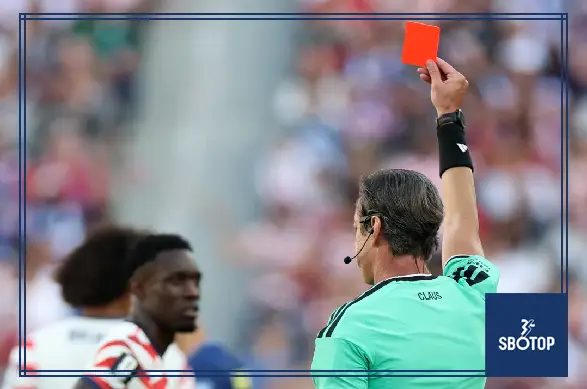
Balogun had been sent off in the United States’ round-of-32 victory over Bosnia and Herzegovina, a dismissal that would normally bring an automatic one-match suspension. That ban should have ruled him out of the knockout match against Belgium. Instead, FIFA chose to suspend the enforcement of the punishment for a one-year probationary period, meaning the red card remained on record but Balogun was allowed to face Belgium.
For Belgium, the issue was not only about one player. It was about competitive fairness. The RBFA believed that a red card in a World Cup knockout match should carry a clear consequence. When FIFA created an exception, Belgium felt the integrity of the tie had been affected before a ball was kicked.
Why Belgium Felt Forced to Act
Belgium’s reaction was immediate because they were the direct sporting party affected by the ruling. Balogun was not a fringe player. He had been one of the United States’ most important attacking figures at the tournament, and Reuters reported that he entered the Belgium match as the USMNT’s top scorer with three goals.
That made his availability a major competitive matter. Belgium were preparing for a knockout match in which one goal could decide the tournament future of both teams. If Balogun had served the usual automatic ban, the United States would have been forced to change their attacking plan. By allowing him to play, FIFA gave the U.S. a key player back at the most important moment.
The RBFA therefore had little choice but to question the decision. From Belgium’s point of view, this was not a minor administrative issue. It was a ruling that directly affected squad selection, tactical preparation and the balance of a World Cup elimination match.
The RBFA’s Anger Was About Process
The Belgian federation’s frustration was not simply emotional. It centered on process. Belgium wanted to know why a rule that appeared automatic could suddenly be delayed. If a red card creates a one-match ban, and if that ban applies to the next match, then the logic seems simple. FIFA’s decision made it complicated.
Reuters reported that FIFA later rejected Belgium’s challenge after treating Belgium’s query as an appeal, while Belgium complained about a lack of documentation and clarity around the ruling.
That is where the controversy became bigger than Balogun. Belgium were effectively being told that a player they believed should be suspended could play against them, while their ability to challenge the decision was limited. In legal terms, FIFA had its own procedure. In sporting terms, the explanation felt deeply unsatisfactory to the team most affected.
Football depends on trust. Teams may disagree with referees, VAR and disciplinary panels, but they must believe the same rules apply to everyone. Belgium’s challenge was a demand for that trust to be defended.
FIFA’s Article 27 Defense
FIFA defended the decision by pointing to Article 27 of its disciplinary code. According to FIFA’s disciplinary committee, the governing body had the authority to suspend the implementation of Balogun’s one-match ban without erasing the red card itself. FIFA also fined Balogun $40,000 for entering the pitch to celebrate with teammates after his dismissal.
That distinction became central to FIFA’s argument. The red card was not cancelled. The punishment was not wiped away. The enforcement of the ban was simply postponed under probationary conditions.
Legally, FIFA argued that it had not broken its own rules. But Belgium’s concern was more practical: if the red-card ban can be postponed in a World Cup knockout match, then how automatic is the punishment in reality?
This is the danger with disciplinary flexibility. It may be written into regulations, but if used in a high-profile case at a sensitive moment, it can create the appearance of special treatment.
Trump’s Intervention Increased the Controversy
The case became even more explosive because of outside political attention. Reports stated that U.S. President Donald Trump contacted FIFA President Gianni Infantino and asked for Balogun’s red card to be reviewed. Trump later publicly defended the player, calling the punishment unfair and arguing that Balogun was one of the United States’ best players.
That sequence caused the controversy to grow beyond football. A political leader had intervened on behalf of a national-team player from his own country. FIFA then suspended the ban. Even if FIFA’s disciplinary committee acted independently, the optics were difficult.
Belgium and UEFA were not only reacting to the legal decision. They were reacting to the appearance that political pressure may have influenced a sporting matter. In a World Cup hosted partly by the United States, that perception was especially sensitive.
Football authorities often say that sport must remain independent from politics. The Balogun case tested that principle in a very public way.
UEFA Joins the Argument
Belgium were not alone in their anger. UEFA issued a strongly worded statement, saying FIFA’s decision to suspend the implementation of Balogun’s one-match ban had “crossed a red line.” UEFA argued that automatic red-card suspensions are essential to fairness, transparency and sporting integrity.
That statement gave Belgium’s position more weight. This was no longer just the complaint of a team facing the United States. It was a major continental governing body challenging FIFA’s handling of the case.
Reuters reported that UEFA described FIFA’s ruling as “unprecedented, incomprehensible and unjustifiable,” warning that the decision threatened the integrity and credibility of the competition.
UEFA’s intervention mattered because it turned the dispute into a governance battle. FIFA runs the World Cup, but UEFA represents many of the strongest football nations in the tournament. When UEFA publicly challenges FIFA during a World Cup, it signals a serious institutional fracture.
Belgium’s Appeal and FIFA’s Rejection
Belgium pursued the matter through FIFA’s available channels, but the challenge did not succeed. FIFA’s appeals committee rejected Belgium’s attempt to uphold the suspension, which meant Balogun was cleared to start against Belgium.
That rejection deepened Belgium’s frustration. The RBFA had raised concerns, UEFA had condemned the decision, and the wider football world was debating the precedent. Yet, on match day, the practical outcome remained the same: Balogun was available.
For Belgium, the legal pathway appeared closed before the sporting consequences could be avoided. The team had to shift from legal frustration to match preparation. They could not allow the controversy to consume them, but they also could not ignore it.
This is one of the toughest challenges in tournament football. A team may feel wronged, but it still has to perform. Belgium had to turn anger into focus.
Balogun Starts Despite the Storm
Balogun’s inclusion in the U.S. starting lineup ensured that the controversy remained central to the match narrative. Reuters confirmed that he started in attack alongside Christian Pulisic, with Mauricio Pochettino keeping the same U.S. lineup from the Bosnia match.
That decision was unsurprising. Once FIFA cleared Balogun, the United States had every sporting reason to use him. He was in form, confident and important to their attacking structure. From the U.S. perspective, the ruling simply made an eligible player available.
But for Belgium, every Balogun touch carried symbolic weight. His presence on the pitch was a reminder of the decision they had tried to challenge. Every run, pass and duel became part of the controversy.
Balogun did contribute in one important moment, winning the free kick that led to the U.S. equalizer. But overall, his impact was limited as Belgium took control of the match.
Belgium Answers on the Pitch
The most powerful Belgian response came not from legal documents, but from the scoreboard. Belgium defeated the United States 4-1, ending the co-hosts’ World Cup run and advancing to the quarter-finals. Charles De Ketelaere scored twice, while Hans Vanaken and Romelu Lukaku also found the net.
The result changed the emotional tone of the dispute. Had the United States won with Balogun involved, the controversy would have become even louder. Belgium’s victory did not erase the governance questions, but it prevented the ruling from being seen as the decisive factor in eliminating Belgium.
Still, the players clearly felt the issue. Reuters reported that Belgium midfielder Nicolas Raskin said there was “justice” in the result after the controversy surrounding Balogun’s availability.
That reaction showed how deeply the matter had entered the Belgian dressing room. The players did not simply see the ruling as background noise. They used it as motivation.
Why the Result Does Not End the Debate
Belgium’s 4-1 win may have reduced the immediate sporting damage, but it does not settle the bigger issue. FIFA’s decision remains controversial because it raised questions about consistency, transparency and political influence.
If automatic red-card suspensions can be delayed during the knockout stage, other teams will now ask for the same treatment. England, for example, were reported to be considering their options regarding Jarell Quansah’s red card after the Balogun precedent.
That is exactly the kind of situation UEFA feared. One exception can create a chain reaction. Every federation with a suspended player may now argue for similar relief. If FIFA grants one request and denies another, accusations of inconsistency will follow.
This is why the Balogun ruling matters beyond Belgium and the United States. It may reshape how teams approach disciplinary appeals during major tournaments.
FIFA Pushes Back Against Critics
FIFA did not accept UEFA’s criticism quietly. The Guardian reported that FIFA later accused UEFA of hypocrisy and defended the ruling as a balanced measure permitted under its disciplinary code. FIFA stressed that the red card had not been overturned and that only the enforcement of the suspension had been deferred.
That response showed FIFA’s determination to defend its authority. From FIFA’s perspective, the disciplinary committee acted within the rules. The governing body also argued that similar discretion exists in other football systems, including UEFA competitions and leagues.
But FIFA’s explanation did not fully answer the question of perception. Even if a decision is technically legal, it can still appear problematic if it arrives after high-profile political intervention and benefits a host nation’s player in a World Cup knockout match.
That is the tension at the center of the dispute: legality versus credibility.
Also Read:
- SBOTOP: Erling Haaland Transfer Rumours Cooled as Father Addresses Real Madrid Links and Mourinho Speculation
- SBOTOP: Spain Brace for Cristiano Ronaldo Challenge as Portugal’s Icon Looms Over World Cup Last-16 Showdown
- SBOTOP: Alphonso Davies Opens Up on Career’s Toughest Test While Refusing to Blame Limited Canada World Cup Role