France’s dream of reaching a third consecutive World Cup final ended with a deeply disappointing 2-0 defeat to Spain in Dallas. What had been anticipated as a heavyweight semi-final between two of the tournament’s strongest squads instead became a demonstration of Spanish control and a painful examination of France’s tactical and technical limitations.
Mikel Oyarzabal opened the scoring from the penalty spot in the 22nd minute after Lucas Digne fouled Lamine Yamal. Pedro Porro then doubled Spain’s advantage in the 58th minute, completing a sharp exchange with Dani Olmo before finishing beyond Mike Maignan. France never found an effective response and departed the competition having produced only limited danger against a composed Spanish defence.
The result was difficult enough for Les Bleus to accept. The manner of the defeat made it considerably worse.
French newspapers did not simply report that Spain had won. Their coverage portrayed a national team that had failed to meet the emotional, tactical and technical demands of the occasion. L’Équipe led the criticism with a front-page verdict that could hardly have been more direct: “Demolished.” Le Monde described the performance as a collective failure, while regional newspapers presented the defeat as the abrupt end of France’s American adventure.
A Night That Began with National Expectation
The timing of the semi-final increased the sense of occasion. France faced Spain on 14 July, Bastille Day, with supporters across the country preparing for what they hoped would become another historic night.
Les Bleus had arrived at the semi-final after six consecutive victories. They had conceded only two goals in their first six matches and were attempting to become only the third national team to reach three straight men’s World Cup finals. The squad contained Kylian Mbappé, Ousmane Dembélé, Michael Olise, Bradley Barcola and several other elite attacking players.
Expectations were therefore enormous. Bars were crowded, public viewing areas were prepared, and French supporters entered the evening believing this generation was capable of adding another major final to an already remarkable period of consistency.
By the final whistle, however, those celebrations had disappeared. Spain had not merely eliminated France; it had controlled the contest so convincingly that French observers were forced to question how a team with so much talent had created so little.
France’s Bright Opening Quickly Faded
France began with signs of attacking intent. Bradley Barcola tried to stretch Spain on the left, while Mbappé looked to attack the space behind the defensive line. Adrien Rabiot also provided energy in midfield and attempted to disrupt Spain’s rhythm.
Those moments created the impression that France might challenge Spain with speed and physical power. Yet the early optimism did not develop into sustained pressure.
Spain settled into possession, established control in midfield and forced France to spend longer periods without the ball. Rodri, Fabián Ruiz and Dani Olmo continually offered passing options, enabling La Roja to move through the French pressure without losing their shape.
France’s press lacked coordination. One player would move forward, but the supporting line often remained too deep. Spain repeatedly found the free player and moved the ball away from pressure.
Once Spain established that control, France’s attacking quartet became increasingly disconnected. Mbappé, Barcola, Dembélé and Olise occupied dangerous positions on paper, but there was little combination play between them.
Digne’s Error Changed the Match
The opening goal arrived through a moment that symbolised France’s nervousness.
Lucas Digne failed to deal cleanly with a ball inside the penalty area. His uncertain first action allowed Lamine Yamal to challenge, and the French defender then caught the Spanish teenager while attempting to recover. The referee awarded a penalty, which Oyarzabal converted in the 22nd minute.
It was the first time France had fallen behind during the tournament. Their reaction was revealing.
Instead of responding with greater intensity and clearer attacking movement, Les Bleus appeared increasingly uncomfortable. Spain continued circulating the ball, while France struggled to determine whether to press high or protect the space behind its midfield.
Digne’s mistake was costly, but the defeat cannot be explained by one defensive action. France still had more than an hour to change the game. The greater concern was how rarely they looked capable of doing so.
Saliba’s Injury Added to the Instability
France suffered another setback before the half-hour mark when William Saliba was forced off with a back problem. The defender had been managing discomfort during the tournament but could not continue in the semi-final.
Maxence Lacroix replaced him after approximately 30 minutes. Although the substitute competed seriously, the early change disrupted a defensive structure that was already under pressure.
Saliba’s departure removed one of France’s most composed defenders and ball carriers. Against a Spain side pressing intelligently, his ability to step forward and break the first line could have been particularly valuable.
Nevertheless, France’s biggest problems remained further forward. The midfield could not control possession, while the attackers received the ball too far apart to combine effectively.
Spain Controlled the Centre of the Pitch
The semi-final was largely decided in midfield.
Spain understood where the spaces would appear and how to create numerical superiority. Their midfielders constantly adjusted their positions, offering short passing lanes before accelerating the ball into more advanced areas.
France, by contrast, looked reactive. Aurélien Tchouaméni struggled to influence the game, while Rabiot’s aggressive approach resulted in an early booking. Didier Deschamps replaced Rabiot with Manu Koné at half-time, partly because the experienced midfielder risked receiving a second yellow card.
The substitution did little to alter the balance. Koné was unable to drive France forward, and Spain continued dictating the speed and direction of the game. L’Équipe later scored Tchouaméni 3 out of 10 and noted how little influence he exerted either defensively or in starting attacks. Rabiot received a more respectable 5, one of France’s joint-highest marks.
France had entered the match speaking about the need to challenge Spain for midfield control. In practice, Les Bleus never came close to achieving that objective.
Porro’s Goal Ended France’s Realistic Hopes
Spain’s second goal arrived in the 58th minute and demonstrated everything missing from France’s attacking performance.
Pedro Porro moved forward from right-back and exchanged passes with Dani Olmo. The movement was simple but perfectly timed. Olmo’s return released Porro behind the defensive line, and the full-back finished confidently to make it 2-0.
France’s defensive organisation had been pulled apart by one rapid combination. The Spanish players understood where to move and trusted that the return pass would arrive.
Shortly afterwards, Yamal put the ball into the net again, although the effort was disallowed for offside. Spain looked closer to scoring a third than France did to beginning a comeback.
Deschamps introduced Désiré Doué, Rayan Cherki and Theo Hernández in an attempt to add creativity and width. Cherki briefly brought greater imagination, but by then Spain had withdrawn into a compact defensive shape and managed the remaining minutes professionally.
France’s Attacking Numbers Were Historically Poor
The statistics supported the severity of the French media’s criticism.
France finished the game with an expected-goals total of only 0.3. According to data reported by L’Équipe, it was the lowest attacking output recorded by Les Bleus in a World Cup match across 60 years of available analysis.
Spain’s expected-goals figure was 1.63. Although La Roja registered only two shots on target from ten attempts, both resulted in goals. France rarely created opportunities of comparable quality.
Mbappé attempted three shots but failed to place any on target. He touched the ball seven times inside Spain’s penalty area and accumulated an expected-goals figure of just 0.09.
For a team containing several of Europe’s most gifted forwards, those numbers were damaging. France did not lose because of poor finishing alone. They failed to construct enough attacks to give their forwards realistic chances.
L’Équipe’s Ratings Reflected the Anger
L’Équipe’s player ratings offered one of the clearest indications of the disappointment in France.
The newspaper gave Les Bleus an average score of just 3.7 out of 10, compared with Spain’s average of 6.7. The accompanying headline declared that Digne and Olise had “got everything wrong,” presenting the pair as symbols of a collective collapse.
Digne received 2 out of 10 after conceding the penalty and repeatedly losing possession. Michael Olise was also awarded 2 following an unusually inaccurate performance in which he struggled to complete passes or beat opponents.
Dembélé received the same mark. L’Équipe judged that the Ballon d’Or winner became less influential as the game progressed, despite being moved from the wing into a more central position.
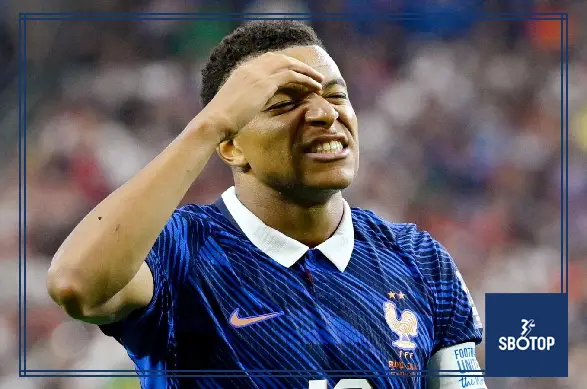
Mbappé was rated 3. The captain showed flashes of acceleration but remained isolated, struggled to connect with his teammates and attempted to solve too many situations alone.
Tchouaméni also received 3, while Barcola was awarded 4. Maignan scored 4 despite having little chance with either goal. Koundé, Upamecano and Rabiot received 5, the highest marks among the French starters who completed a significant portion of the match.
Deschamps himself was rated 3. L’Équipe criticised his starting choices and suggested his substitutions showed too much respect for established status rather than rewarding the players most capable of changing the game.
The ratings were severe, but they reflected more than frustration with individual mistakes. They expressed disappointment that France’s strongest players had failed collectively on the tournament’s biggest night.
“Demolished” Captured the National Mood
The most striking element of the media response was the similarity between different publications.
L’Équipe’s “Demolished” headline focused on a performance it regarded as disastrous in strategy, technical execution and emotional preparation. Its analysis suggested France appeared mentally overwhelmed by the importance of the occasion.
Le Monde described the loss as a brutal return to reality and a collective failure. La Voix du Nord called the match a nightmare, while Ouest France announced the end of the American dream.
Libération wrote that France had fallen from a considerable height after entering the game with confidence. Le Figaro acknowledged that Spain had been the better team, describing Les Bleus as suffocated and technically inferior.
The reaction was not based on an expectation that France should win every match. Spain entered the game as an outstanding team and had already defeated France in the Euro 2024 semi-final and the 2025 Nations League.
The anger came from the belief that France had not made Spain work hard enough for victory.
Mbappé Accepts Responsibility
After the match, Mbappé did not attempt to blame the referee or hide behind France’s impressive run to the semi-final.
The captain admitted that France had not delivered the performance it wanted, either tactically or technically. He recognised Spain’s superiority in controlling possession and accepted responsibility for the failure as captain.
His comments were significant because France’s tactical approach had become a major point of debate. Les Bleus appeared uncertain about how aggressively to press Spain, allowing Rodri and the Spanish defenders too much time to organise possession.
Mbappé’s disappointment was also personal. He entered the match among the leading scorers at the tournament but was unable to influence the semi-final. Spain prevented him from receiving the ball in advantageous positions and ensured that his bursts of pace rarely developed into clear chances.
A captain can accept responsibility, but France’s problems were too widespread to be placed on one player. Mbappé needed better service, closer support and a collective structure capable of disturbing Spain.
Deschamps Admits France Fell Below the Required Level
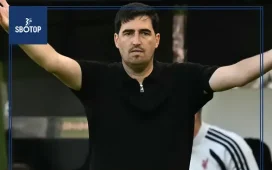
Didier Deschamps conceded that Spain had closed the available spaces and that France’s technical performance was below standard.
The coach’s assessment was accurate. France made too many errors under pressure and failed to use the ball efficiently when opportunities appeared. Their attacks were often interrupted by inaccurate passes, poor spacing or mistimed runs.
The defeat also represented the final major tournament match of Deschamps’ 14-year reign, aside from the third-place play-off.
His record remains extraordinary. Deschamps rebuilt a national team damaged by the chaos of the 2010 World Cup, won the 2018 title and reached another final in 2022. Under his leadership, France became one of international football’s most consistent tournament sides.
Yet his pragmatic approach was frequently criticised for failing to maximise France’s attacking resources. The defeat to Spain revived that argument. France possessed an exceptional group of forwards but completed the semi-final with historically poor attacking numbers.
Also Read: