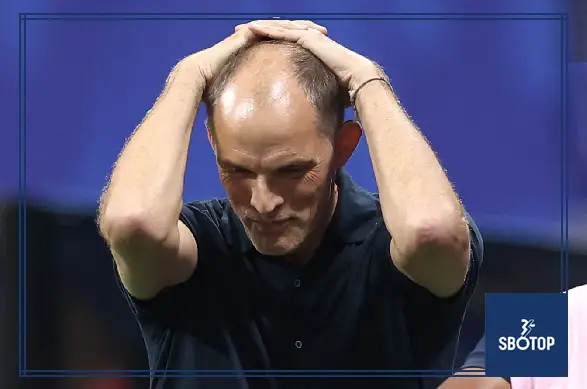
Thomas Tuchel has confirmed that he intends to remain England head coach through Euro 2028, resisting any suggestion that the painful World Cup semi-final defeat to Argentina could bring his tenure to an early conclusion.
England’s campaign ended dramatically in Atlanta as the defending champions overturned a one-goal deficit during the closing stages. Anthony Gordon had placed the Three Lions ahead early in the second half, but Enzo Fernández equalised in the 85th minute before Lautaro Martínez headed home Argentina’s winner in stoppage time.
The 2-1 defeat denied England their first World Cup final appearance since 1966 and immediately placed Tuchel’s tactical decisions under intense scrutiny. Yet the German coach made his position clear after the match: he remains committed to the contract that will take him through the European Championship in 2028.
That confirmation provides England with clarity at a moment of enormous disappointment. It does not, however, remove the questions raised by the semi-final. Tuchel must now prove that England’s latest near miss can become the foundation for another challenge rather than one more entry in the country’s growing collection of painful tournament exits.
Tuchel’s Future Was Already Secured Before the World Cup
Tuchel’s post-match declaration was not the announcement of a completely new agreement. The Football Association had already extended his contract in February 2026, several months before the World Cup began.
The original arrangement was designed to take him through the 2026 tournament. After England completed an unbeaten qualifying campaign without conceding a goal, the FA moved to secure greater continuity by extending Tuchel’s stay for another two years.
England scored 20 times during that qualification campaign and entered the World Cup with confidence that the team had become more disciplined, tactically adaptable and difficult to break down. Tuchel’s senior coaching staff also agreed new contracts through the summer of 2028, ensuring that the manager would continue working with the same core group behind the scenes.
The extension was intended to remove uncertainty before the World Cup. Rather than entering the tournament with constant speculation surrounding his future, Tuchel could plan beyond one summer and begin shaping a longer-term cycle.
That decision now becomes particularly significant. England’s failure to reach the final might ordinarily have triggered a debate over whether the coach should continue. Instead, both Tuchel and the FA can point to an existing plan that leads directly toward a major tournament on home soil.
Euro 2028 Offers a Powerful Motivation
Euro 2028 will carry unusual importance for England.
The tournament is scheduled to be staged across the United Kingdom and Ireland, with England sharing hosting responsibilities with Scotland, Wales and the Republic of Ireland. Wembley is expected to play a central role, including staging the final.
For Tuchel, the prospect of leading England at a home European Championship is one of the strongest reasons to continue. When he signed his extension, he described the competition as a special opportunity and emphasised his desire to compete on the biggest possible stage.
England will enter that tournament with memories of previous disappointment still fresh. The team reached the European Championship finals in 2021 and 2024 but failed to win either one. The World Cup defeat against Argentina has now added another painful late-stage exit.
By 2028, England’s wait for a major men’s international trophy will have extended beyond six decades. Hosting the tournament will increase expectations rather than reduce them.
Tuchel understands that reaching semi-finals and finals is no longer enough to satisfy a country that believes its squad possesses the quality to become champions. His decision to remain is therefore not simply an act of loyalty. It represents an acceptance of one of the most demanding challenges in international football.
The Argentina Defeat Will Define the Beginning of the Next Cycle
Although Tuchel has committed to the future, England’s path toward Euro 2028 must begin with an honest assessment of what happened against Argentina.
For more than an hour, the Three Lions executed much of their plan successfully. England remained compact, restricted Lionel Messi’s influence and created danger when transitioning quickly into attack.
Gordon’s goal in the 55th minute placed England within touching distance of the final. Argentina were forced to commit more players forward, theoretically creating opportunities for England to attack the space behind them.
Instead, the Three Lions became increasingly defensive.
Tuchel introduced additional defenders and moved towards a back-five structure. The changes were designed to reduce the gaps inside England’s defensive shape and provide greater protection against Argentina’s aerial threat. However, they also reduced England’s ability to move up the pitch.
Once the attacking outlets disappeared, Argentina could apply pressure without fearing the counterattack. England’s defenders cleared the ball repeatedly, but possession quickly returned to the world champions.
The match became less about managing the lead and more about surviving each new attack.
The Possession Statistics Exposed England’s Collapse
The scale of Argentina’s late control was reflected in the possession statistics.
From Gordon’s opening goal until Martínez’s winner, England reportedly held only 12 per cent of the ball. After Tuchel shifted to a back five, Sky Sports calculated that Argentina enjoyed 93 per cent possession during the remaining period before completing the comeback.
Possession alone does not determine a football match. Teams can defend effectively with very little of the ball, particularly when they remain compact and retain a counterattacking threat.
England’s problem was that they could no longer escape.
Harry Kane became isolated against Argentina’s central defenders. The midfielders dropped towards their own penalty area, while the wide players were increasingly occupied by defensive responsibilities.
Whenever England regained possession, the nearest supporting player was often too far away. A clearance might provide a few seconds of relief, but it did not change the structure of the match.
Tuchel later admitted that England became passive. He argued that the team remained in a 4-4-2 shape for part of the period but could not convert defensive recoveries into controlled possession.
That distinction matters. The collapse was not caused only by the number of defenders on the pitch. It was caused by England’s inability to retain the ball, advance its defensive line and make Argentina defend.
Why Tuchel Defended His Decisions
Tuchel insisted that he did not regret his tactical choices.
From his perspective, England were already allowing Argentina to find dangerous spaces before the formation changed. Messi had moved towards the right side, where he began delivering threatening crosses into the penalty area.
Nico González forced Jordan Pickford into a difficult save, while Alexis Mac Allister struck the post with a header. England’s defensive line was struggling against the number of players Argentina placed around the box.
Tuchel therefore believed an additional central defender would help close the gaps and strengthen England in the air. He did not feel that introducing another attacker would solve the immediate problem because Argentina had already gained control of the game.
The reasoning was understandable. Managers are required to respond to what they see, and Argentina were generating increasingly dangerous situations.
However, a tactically logical decision can still produce an unsuccessful outcome.
By removing Gordon and reducing England’s attacking presence, Tuchel made it easier for Argentina to move its defenders higher. England became stronger numerically around its own penalty area but weaker everywhere else.
The decision will remain one of the defining moments of Tuchel’s first major tournament with England.
Kane’s Comments Increased the Pressure
Harry Kane’s post-match assessment added another layer to the debate.
The England captain acknowledged that the team appeared to focus on protecting the one-goal lead after moving ahead. At World Cup semi-final level, Kane argued, attempting merely to hold on was unlikely to be enough against opponents of Argentina’s quality.
Kane’s remarks did not directly blame Tuchel. The captain also explained that the manager wanted England to continue pursuing a second goal.
The problem was that the players could not translate that intention onto the pitch.
Argentina’s pressure, England’s physical fatigue and the emotional weight of being so close to the final all influenced the team’s behaviour. Even when the instruction was to remain positive, the players instinctively moved deeper.
That raises an important issue for Tuchel’s next two years.
A coach must do more than deliver the correct message. He must build structures that allow players to carry out that message during the most difficult moments.
If England want to win Euro 2028, they must learn how to protect a lead without surrendering their entire attacking identity.
The Late Goals Made the Defeat Especially Cruel
England were still ahead with only five minutes of normal time remaining.
Fernández changed the match with an excellent strike from outside the penalty area in the 85th minute. England had concentrated so many players closer to goal that the midfielder found enough space to shoot before Jude Bellingham could close him down.
Argentina then pursued the winner rather than settling for extra time.
Messi, who had been restricted for much of the game, delivered another dangerous cross from the right. Martínez attacked it decisively and headed past Pickford in the 92nd minute. The two goals arrived within seven minutes.
England had spent much of the tournament displaying resilience. They had survived difficult knockout matches, handled pressure and found ways to advance even when their performances were not perfect.
Against Argentina, that resilience finally broke.
The players sank to the pitch at full time, aware that they had moved from the edge of history to elimination in a matter of minutes.
Criticism of Tuchel Was Immediate
The tactical nature of the defeat ensured that criticism focused heavily on the manager.
Former England captain Wayne Rooney described the approach as too passive and argued that the collapse began with decisions made from the technical area. Alan Shearer similarly suggested that Tuchel had made his defensive moves too early and placed too much faith in England’s ability to survive.
The criticism reflects the reason Tuchel was appointed.
He arrived with a reputation as an elite knockout coach. His Champions League success with Chelsea and tactical work at several major European clubs convinced the FA that he could provide the final detail England had lacked under Gareth Southgate.
Reaching the World Cup semi-final was a respectable achievement, but it did not fulfil that central objective.
Tuchel was expected to make the decisive difference when England encountered the strongest opponents and the pressure became greatest. Against Argentina, his changes appeared to contribute to the loss of control.
His commitment through Euro 2028 means he will have an opportunity to respond. It also ensures that the debate surrounding his suitability will continue throughout the next qualification cycle.
England Still Made Genuine Progress
The disappointment should not completely erase the positive aspects of England’s tournament.
Tuchel led the team into the last four of the World Cup after a perfect qualification campaign. England developed a strong collective spirit and demonstrated that it could survive difficult knockout matches.
Kane and Bellingham scored six goals each during the tournament, accounting for 12 between them. Their performances gave England a mixture of experience, leadership and youthful energy.
The squad also contained several players who should remain central to the team in 2028. Bellingham will still be entering the prime years of his career, while Gordon and other emerging attackers will have gained further experience at club and international level.
England do not need to rebuild from the beginning.
They need to refine what already exists.
The challenge for Tuchel is to preserve the togetherness, defensive organisation and competitive strength of the World Cup campaign while developing a team that can control decisive matches with the ball.
The Kane Question Will Become More Important
Harry Kane remains England’s captain, leading goalscorer and most reliable central striker. His six World Cup goals confirmed that he can still deliver at the highest international level.
However, Euro 2028 will take place when Kane is approaching the later stages of his career.
Tuchel must decide how to manage that transition. Kane may remain an automatic starter, become part of a more flexible rotation or adopt a role that relies increasingly on his passing, movement and leadership rather than constant physical involvement.
England also need to develop alternatives.
The Argentina semi-final demonstrated the danger of leaving Kane isolated. When England dropped deeper, he had no nearby support and could not provide a reliable route out of pressure.
A more effective structure might involve quicker runners positioned around him, a second forward or midfielders prepared to move closer when England regain possession.
Tuchel’s work toward 2028 must include building an attack that functions with Kane but does not become completely dependent on him.
Bellingham Can Become the Centre of the Next England Team
Jude Bellingham’s disappointment after the semi-final illustrated how much the defeat meant to him.
He had already experienced the pain of losing a European Championship final in 2024. The World Cup provided another opportunity to become part of the generation that finally ended England’s wait, but once again the campaign stopped just short.
By Euro 2028, Bellingham should be one of the central figures in the squad.
Tuchel must determine the role that best allows him to influence matches. Bellingham can operate as an attacking midfielder, a deeper playmaker or a powerful runner from central areas.
At times, his versatility creates uncertainty because England can use him almost anywhere.
The next stage of development should provide greater clarity. Rather than adjusting Bellingham’s position from match to match, Tuchel may need to construct the midfield around the areas where he is most decisive.
A settled structure could help England control matches instead of relying on individual moments.
Also Read: