France never travelled to the 2026 World Cup intending to compete for third place. A squad filled with elite players, led by Kylian Mbappé and carrying the experience of two consecutive World Cup final appearances, arrived in North America expecting to challenge for the trophy.
A bronze medal was not part of the dream.
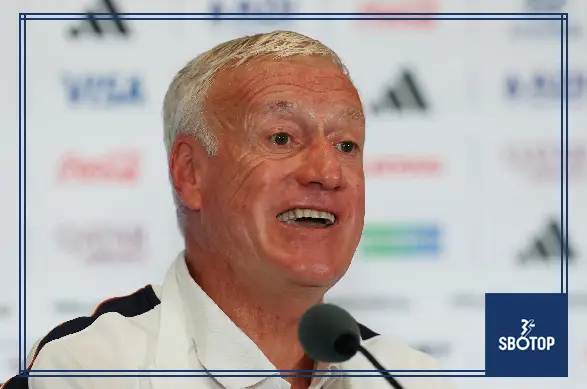
After France were defeated 2-0 by Spain in the semifinal, the prospect of facing England in the third-place play-off felt more like an obligation than an opportunity. Didier Deschamps openly acknowledged the difficulty of motivating players for a fixture that neither team had wanted to reach. Defender Ibrahima Konaté even used the expression “chocolate medal” to describe the prize awaiting the winner.
Yet France still had a reason to compete. The match would be the final game of Deschamps’ extraordinary 14-year reign as national-team coach. Whatever the players thought about the value of finishing third, they wanted to give the man who had led their country through one of its most successful eras an appropriate farewell.
France ultimately fell short, losing 6-4 to England in a chaotic contest in Miami. However, the spirit behind their second-half comeback revealed how much Deschamps still meant to his squad. Four goals down at half-time, Les Bleus refused to disappear quietly. They fought back, threatened an extraordinary recovery and ensured their coach’s final match contained at least one last demonstration of the resilience he had spent more than a decade building.
A Match Nobody Wanted
The World Cup third-place play-off occupies an unusual place in international football. It brings together two teams who have just suffered the most painful defeat possible without reaching the final. Players must recover physically and emotionally within a few days, knowing that the tournament’s greatest prize is no longer available. For France, the disappointment was especially sharp.
Deschamps’ side had entered the competition as one of the leading favourites. France won the World Cup in 2018, reached the final again in 2022 and had hoped to become the first nation in decades to appear in three consecutive finals. Instead, Spain controlled the semifinal and ended that ambition with a deserved 2-0 victory.
The defeat meant France had to remain in the tournament while Spain prepared to face Argentina for the trophy. Rather than returning home to process their disappointment, the French players were required to prepare for another match against an England team carrying similar emotional damage after losing its semifinal to Argentina.
Deschamps did not pretend that his squad felt enthusiastic. He admitted that the players would have preferred not to play the match, but he also stressed that representing France created a responsibility. A bronze medal might not compare with the World Cup trophy, yet the team still had a duty to compete for the country and its supporters.
That responsibility was one source of motivation. The other was personal.
One Final Match for Deschamps
The meeting with England marked the conclusion of one of the longest and most successful managerial reigns in modern international football.
Deschamps took charge of France in 2012, inheriting a talented national team still attempting to recover from the divisions and disappointments of previous tournaments. Over the following 14 years, he rebuilt France into a side defined by tactical discipline, competitive strength and remarkable consistency.
The high point arrived in 2018, when France defeated Croatia in Moscow to become world champions. Deschamps thereby joined the exclusive group of figures who have won the World Cup as both a player and a manager, having captained France to their first title in 1998.
His achievements extended far beyond that victory. France reached the final of Euro 2016, won the Nations League in 2021 and returned to the World Cup final in Qatar in 2022. Even when the football attracted criticism for appearing cautious, the results demonstrated an exceptional ability to compete deep into major tournaments.
By the end of his tenure, Deschamps had recorded more World Cup victories as a coach than anyone else. His influence stretched across several generations, from Hugo Lloris, Raphaël Varane and Antoine Griezmann to Mbappé, Konaté and France’s emerging young players.
For many members of the squad, the match against England was therefore about more than a bronze medal. It was a final opportunity to perform for a coach who had selected them, defended them and helped shape their international careers.
Players Find a Different Kind of Motivation
International players are trained to pursue trophies, not consolation prizes. France’s squad did not need to pretend that third place represented the outcome they wanted. Their challenge was to find meaning in a match that had lost its original competitive purpose.
Honouring Deschamps gave them that meaning.
The players understood that the coach’s final appearance deserved commitment, even if their own disappointment remained raw. They wanted his tenure to end with a victory rather than a second defeat in four days. They also wanted the final image of his reign to reflect the qualities associated with his best France teams: organisation, sacrifice, resilience and collective responsibility.
The circumstances required emotional discipline. France had to separate the pain of losing to Spain from the task of facing England. They could not allow frustration to become apathy.
That process is difficult in any tournament, but it becomes even harder at the end of a long World Cup. Players have spent weeks away from home, trained repeatedly in demanding conditions and carried the pressure of national expectation. Some are managing injuries, while others are thinking about the club season waiting immediately after the competition.
Deschamps recognised those realities. He was never likely to produce an emotional speech that erased the disappointment. Instead, he appealed to professionalism, national duty and the relationships built within the squad.
Unfortunately for France, that motivation was not visible during the opening half against England.
A Disastrous First-Half Farewell
France’s attempt to honour Deschamps initially appeared to be collapsing in humiliating fashion.
England attacked with freedom and intensity from the opening stages. Thomas Tuchel made several changes to his team, but the new-look side showed greater attacking ambition than it had during much of the tournament. France struggled to match England’s energy, defend transitions or protect the spaces around their penalty area.
Declan Rice opened the scoring before Ezri Konsa added another. Bukayo Saka then struck twice, sending England into half-time with an extraordinary 4-0 advantage.
France looked stunned. Their defensive structure had disappeared, their midfield was being bypassed and England’s movement repeatedly exposed gaps between the French defenders. The team that had entered the match hoping to deliver one final victory for Deschamps instead appeared in danger of ending his reign with an embarrassing defeat.
Afterwards, Deschamps accepted responsibility for what he described as an unacceptable first-half performance. It was a characteristic response from a coach who had usually protected his players publicly, even when France had underperformed.
At half-time, the objective changed. Winning remained possible in theory, but restoring pride became the immediate priority. France needed to show that the first 45 minutes would not define either the match or the final memory of the Deschamps era.
Mbappé Leads the Response
The second half produced a very different France.
Mbappé began the comeback shortly after the restart, giving his teammates the belief that England’s lead could at least be challenged. Bradley Barcola also scored, while Mbappé found the net again as France reduced the deficit to a single goal.
Suddenly, a match that had looked finished became one of the most dramatic contests of the tournament.
Mbappé’s contribution carried particular significance. As captain, he had inherited greater responsibility during the closing years of Deschamps’ reign. The third-place play-off offered him one final chance to lead the team for the coach who had trusted him as a teenager and built France’s attack around his abilities.
His two goals also carried historic personal consequences. Mbappé finished the tournament with 10 goals and moved to 22 across his World Cup career, surpassing Lionel Messi’s total before the final. Yet his performance was driven by more than individual records. France needed someone to change the emotional direction of the match, and their captain responded.
The comeback showed the best of the France developed under Deschamps. Even when the football was imperfect, the team rarely accepted defeat easily. They remained physically powerful, dangerous in transition and capable of creating pressure from moments that seemed lost.
England eventually regained control. Saka completed his hat-trick from the penalty spot, Ousmane Dembélé scored France’s fourth, and Jude Bellingham sealed the 6-4 victory in stoppage time. France had failed to complete the comeback, but they had at least transformed a potential humiliation into a genuine contest.
Defeat Could Not Erase the Gesture
The final score meant France could not give Deschamps the victory they wanted. England collected the bronze medal, while Les Bleus finished fourth after reaching at least the semifinals for the third consecutive World Cup.
However, the second-half fight still mattered.
Honouring a coach does not always produce a perfect ending. Football rarely follows the emotional script players and supporters would prefer. France could not reverse the mistakes of the first half, but their refusal to surrender showed that the squad had not treated the match as meaningless.
At 4-0 down, it would have been easy to accept the result and allow the remaining minutes to pass. Instead, France attacked with urgency and repeatedly forced England to respond. Their comeback reflected the competitive mentality that Deschamps had made central to the national team.
The players did not deliver the medal they had discussed before the match. They delivered something less tangible but still significant: an effort worthy of the relationship they shared with their departing coach.
Deschamps’ final game ended in defeat, yet it also included one last example of his team’s resilience.
The Legacy of a Results-Driven Coach
Deschamps was not universally loved by French football supporters. His tactical approach was frequently criticised for being too cautious, particularly given the attacking talent available to him.
France often possessed players capable of expressive, possession-based football, but Deschamps generally prioritised balance, defensive security and tournament efficiency. His teams were comfortable allowing opponents to have the ball before attacking quickly through the speed of Mbappé and other forwards.
Critics argued that France should dominate matches more completely. Supporters of Deschamps responded that international tournaments reward results rather than style points.
The record strongly supports the second view.
During his tenure, France became one of the most reliable tournament teams in the world. They reached three major finals, won the World Cup and Nations League, and remained competitive even as key players retired or suffered injuries.
Deschamps also managed the pressure surrounding a national team filled with global stars. He made difficult selections, left famous players out when he believed it necessary and maintained authority through several changes of generation.
His greatest skill may have been convincing exceptional individuals to accept collective roles. France rarely depended on tactical complexity. The team’s strength came from clarity. Players knew their responsibilities, understood how to defend together and trusted that their quality would create decisive moments.
That approach did not succeed against Spain in the 2026 semifinal, and it collapsed during the first half against England. Even so, two disappointing matches cannot erase 14 years of achievement. Reuters described the end of his reign as painful while emphasising that the late setbacks would not significantly damage his legacy.
A Generation Shaped by Deschamps
Deschamps’ departure represents a major transition for French football because so many players have known no other senior national-team coach.
Mbappé made his international debut under Deschamps. Griezmann developed into one of France’s most important tournament performers under him. Defenders, midfielders and goalkeepers across multiple generations learned to operate within his demanding structure.
For younger players, Deschamps represented stability. National-team football can change quickly, but France entered every tournament with a familiar philosophy and clear expectations.
His successor will inherit an exceptionally talented squad, but also a difficult standard. France will expect to challenge for every major trophy. Reaching a semifinal will be treated not as an extraordinary success but as the minimum requirement.
The new coach may introduce a more expansive style or change the balance of the team. Yet the discipline built during the Deschamps era will remain part of France’s football identity.
The players’ desire to win the third-place play-off for him demonstrated the respect he maintained inside the dressing room. Public debates about tactics never appeared to weaken his authority among those he coached.
Also Read:
- SBOTOP: Kylian Mbappé Takes Command of World Cup Golden Boot Race with Two-Goal Lead over Lionel Messi
- SBOTOP: Bukayo Saka Proves His Fitness with Stunning Hat-Trick as England Beat France 6-4
- SBOTOP: How Luis de la Fuente and Lionel Scaloni Outclassed Thomas Tuchel and Carlo Ancelotti at the World Cup