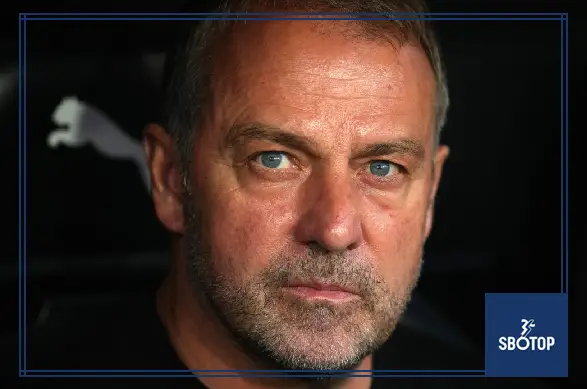
Hansi Flick’s relationship with Barcelona midfielder Frenkie de Jong has reportedly deteriorated dramatically, creating fresh uncertainty around the future of one of the club’s most experienced and technically gifted players.
The tension is said to have developed during the closing stages of the previous season and reached a critical point around Barcelona’s Champions League quarter-final elimination against Atletico Madrid.
According to Spanish journalist Gerard Romero, Flick wanted De Jong to start the decisive second leg after the Dutch midfielder had received medical clearance. De Jong reportedly refused because he did not feel comfortable risking his physical condition, leading to a serious disagreement between the player and head coach.
The report claims Flick has now lost trust in the midfielder and that their professional relationship has become increasingly strained. Barcelona have not publicly confirmed those claims, while neither Flick nor De Jong has directly explained the alleged incident in detail.
That distinction is important. Dressing-room disagreements are common at elite clubs, especially when selection, injuries and major European fixtures are involved. A reported loss of confidence does not automatically mean that a player will be sold or permanently removed from the manager’s plans.
Nevertheless, the suggestion of a breakdown between Flick and De Jong is significant because the German coach has built much of his Barcelona success around unity, collective responsibility and trust.
A disagreement involving one of the team’s senior figures could therefore have consequences extending far beyond a single match.
A Relationship Under Growing Pressure
De Jong’s situation at Barcelona has rarely been simple.
Since joining the club from Ajax in 2019, he has been praised for his ball-carrying ability, composure under pressure and intelligence in possession. He has also repeatedly faced questions about his role, salary, injury record and long-term future.
Several Barcelona coaches have attempted to use him in different positions.
He has played as a defensive midfielder, a central playmaker, an advanced number eight and occasionally as an emergency central defender.
His versatility has often been valuable, but it has also prevented him from establishing one clearly defined identity within the team.
Under Flick, De Jong appeared capable of becoming an important part of a more direct and physically intense Barcelona midfield.
The coach values players who can receive possession under pressure, accelerate attacks and break opposition lines. De Jong possesses all of those qualities.
However, Flick also demands availability, discipline and total commitment to the collective plan.
If the coach believed that De Jong had been cleared to play an important match but still declined selection, he may have interpreted the decision as a failure to place the team’s needs first.
From the player’s perspective, the situation may have looked completely different.
Medical clearance does not always mean a footballer feels physically or mentally ready for a high-intensity Champions League match. A player understands his own body and may fear aggravating an injury even when tests indicate that participation is possible.
The dispute may therefore reflect conflicting assessments of risk rather than a simple question of courage or loyalty.
The Atletico Madrid Incident
Reports identify Barcelona’s Champions League quarter-final second leg against Atletico Madrid as the moment when the relationship became especially tense.
Barcelona entered the match under enormous pressure, with a place in the semi-finals at stake.
Flick reportedly wanted De Jong in the starting line-up because of his ability to control possession and help Barcelona play through Atletico’s aggressive midfield pressure.
The Dutchman had been medically cleared, but he was said to have informed the coaching staff that he did not want to risk playing.
Barcelona were eliminated, increasing the emotional weight attached to the decision.
When a team loses an important knockout match, every unavailable player and tactical choice is examined more intensely. A disagreement that might have remained manageable after a victory can become far more damaging following elimination.
Flick may have felt that a senior player had not supported the team at a decisive moment.
De Jong may have felt that his physical concerns were not being respected.
Without direct confirmation from either side, it is impossible to determine exactly how the conversation developed.
What appears clear is that the incident has contributed to speculation over whether the midfielder still has a future under Flick.
Medical Clearance Is Not Always Simple
The disagreement raises an important issue in elite football: the difference between being medically available and being completely ready to perform.
A player may pass physical tests and receive permission to return without feeling entirely confident.
Returning from injury involves more than muscle strength or scan results. Footballers must sprint, change direction, absorb contact and make instinctive movements without hesitation.
Fear of reinjury can influence performance.
A midfielder who is worried about his knee, ankle or hamstring may avoid certain movements, arrive late to challenges or play with reduced intensity.
That can place both the player and team at risk.
Medical staff must balance several competing pressures.
They must protect the player’s long-term health while recognising that elite clubs face important matches and expect leading players to return as quickly as safely possible.
Coaches also face difficult decisions. They rely on medical advice and may become frustrated when a player remains reluctant after being officially declared available.
Neither position is necessarily unreasonable.
The conflict becomes dangerous when communication breaks down and each side believes the other has failed to understand its responsibilities.
De Jong’s Latest Injury Complicates His Future
The uncertainty has been increased by another injury suffered while De Jong was representing the Netherlands at the 2026 World Cup.
Reports state that the midfielder is dealing with a serious knee problem and considering whether surgery will be required. He is said to be delaying a final decision while assessing his club future.
That situation creates several complications.
Barcelona cannot easily plan a transfer without knowing when De Jong will be available again.
Potential buyers may hesitate to invest heavily in a player requiring surgery or a lengthy rehabilitation period.
The midfielder must also consider whether changing clubs during recovery would be in his best interests.
Remaining at Barcelona would provide continuity with medical staff familiar with his history. Leaving could offer a fresh start but require him to adapt to a new environment while rebuilding fitness.
The injury also limits Flick’s immediate options.
Even if the coach wanted to reintegrate De Jong, he may be unavailable for a significant period. That gives other midfielders an opportunity to establish themselves.
By the time the Dutchman returns, Barcelona’s tactical structure may have developed without him.
Flick’s Barcelona Is Built on Collective Trust
The reported dispute matters because Flick has repeatedly emphasised the importance of unity.
His Barcelona team recovered from difficult periods by developing a strong collective identity. Players have publicly described the dressing room as a family, while Flick has spoken about mentality, attitude and the need for everyone to play for each other.
That environment helped Barcelona win consecutive La Liga titles despite injuries, financial limitations and a young squad.
Flick’s authority has been strengthened by the belief that he treats players honestly and expects the same commitment in return.
A senior player falling outside that circle of trust would therefore represent a serious development.
The coach may accept mistakes, poor form or tactical limitations more easily than he accepts uncertainty over commitment.
At the same time, a family-like culture must also include empathy.
If De Jong genuinely feared another injury, Flick must decide whether the midfielder’s caution represented self-protection or a lack of commitment.
The way the coach handles the situation could influence how other players respond when they face similar physical concerns.
What De Jong Offers Barcelona
Despite the controversy, De Jong remains a highly valuable footballer when fit.
His greatest strength is his ability to carry the ball through midfield.
Many central players progress possession primarily through passing. De Jong can receive the ball near his own penalty area, escape pressure and advance several metres before releasing it.
That quality forces opponents to adjust.
A midfielder who breaks the first line of pressure through dribbling can create numerical advantages further forward.
De Jong is also comfortable receiving possession with his back to goal. He uses body positioning and close control to protect the ball before turning away from pressure.
These qualities are especially useful against aggressive pressing teams.
Barcelona’s football traditionally depends on midfielders who remain calm in crowded areas. De Jong fits that requirement naturally.
He can also drop between central defenders during build-up, allowing the full-backs to move higher and giving Barcelona another passing option.
His experience is valuable within a young squad.
Players such as Pedri, Gavi, Marc Casado and other academy graduates bring energy and quality, but De Jong has played hundreds of elite matches and understands the pressure surrounding Barcelona.
Losing him would remove a technically gifted and internationally experienced midfielder.
Why Flick May Still Prefer Other Options
The problem is that De Jong’s qualities do not automatically make him essential.
Flick’s system places significant emphasis on intensity, pressing and quick movement after possession changes.
Midfielders must react immediately when the ball is lost. They need to cover space, challenge opponents and maintain a high tempo.
De Jong can perform those tasks, but his injury interruptions have sometimes limited his rhythm and physical consistency.
Barcelona also possess several younger midfielders who may be better suited to specific roles.
Pedri offers creativity and control. Gavi provides aggression and emotional intensity. Casado can protect the defence, while Fermín López contributes direct running and goals.
If those players remain fit, Flick may believe the midfield can function effectively without De Jong.
The Dutchman’s salary and transfer value also influence the discussion.
Barcelona have faced financial restrictions for several years and must carefully manage their wage bill.
Selling a high-earning player could create room for new signings, even if the sporting decision would be difficult.
A Transfer Could Suit All Parties
Should the relationship truly be broken, a transfer may eventually become the most practical solution.
Barcelona could remove a significant salary, generate income and avoid allowing a valuable player’s contract situation to become more difficult.
De Jong could join a club where he receives a clearly defined role and renewed confidence from the manager.
Several leading European teams have been linked with him during previous transfer windows.
His ability in possession would attract clubs in the Premier League, Bundesliga, Serie A and elsewhere.
However, completing a transfer would depend on his recovery, salary expectations and willingness to leave.
De Jong has repeatedly shown affection for Barcelona and has not always been eager to move, even when the club considered selling him.
The midfielder may still believe he can repair the relationship and regain his position.
A departure should therefore not be treated as inevitable.
Could the Relationship Be Repaired
Football relationships can change quickly.
A coach may lose confidence in a player after one incident and regain it through conversations, training performances and professional behaviour.
If De Jong remains at Barcelona, the first step would be direct communication.
Flick would need to explain why the Atletico incident damaged his trust.
De Jong would need the opportunity to describe his physical concerns and explain why he did not believe he could safely start.
Both sides may discover that the disagreement was intensified by frustration and incomplete information.
The player would then have to demonstrate commitment during rehabilitation and training.
Flick has shown that he is willing to reward players who respond positively.
Barcelona’s squad is too demanding for personal tension to continue indefinitely. Either the relationship must be repaired or the club must create a clear exit plan.
Uncertainty would help nobody.
The Role of Sporting Director Deco
Barcelona’s sporting leadership must manage the situation carefully.
Deco and the club’s executives need to separate sporting reality from media speculation.
They must determine whether Flick genuinely no longer wants De Jong or whether the relationship has simply experienced a difficult period.
If the coach has made a final decision, Barcelona should avoid pretending that the player remains central to the project while privately searching for buyers.
That approach would weaken trust and reduce negotiating power.
If Flick remains open to reconciliation, the club should support discussions between the coach and player rather than allowing rumours to define the relationship.
Deco must also assess the financial implications.
Selling De Jong below his market value because of injury or conflict would not necessarily benefit Barcelona.
Keeping an unhappy, highly paid player would create another problem.
The decision requires sporting, medical and financial coordination.
Supporters Are Likely to Be Divided
De Jong remains a popular figure among many Barcelona supporters.
His elegant playing style and ability to carry possession match qualities traditionally valued at the club.
Some fans will believe Barcelona should protect a technically gifted midfielder rather than allow another internal disagreement to force a transfer.
Others may argue that his years at the club have not produced enough consistent influence.
They may point to injuries, changing roles and the financial importance of reducing the wage bill.
The reported refusal to start an important Champions League match will also shape opinion.
Supporters who trust Flick may view the incident as evidence that De Jong is no longer fully committed.
Those more sympathetic to the player may argue that no coach should pressure someone to play when he does not feel physically safe.
The lack of confirmed information makes the debate especially difficult.
Also Read: