Adrien Rabiot has attempted to lower the temperature around one of the most anticipated individual battles of the 2026 World Cup. With France preparing to face Spain in the semi-final, much of the discussion has centred on Lamine Yamal and the defensive measures Didier Deschamps might use to contain him. Rabiot’s response was calm and direct: France have no special “anti-Yamal” plan because their attention is fixed on Spain’s entire system rather than one celebrated attacker.
That answer was not an attempt to diminish Yamal. Rabiot acknowledged the winger’s danger, but argued that Spain threaten opponents through possession, close combinations, movement around the penalty area and quality across the front line. Isolating one player in the tactical conversation would therefore misunderstand how Luis de la Fuente’s side create advantages. France intend to restrict the structure that supplies Yamal, not chase him with an improvised man-marking scheme.
The midfielder’s composed reaction also reflected France’s confidence. Les Bleus have reached another major semi-final by combining attacking firepower with defensive discipline. Spain may possess one of the tournament’s most gifted young players, but France have Kylian Mbappé, Ousmane Dembélé, Michael Olise and a deep group of midfielders capable of changing the rhythm of a match. The French camp’s message is respect without fear.
Yamal Commands Attention Without Defining Spain
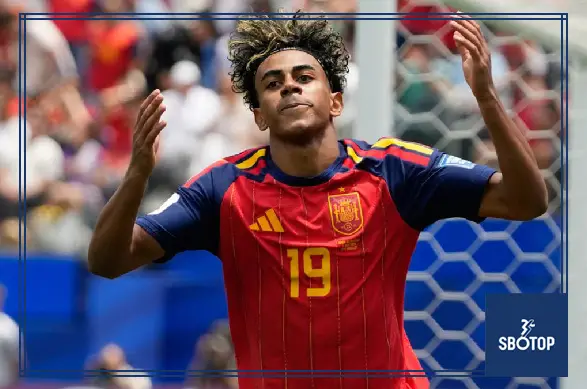
Yamal inevitably dominates headlines because his talent is extraordinary and his age makes every achievement feel historic. He turned 19 immediately before the semi-final and described the meeting with France as the most important match of his life. Although his tournament statistics have been relatively modest, his influence extends beyond goals and assists. Defenders move toward him, midfielders provide cover, and those reactions create space for Spain’s other attackers.
His ability to receive near the touchline and attack inward changes the geometry of Spain’s possession. A full-back facing Yamal cannot simply protect the outside lane because the winger’s left foot allows him to dribble toward goal, combine with a midfielder or deliver an early pass behind the defence. Sending a second defender may reduce that immediate danger, but it also opens a passing lane elsewhere. This is precisely why Rabiot rejected the idea that France can solve the semi-final through one specialised assignment.
Spain’s wider strength makes the problem more complicated. Rodri can direct play from deep, Pedri and Fabián Ruiz can find pockets between lines, while Mikel Merino has repeatedly provided decisive contributions from the bench. On the opposite side, Spain can stretch the pitch and prevent France from tilting their entire defensive block toward Yamal. France must manage all of those relationships together.
France Want to Challenge Spain for the Ball
Deschamps has indicated that France do not plan to spend the evening defending passively and waiting for counterattacks. His side want to fight for midfield control, disrupt Spain’s circulation and prevent La Roja from settling into the long possession sequences that suffocate opponents. That ambition supports Rabiot’s argument: the best way to reduce Yamal’s influence may be to stop the ball reaching him cleanly.
If France press Spain’s first passes successfully, Yamal may receive possession farther from goal and with fewer supporting options. If Rabiot, Manu Koné, Aurélien Tchouaméni or Warren Zaïre-Emery can close the centre, Spain’s defenders may be forced toward riskier passes along the touchline. France can then use their physical strength to contest second balls and launch attacks before Spain reorganise.
The challenge is enormous because Spain are exceptionally comfortable under pressure. Their midfielders constantly adjust their positions, creating short passing angles and inviting opponents to step forward. One mistimed French press could release Pedri into open space and leave Yamal isolated against a retreating defender. France therefore need coordinated pressure rather than individual aggression.
Rabiot’s role could be central. His experience, athletic range and willingness to cover wide spaces may help France protect whichever full-back faces Yamal. However, he must also remain connected to the central midfield. Drifting too far toward the winger could create exactly the interior opening Spain want to exploit.
Lessons from Previous Meetings
The semi-final carries recent history. Spain defeated France in the Euro 2024 semi-final, when Yamal produced a spectacular equaliser before Dani Olmo completed the comeback. Spain then beat France again in a remarkable 5-4 Nations League semi-final in 2025, with Yamal scoring twice. Those results explain why questions about a special defensive plan have followed France into this meeting.
Rabiot understands the danger personally. He faced Spain in those high-profile encounters and was involved in the intense duels that developed around Yamal’s side of the pitch. Yet France’s midfielder appears determined not to allow previous defeats to create tactical fear. The teams have changed, the tournament context is different and the World Cup semi-final will produce its own demands.
France can still learn from those matches. Spain punished moments when the French block became stretched and created opportunities by moving quickly after drawing defenders toward the ball. Yamal’s brilliance mattered, but it was amplified by the positioning of teammates. Treating him as an isolated problem would repeat the analytical mistake Rabiot wants France to avoid.
Spain will also study how France responded. Deschamps’ squad possess enough pace to punish the space behind Spain’s advancing full-backs. Mbappé and Dembélé can turn a failed Spanish attack into a shooting opportunity within seconds. The tactical contest therefore concerns risk management on both sides, not merely France’s attempt to stop one teenager.
Spain’s Possession Is Both Sword and Shield
De la Fuente’s team use possession to create chances, but also to protect their defence. Every controlled passing sequence keeps France’s attackers away from Unai Simón and forces Mbappé to decide how much energy he will spend pressing. Spain’s objective will be to control the tempo, make France chase and reduce the number of open-field transitions available to their opponents.
France must avoid becoming impatient. Chasing every pass recklessly would allow Spain to play through pressure and attack an exposed back line. Remaining too passive, however, would give Rodri and Pedri time to choose where the next overload develops. The correct response will require France to identify pressing triggers—poor touches, backward passes and receivers facing their own goal—then move as a unit.
Yamal becomes especially dangerous after Spain have circulated the ball from one side to the other. By the time possession reaches him, the opposing defence may already have shifted several metres and lost compactness. France’s far-side winger, central midfielder and full-back must therefore move together. A delayed recovery by any one of them can create the one-on-one situation Spain seek.
This collective requirement explains Rabiot’s cool dismissal. An “anti-Yamal” plan sounds dramatic, but elite defending is rarely that simple. France need distances, communication and pressure on the passer. The player on the ball is only the final element of a much larger sequence.
France Carry Their Own Attacking Threat
France do not enter the match as a team hoping merely to survive Spain. They have scored heavily during the tournament, conceded only twice and reached the semi-final without falling behind. Mbappé has led an attack supported by Dembélé, Olise, Désiré Doué and Bradley Barcola, giving Deschamps several combinations of speed, dribbling and finishing.
That attacking quality can become part of France’s defence against Yamal. If Mbappé or another forward remains high on Yamal’s side, Spain’s full-back may hesitate to advance. The winger could then receive less support, making it easier for France to surround him. Threatening the space behind Spain is therefore not separate from containing Yamal; it may be one of the most effective methods.
France must still balance that threat with defensive responsibility. Leaving the full-back unsupported against Yamal would be dangerous, particularly when Spain establish possession near the penalty area. Deschamps may ask a midfielder to slide across while allowing a forward to remain in a counterattacking position. Such rotations demand concentration and trust.
The potential duel between Yamal and France’s left side may receive the most attention, but the opposite flank could prove equally important. If France overload one side, Spain can quickly switch play and attack through Nico Williams, Dani Olmo or an advancing full-back. Rabiot’s broader warning is therefore tactically sound: Spain must be treated as an interconnected unit.
Rabiot’s Calm Tone Carries a Message
Respecting Yamal does not require France to behave as though he is unstoppable. He entered the tournament after a hamstring injury and has gradually regained rhythm, scoring once but contributing through movement and chance creation. De la Fuente believes his greatest World Cup performance may still be ahead, adding anticipation to the semi-final.
Rabiot has enough tournament experience to understand how narratives can consume preparation. France are seeking a third consecutive World Cup final, but their concentration cannot shrink to one individual duel, however fascinating it may appear to outsiders.
The Midfield Could Decide Everything
Although the match is being promoted through Yamal and Mbappé, the decisive battle may take place several metres behind them. Spain want Rodri and Pedri to control the ball; France want Rabiot and his partners to interrupt that control and create transitions. Whoever wins those exchanges will determine which star receives possession in the most dangerous conditions.
A clean Spanish progression could leave Yamal facing a defender near the box. A French interception could release Mbappé against a back line moving toward halfway. The midfielders are therefore responsible for both creating their own team’s greatest threat and preventing the opponent’s.
France’s selection will reveal Deschamps’ priorities. Tchouaméni has been recovering from a hamstring problem, while Koné and Rabiot performed effectively against Morocco. Zaïre-Emery offers another mobile option. Deschamps must choose between continuity, physical protection and greater control in possession.
Spain, meanwhile, will try to move the French midfield through constant positional exchanges. Their objective is not simply to complete passes but to create the fraction of hesitation that opens a lane toward Yamal or another attacker. France must remain compact without becoming static.
A Semi-Final Greater Than One Duel
France and Spain have both reached the last four without trailing at this World Cup. France defeated Morocco 2-0 in the quarter-final, while Spain edged Belgium 2-1. The winners will advance to the final against England or defending champions Argentina.
The occasion is also rich in national history. France are attempting to reach a third successive World Cup final, while Spain are seeking their first appearance in the tournament’s deciding match since winning the trophy in 2010. The semi-final takes place on Bastille Day, adding another emotional layer for the French team.
Yet emotion must not overwhelm tactical discipline. Spain cannot become so eager to feed Yamal that they ignore better options elsewhere. France cannot become so concerned about him that they abandon the midfield or leave space for other Spanish attackers.
Rabiot’s dismissal of an anti-Yamal plan captures that reality. The teenager is a major threat, perhaps Spain’s most unpredictable one, but he operates inside a sophisticated collective. France’s task is to limit the passing network around him, compete for possession and force Spain to defend their own goal.
Also Read: