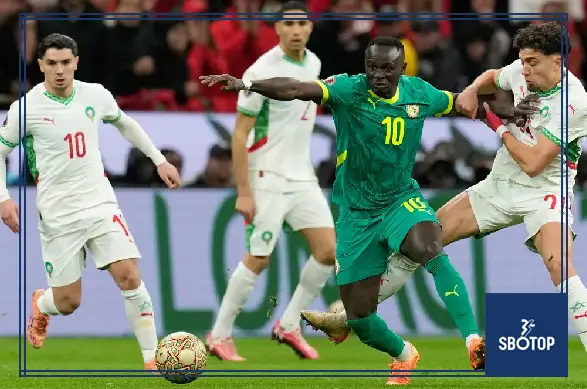
Senegal arrived at the 2026 World Cup carrying the confidence of African champions and the expectation that one of the continent’s strongest squads could challenge the traditional powers. Instead, the Lions of Teranga left North America after a turbulent campaign that ended with a dramatic 3-2 extra-time defeat to Belgium in the Round of 32.
The disappointment did not remain on the pitch for long. Head coach Pape Bouna Thiaw was dismissed, questions emerged about the team’s preparation, and Senegalese Football Federation president Abdoulaye Fall publicly raised concerns about the medical support provided to the players.
The most controversial part of Fall’s post-tournament assessment involved national team doctor Abderahmane Fediore. Fall said he had learned that Fediore had originally trained in gynaecology and suggested that some players had not felt fully reassured by the medical support available during the tournament.
The claim immediately generated sensational headlines. However, Senegal’s sports medicine community strongly rejected the suggestion that Fediore lacked the appropriate qualifications. The Senegalese Association of Sports Medicine described the allegation as unfounded and defamatory, stating that the doctor possesses specialist qualifications in sports medicine and sports biology.
The result is a dispute involving more than one doctor’s academic background. It raises wider questions about federation governance, communication, professional reputation and the search for explanations after a disappointing World Cup.
Senegal Entered the Tournament with Major Expectations
Senegal’s early elimination was particularly painful because the team had travelled to the World Cup with genuine ambition. They had completed an unbeaten qualifying campaign and entered the competition after defeating Morocco in the Africa Cup of Nations final earlier in 2026.
The squad contained experienced international players, emerging talent and several footballers competing at leading European clubs. After establishing themselves as one of Africa’s most consistent national teams, Senegal were expected to progress comfortably from the group stage and potentially produce another historic knockout run.
Instead, they lost their opening two group matches against France and Norway. Those defeats placed enormous pressure on their final fixture against Iraq.
Senegal responded by winning 5-0, securing enough points and goal difference to qualify for the Round of 32 as one of the tournament’s best third-placed teams. The emphatic performance appeared to restore confidence and offered the possibility of a fresh beginning in the knockout phase.
Their next opponent was Belgium, a talented but inconsistent side that had also experienced difficulties earlier in the competition. For much of the match, Senegal looked ready to advance.
Belgium Defeat Leaves Lasting Scars
Senegal established a 2-0 lead against Belgium through goals from Habib Diarra and Ismaïla Sarr. With only a few minutes of regulation time remaining, the African champions appeared to have secured a place in the last 16.
The match then changed dramatically.
Romelu Lukaku reduced Belgium’s deficit in the 86th minute before Youri Tielemans equalised three minutes later. Senegal, having controlled much of the contest, suddenly found themselves entering extra time with their momentum gone.
The decisive incident arrived deep into the additional period. Belgium received a penalty following a video review of a challenge involving Lamine Camara. Tielemans converted at 124 minutes and 44 seconds, completing the comeback and scoring what was reported as the latest goal in World Cup history.
Senegal protested the decision, but coach Pape Thiaw avoided launching a direct public attack on the officials. The 3-2 defeat nevertheless represented an extraordinary collapse after the team had been only minutes away from advancing.
The emotional consequences were immediate. Supporters questioned the substitutions, the management of the closing stages and the team’s ability to respond after Belgium’s first goal. Within days, attention moved beyond tactical decisions toward the organisation surrounding the squad.
Pape Thiaw Pays the Price
The Senegalese Football Federation dismissed Pape Bouna Thiaw shortly after the tournament exit, explaining that the World Cup results required a change in leadership.
The decision was significant because Thiaw had recently delivered success. A former Senegal international and a member of the historic team that reached the 2002 World Cup quarter-finals, he had guided the national side to the Africa Cup of Nations title earlier in 2026.
That achievement might ordinarily have protected a coach from dismissal after one disappointing tournament. The manner of Senegal’s elimination, however, intensified pressure on the federation.
Losing the opening matches to France and Norway had already damaged confidence. Surrendering a two-goal advantage against Belgium then created the impression that the tournament had exposed deeper weaknesses in preparation and management.
By removing Thiaw, the federation signalled that it intended to restructure the national team before the next cycle. Yet the coach’s departure did not end the debate. Fall’s subsequent press conference widened the crisis by directing attention toward the medical department.
The Federation President’s Allegation
During his review of Senegal’s campaign, Abdoulaye Fall claimed that the federation had discovered late that the national team doctor had been trained as a gynaecologist.
Fall linked the discovery to concerns reportedly expressed by players. According to his account, some members of the squad did not feel sufficiently reassured about the medical support being provided.
The federation president said additional expertise had been sought during the tournament because player health had to take priority. His remarks suggested that the issue was serious enough to require intervention while Senegal were competing in North America.
Those statements quickly produced headlines claiming that Senegal had unknowingly employed a gynaecologist as the national football team’s doctor for almost a decade. The story spread internationally because of the apparent contrast between gynaecology and the medical demands of elite men’s football.
However, such headlines risked oversimplifying the dispute. A doctor’s original field of training does not necessarily represent the full extent of their later education, qualifications or professional experience.
The essential question was not whether Fediore had studied gynaecology at some point. It was whether he also possessed recognised expertise in sports medicine and was professionally qualified to treat elite footballers.
Senegal’s sports medicine association answered that question with a forceful defence.
Medical Association Rejects the Claims
The Senegalese Association of Sports Medicine responded rapidly to Fall’s comments. It rejected the allegations as “unfounded and defamatory” and provided details intended to establish Fediore’s professional credentials.
According to the association, Fediore holds a specialist diploma in sports medicine and sports biology from the Faculty of Medicine at Cheikh Anta Diop University.
The organisation also said he previously led the physiotherapy department at Fann Hospital. That experience would place him in a clinical environment directly connected to physical recovery and rehabilitation rather than restricting his work to one unrelated medical speciality.
Fediore has served as Senegal’s national team doctor since 2017. During that period, he has worked at three World Cups and five Africa Cup of Nations tournaments. His tenure includes Senegal’s recent period of international success and repeated appearances in the later stages of major competitions.
The association’s response fundamentally changed the nature of the controversy. The dispute was no longer a simple story about an unqualified doctor supposedly being exposed. It became a public disagreement between the country’s football federation president and its sports medicine body over how Fediore’s professional background should be represented.
Being Trained in Another Field Does Not Erase Later Qualifications
Medical careers are often more complex than a single job title suggests. Doctors may begin their training in one speciality before completing additional qualifications, working in different clinical departments or developing expertise in another area.
Therefore, saying that someone was trained in gynaecology does not automatically prove that the person is unqualified to practise sports medicine. The relevant assessment would need to consider recognised diplomas, licences, professional experience and the precise responsibilities assigned within the national team.
In Fediore’s case, the Senegalese Association of Sports Medicine says that he possesses a specialist diploma directly connected to athlete care. It also points to his hospital leadership experience and lengthy involvement with the national team.
Those claims do not necessarily answer every question about how Senegal’s medical department operated during the World Cup. Players may still have had concerns about communication, confidence, treatment processes or the size of the medical staff.
However, concerns about service delivery are different from an allegation that a medical professional lacks the necessary academic qualifications.
That distinction matters because a public claim about a doctor’s competence can seriously damage professional reputation. It may affect employment, relationships with patients and standing within the broader medical community.
The controversy therefore requires evidence and careful language rather than ridicule based solely on the word “gynaecologist.”
Player Confidence Remains an Important Issue
Although the medical association defended Fediore’s credentials, Fall’s claim about player confidence cannot simply be dismissed without further examination.
Elite footballers rely heavily on medical staff. During a major tournament, players need injury assessments, recovery programmes, medication guidance, hydration management, rehabilitation and honest advice about whether they can safely compete.
Trust is central to that relationship. A player must feel comfortable reporting pain, discussing symptoms and accepting decisions that may prevent participation in an important match.
Even a properly qualified doctor can struggle if communication inside the squad breaks down. Conversely, player dissatisfaction does not by itself prove medical incompetence.
The federation must therefore clarify what concerns were raised, when they were reported and what additional expertise was introduced. It should also explain whether any player’s treatment was delayed, mismanaged or placed at risk.
At present, the public record establishes that Fall said players were not fully reassured and that the association insists Fediore is appropriately qualified. It does not establish that the doctor caused Senegal’s poor performances or contributed directly to the defeat against Belgium.
Why Was the Issue Raised Only After Elimination?
The timing of the revelation has created another important question.
Fediore had reportedly worked with Senegal’s national team since 2017. That means he had served under previous federation leadership, travelled to several major tournaments and remained in place during some of the country’s greatest football achievements.
If his qualifications were genuinely inadequate, the federation’s appointment procedures and background checks would require serious scrutiny. A national association should verify the credentials of every medical professional before allowing that person to take responsibility for international players.
If his sports medicine qualification was already known, Fall’s public description of him primarily as a gynaecologist becomes more difficult to understand.
Either possibility exposes a governance problem.
The federation may have failed to maintain accurate professional records, or its president may have presented an incomplete account of the doctor’s background while searching for explanations after elimination.
An independent review could determine which interpretation is correct. Without such a process, supporters are left with contradictory statements from two institutions that should be cooperating to protect player welfare.
A Wider Crisis of Preparation and Accountability
Reports surrounding Fall’s press conference suggested that the doctor was not the only issue raised. Questions were also directed toward Senegal’s preparation, logistics, accommodation and organisation during the World Cup.
Fall reportedly argued that parts of the tournament preparation had not reached the required standard. He also placed responsibility for some logistical shortcomings on government authorities rather than accepting that every problem belonged to the federation.
These comments show how quickly a disappointing football result can develop into an institutional blame contest.
The coach can be criticised for tactics. Players can be blamed for losing concentration. Medical staff can be questioned over support. Government departments can be accused of logistical failures. Federation officials can then defend their own decisions by pointing elsewhere.
Such public disputes rarely help a team rebuild. They may instead weaken trust between departments and discourage qualified professionals from accepting future roles.
Senegal need a structured assessment that separates legitimate failures from emotional reactions to elimination.
Also Read:
- SBOTOP: Four Key Facts About Ivan Barton the Referee Set to Oversee France vs Spain After Showing 11 Yellow Cards
- SBOTOP: France Midfielder Coolly Dismisses Talk of Special Anti-Yamal Plan for World Cup Semi-Final
- SBOTOP: Spain Coach Reveals Tactical Plan to Neutralise France in 2026 World Cup Semi-Final